GAZA – The “worst financial crisis” ever faced by the UN’s agency for Palestinian refugees could lead to “disaster” in the Gaza Strip and insecurity in Lebanon, the organisation's chief has warned.
Founded in 1949, the United Nations Relief and Works Agency for Palestine Refugees in the Near East (UNRWA) runs schools and provides health services as well as other humanitarian aid to an estimated 5.7 million Palestinians with refugee status.
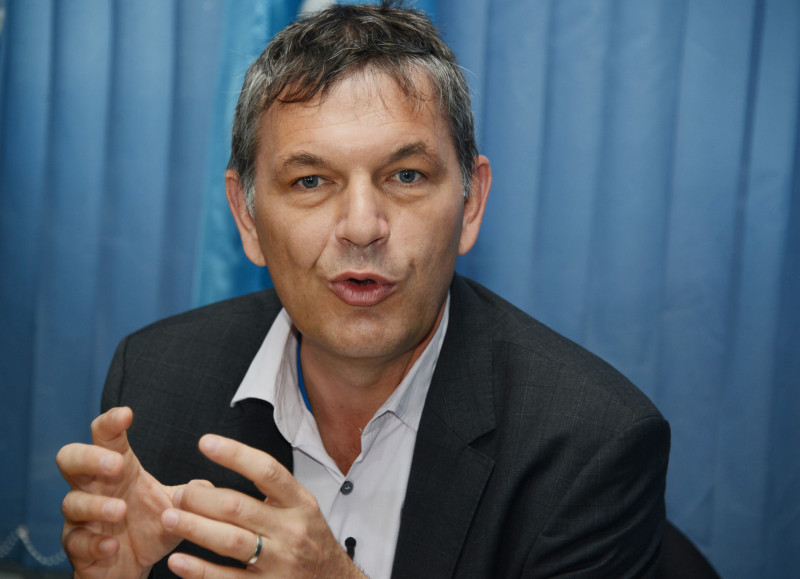
"It is in the interest of no one to see schools suddenly suspended... health services being suspended (in Gaza), at a time when people are hit by the (coronavirus) pandemic," said the agency's chief Philippe Lazzarini.
“It would be a total disaster,” he added, in an interview conducted by videoconference on Sunday.
Last week, Lazzarini announced that UNRWA faced a US$70 million (RM 288.22 million) funding shortfall that has jeopardised its ability to pay staff full salaries in November and December.
The shortfall affects 28,000 staffers, mostly refugees themselves, across the Israeli-occupied West Bank, east Jerusalem, the Gaza Strip, Lebanon and Jordan.
The situation is particularly critical in the Gaza Strip, a Palestinian enclave of two million people where the unemployment rate is over 50% and where the novel coronavirus crisis has led authorities to slash public sector salaries.
After the local authorities, UNRWA, with some 13,000 people on staff, is the main employer in the Gaza Strip, which is controlled by Islamist group Hamas and under blockade by Israel.
“This population is entirely dependent on international assistance,” Lazzarini said, warning that the suspension of UNRWA programmes could have a “devastating” economic and security impact.
The agency chief expressed fear that “the same could very easily happen with the Palestinian refugees in Lebanon.”
Around 180,000 Palestinian refugees reside in Lebanon, out of 470,000 registered in the country, according to UNRWA planning data. Their right to work and own property is restricted.
Lebanon is facing its worst economic crisis since its 1975-1990 civil war, with soaring unemployment and poverty rates.
And while the situation is dire across Lebanon, “it is even worse for the Palestinian refugees,” Lazzarini said, adding that some 80%-90% of them rely on UNRWA for assistance.
The suspension of the agency's aid programmes there could represent a "new source of insecurity" for Lebanon, he warned.
“We are at a time when people expect UNRWA to deliver more,” said Lazzarini.
But it “is also the time where the organisation is facing its worst financial crisis,” he added. – AFP, November 16, 2020