Business

Philippine economy to take ‘10 years to recover from virus’

Next 2 generations to pay for RM3.3 trillion cost of Covid-19, says official

Updated 4 years ago · Published on 30 Sep 2021 11:59PM

Philippine economy to take ‘10 years to recover from virus’
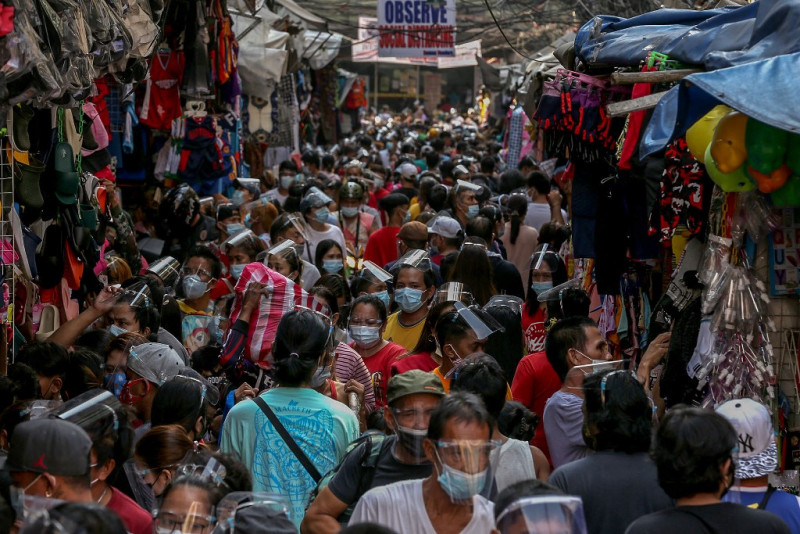
Nearly 70% of the economy, including 23.3 million workers, remain under ‘heightened quarantine’ restrictions, says Economic Planning Secretary Karl Kendrick Chua. – AFP pic, September 30, 2021

MANILA – The Philippine economy will take more than a decade to return to pre-pandemic growth, an official said today, warning the next two generations of Filipinos would be paying for the cost of Covid-19.

Lockdowns and other restrictions aimed at slowing the spread of the coronavirus have shattered the Southeast Asian nation’s economy, throwing millions out of work and leaving many poor families hungry.

“Our long run total cost of Covid and the quarantine both to the present and future society – meaning our children and our grandchildren – will reach 41.4 trillion” pesos (RM3.3 trillion), Economic Planning Secretary Karl Kendrick Chua said.

The figure is more than twice the Philippines’ gross domestic product last year, which the World Bank estimates at US$361.5 billion.

The losses would be felt over the next 10 to 40 years, Chua said.

Consumption, investment and tax revenues would struggle to recover as social distancing rules prevent key sectors, such as tourism and restaurants, from fully reopening.

Lower productivity caused by death, illness or lack of schooling during the pandemic “is likely to be permanent”, he added.

The economy is expected to expand by 4% to 5% this year, Chua said, compared with a record contraction of 9.6% last year.

But it would take 10 years before the country returned to pre-pandemic growth, which averaged 6.4% in the 10 years before Covid-19 hit. 

Nearly 70% of the economy, including 23.3 million workers, remain under “heightened quarantine” restrictions, Chua said.

He warned lockdowns caused greater hunger and are not the answer to the pandemic.

The Philippines has recorded more than 2.5 million infections, including over 38,000 deaths.

Just over a quarter of the adult population has been fully vaccinated amid a delayed and slow vaccination roll-out. – AFP, September 30, 2021


Related News

Opinion / 23h

Massive attacks in the Thai Deep South aimed at destroying the economy

Malaysia / 4d

Malaysia records 6% GDP growth in Q2 despite global headwinds, says Sim

Malaysia / 1w

Six per cent growth proves Malaysia's economy remains resilient - PM

Opinion / 1w

LHDN’s uneven hand: Tough on MSMEs, soft on the shadows

Opinion / 3w

Lessons From Negeri Sembilan - Charles Santiago

Opinion / 3w

Is the South China Sea moving from a ‘zone of peace’ towards the next conflict area?

Spotlight

Trump’s North Korea gamble deepens Asia’s doubts over US alliances

Malaysia

Rayer denies involvement in 'Maha Kali Red Rally', claims name and photo misused

Malaysia

E-Hailing driver charged with attempted murder after allegedly setting worker on fire

Business

Nation’s economic outlook strengthens as leading index signals continued growth

Malaysia

‘No parent wants her child to be remembered this way,’ says mother of 14-year-old Keziah

Malaysia

RM1.96m Penang land probe: Two ‘Datuks’ remain in custody

Business

K8 cargo: Businessman seeks clarification from MOF, Customs, Petronas

Malaysia

PH leaders hold talks as Melaka election plans take shape

Malaysia

Bersama rejects political alliances, vows to go solo in Melaka state election

You may be interested

Business

Govt rules out RM7.5b Datasonic takeover amid identity security concerns

Business

Nation’s economic outlook strengthens as leading index signals continued growth

Business

K8 cargo: Businessman seeks clarification from MOF, Customs, Petronas

Business

Oil prices pull back after rally as markets brace for tougher Iran sanctions

Business

Matrix Concepts records RM416.7m in 1Q27 sales as geographic diversification gains traction

Business

Oil prices hold near US$85 as US-Iran tensions keep hormuz risks in focus