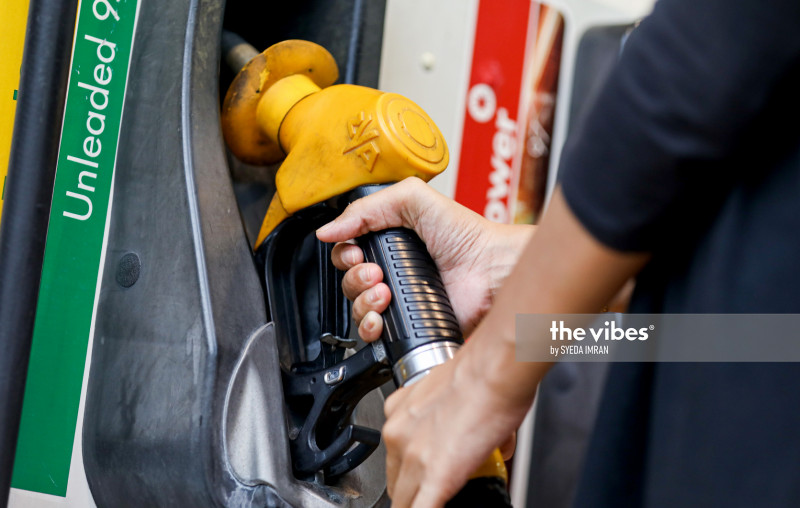
WITH just days to go before the government introduces its targeted fuel subsidy mechanism for RON95 petrol, concerns are mounting over the system’s readiness and the lack of clear communication to the public.
The mechanism, which requires the use of a functioning MyKad to verify subsidy eligibility at petrol stations, is being described by stakeholders as complex, potentially bureaucratic, and open to early disruption.
Dr T Saravanan, Chief Executive Officer of the Federation of Malaysian Consumers Associations (FOMCA), stressed that the new system must be implemented in a way that is seamless, efficient and user-friendly.
“Users must not face overly complicated requirements or a system that frequently fails. The process at petrol stations should be smooth and consumer-centric,” he said in an interview with Sinar Ahad.
Saravanan added that the government must anticipate a ripple effect on the cost of goods if non-eligible consumers face higher fuel prices.
“If petrol prices increase for those deemed ineligible, it could raise logistics and transportation costs, potentially driving up the prices of everyday items. Price control mechanisms and close market monitoring are essential to prevent indirect burdens on the public,” he explained.
In recent days, Home Minister Datuk Seri Saifuddin Nasution Ismail advised the public to ensure their MyKad chips are functioning properly, as the card will be essential in verifying one’s eligibility for subsidised fuel.
However, the actual rollout details remain incomplete, and the delay in official announcements has fuelled widespread speculation and uncertainty among Malaysians.
Saravanan emphasised that the success of the new system depends heavily on transparent and continuous communication.
“Many are still unclear about who qualifies, how eligibility is determined, and how the subsidy will actually be applied. The government needs to run an aggressive public awareness campaign across all platforms—television, radio, social media, and official websites, including holding briefings in both urban and rural areas,” he said.
In addition to public announcements, Saravanan suggested that official channels be established to allow individuals to easily check their eligibility status via a mobile application, online portal or designated service counters.
“Users must understand whether they need to register, how their MyKad will be scanned, and what to do in case of issues—such as damaged or unreadable cards, or lost MyKads. This information must be made public well in advance to avoid panic or feelings of exclusion once the system goes live,” he added.
He also called for a continuous oversight mechanism involving the government and enforcement bodies such as the Ministry of Domestic Trade and Cost of Living (KPDN) to monitor effectiveness, handle complaints and prevent exploitation of the system.
“This mechanism must allow for real-time policy adjustments based on public feedback and on-the-ground challenges,” he said.
Meanwhile, the Petroleum Dealers Association of Malaysia (PDAM) has warned that the system, while well-intentioned, is not without complexity. Although supportive of the targeted subsidy in principle, PDAM stated that verifying customer eligibility at the pump introduces new layers of difficulty compared to the current flat-rate pricing system.
“When the system is launched, there may understandably be some initial challenges. PDAM appeals to the public for understanding and cooperation during this transition period,” the association said in a statement.
PDAM added that preparations are ongoing and implementation readiness may vary across fuel brands and station locations.
The association expressed hope that government hotlines would be available to address public issues and urged customers to refrain from aggressive behaviour at fuel stations during the initial phase.
Petrol station staff across the country are also being prepared for the shift. A check by The Star revealed that some workers have already received video briefings on how to operate MyKad readers, with in-person training expected to follow shortly.
One station worker explained that the MyKad will be used at payment counters to check a customer’s eligibility, and whether they have exhausted their monthly fuel quota.
“For example, if the quota is 100 litres per month, the system will deduct the subsidised amount accordingly. Once that’s used up, the customer will have to pay the full price,” he said.
An added feature is the integration with the Touch ‘n Go e-wallet. Those who forget their MyKad may still use their e-wallet, which will include a special “Budi Madani RON95” icon to facilitate subsidised purchases.
Customers paying with debit or credit cards at the pump will need to insert both their payment card and MyKad. If no loyalty card is used, the process involves only two steps—MyKad verification and payment.
Another worker noted that MyKad holders will be required to present themselves in person for visual verification to prevent proxy purchases using someone else’s card.
Earlier in July, Prime Minister Datuk Seri Anwar Ibrahim announced that under the targeted scheme, eligible Malaysians would pay RM1.99 per litre for RON95 petrol—lower than the current RM2.05 price.
The initiative, which aims to benefit some 18 million motorists, is based on eligibility assessments using Inland Revenue Board (LHDN) income data and the Statistics Department’s Household Income Survey.
On 8 September, Finance Minister II Datuk Seri Amir Hamzah Azizan confirmed in Parliament that the government was finalising the subsidy’s eligibility criteria and implementation methods.
As the system’s launch looms, the coming weeks will be a critical test of both technical infrastructure and public trust. Whether this ambitious reform can avoid disruption and deliver on its promise remains to be seen. - September 21, 2025