Minister noted that supply chains, regulatory frameworks, and currencies are no longer shaped solely by economics but are now intrinsically tied to geopolitical rivalries - October 2, 2025
Strategic collaboration crucial amid global complexity, says Tengku Zafrul Aziz at Milken Summit
Minister highlights Malaysia’s economic reform, regional leadership, and ASEAN resilience in navigating geopolitical uncertainty and climate challenges
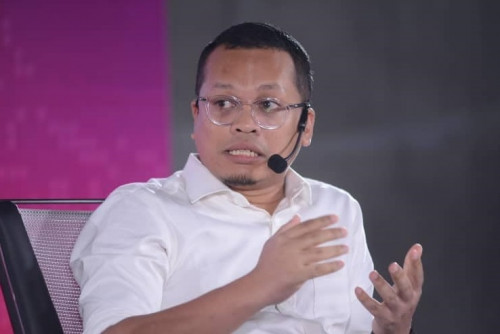
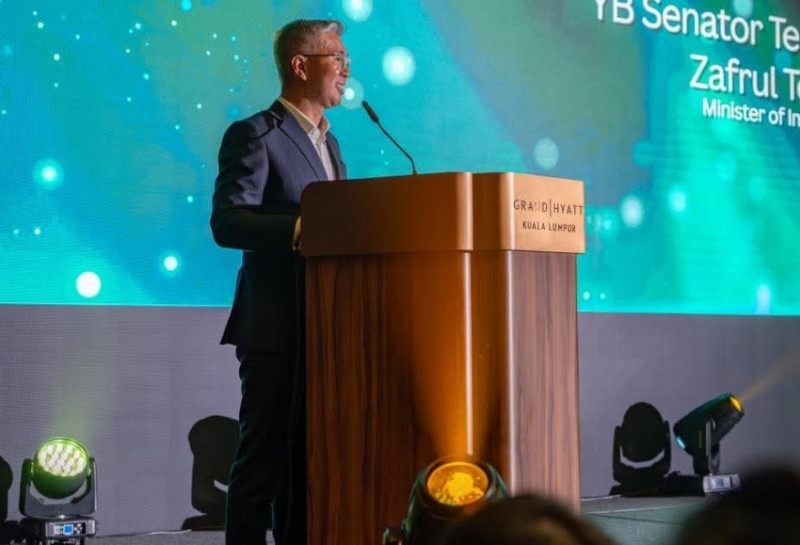
MINISTER of Investment, Trade and Industry, Tengku Zafrul Abdul Aziz has called for deliberate, purpose-driven collaboration to address rising global complexity, warning that geopolitical tensions, technological disruption and climate risks now intersect more than ever before.
Speaking at the 12th Milken Institute Asia Summit in Singapore on Thursday, Tengku Zafrul said, “The world today is increasingly complex. The breakdown of globalisation, revival of populism, and polarisation of nations have made neutrality suspect, and policy responses fragile.”
He noted that supply chains, regulatory frameworks, and currencies are no longer shaped solely by economics but are now intrinsically tied to geopolitical rivalries.
“Progress without purpose is aimless, and collaboration without strategy is fragile,” he remarked, echoing the summit’s theme: *Progress with Purpose: Collaboration Amid Complexity*.
Malaysia’s economic pivot: reform, complexity and climate
Outlining Malaysia’s economic transformation, Tengku Zafrul said the government’s three-pronged strategy — industrial reform, innovation-led growth, and a green transition — is designed not just to adapt to complexity but to convert it into resilience.
“Malaysia aspires not to incremental change, but structural renewal,” he said, pointing to policies such as the New Industrial Master Plan 2030, the National Semiconductor Strategy, and the National Energy Transition Roadmap.
He stressed Malaysia’s ambition to move beyond its legacy role in semiconductor assembly to become a hub for advanced design, packaging, and R&D. “Our push into AI, renewable energy, and advanced manufacturing is both a strategic bet and a national mission.”
Malaysia’s low-carbon pivot, he added, is also being matched with investment strategy. “Our Green Investment Strategy is positioning Malaysia at the forefront of renewable energy, carbon markets, and sustainable finance.”
Cross-border cooperation and Malaysia’s ASEAN leadership
On regional engagement, Tengku Zafrul pointed to projects like the Johor–Singapore Special Economic Zone (JS-SEZ) as models of cross-border collaboration that could be scaled across ASEAN.
“Malaysia’s story is one of resilience and renewal, but survival alone is insufficient. Renewal must be matched by resilience,” he said, citing Malaysia’s post-pandemic rebound, rising competitiveness, and export diversification.
Investor confidence, he noted, is returning. “Global semiconductor giants are expanding in Penang, AI and data hubs are emerging in Johor, and renewable energy projects are powering Kedah and Terengganu.”
Central to this transformation, he said, is Malaysia MADANI — the government’s vision for inclusive, sustainable, and collaborative growth.
“Government alone cannot drive transformation. Purposeful progress requires partnerships — between ministries and industries, innovators and investors, Malaysia and the world.”
Fragmented geopolitics demands regional unity
Tengku Zafrul warned against retreating into protectionism, instead urging deeper partnerships to confront geoeconomic fragmentation. “In today’s fractured world, collaboration is not a luxury but insurance against instability.”
He reaffirmed Malaysia’s commitment to ASEAN centrality, stating, “We make no apologies for our fierce neutrality. The ASEAN Way — diversity, consensus, pragmatism — is what makes us resilient.”
Under Malaysia’s 2025 ASEAN Chairmanship, the bloc is on track to deliver 18 Priority Economic Deliverables, including initiatives in semiconductors, electric vehicle ecosystems, and regional power grids.
ASEAN’s projected 4.2% growth rate in 2025, against a global forecast of 2.8%, reinforces the region’s resilience, he said.
“These numbers are not abstractions. They represent real factories rising in Penang and Bangkok, digital startups scaling in Jakarta, and solar farms lighting homes in Vietnam,” he added.
Malaysia as a gateway to ASEAN and beyond
Tengku Zafrul invited global investors to participate in Malaysia’s transformation. “We seek not just capital, but also technology, ideas, and a shared purpose.”
He pledged that Malaysia would continue reforming to build a more competitive and inclusive economy. “We will not rest on past laurels. We will be a nation that not only grows but uplifts, that collaborates amid complexity, and that adapts with confidence.”
Calling for sustained international cooperation, he concluded, “May our collaborative spirit be like the rising sun — steady, radiant, and full of vitality — and may our collective progress always be with purpose.” - October 2, 2025