
KUALA LUMPUR – Tan Sri Muhyiddin Yassin’s failure to put Malaysia under emergency orders bodes well for the local economy, say economists, following the Yang di-Pertuan Agong’s snub of the prime minister’s draconian request.
Bank Islam chief economist Mohd Afzanizam Abdul Rashid told The Vibes as far as investor confidence is concerned, the Agong’s decision to not call for an emergency is a step in the right direction.
“I would say it’s a plus point from the investors’ point of view. With this announcement, I think we can put to rest the fear of a state of emergency, meaning economic activities will continue as per current ruling.
“For example, one has to adhere to standard operating procedures and those states that are currently under the conditional movement control order will continue to experience a restrictive human mobility within the stipulated time.”
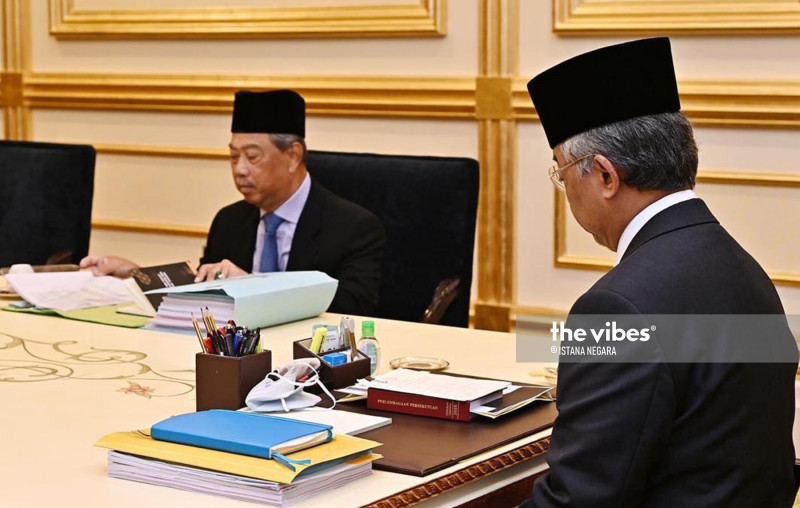
The prime minister on Friday presented to the Agong a proposal to put the country under emergency law.
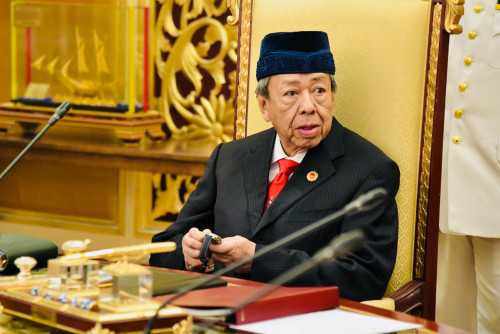
But in a dramatic turn of events, the king yesterday rejected Muhyiddin’s ambition, and instead, told the country’s politicians to stop politicking and focus on combating Covid-19, and reviving the economy.
On the king’s decree, Afzanizam said the rejection also pointed to the monarchy acting as a “stabiliser” during “heightened political uncertainty”, arguing that emergency orders could be detrimental to the economy and wellbeing of Malaysians.
Universiti Tun Abdul Razak’s Prof Barjoyai Bardai said while the king’s decision to not accede to the government’s wishes is a positive signal to investors, the test “will be on political leaders to pass the 2021 Budget” scheduled to be tabled in Dewan Rakyat on November 6.
With the palace having already played its part, the academic said it is now up to lawmakers to ensure the budget is passed.
Echoing the king’s statement that the budget has to be one that is cognisant of the coronavirus pandemic’s effect on Malaysians, Barjoyai said a people-first approach will also help lure more investors to the country.
“There are three important components in the budget that need to be ticked. First, there should be enough allocation to help frontliners in battling the pandemic.
“Second, the government needs to announce another economic recovery plan, in the form of a stimulus package, with at least RM200 billion being allocated.
“Finally, and most importantly, the government must be seen to be thriftier in its administrative spending. They must cut unnecessary budgets such as civil servants’ allowances, and use them to help the people, for example, increasing the minimum wage.
“This will give the impression that the government really means business.”
It is believed that Muhyiddin, who has a razor-thin majority in the Dewan Rakyat, had been pushing for emergency orders as a means to stave off a budget bill defeat, which would automatically translate to a vote of no confidence and the collapse of his government. – The Vibes, October 26, 2020