
KUALA LUMPUR – Instances of illicit gambling operations are tipped to become more rampant amid the PAS-led Kedah government’s ban on legal lottery businesses in the state.
While some quarters have lauded the state government’s move to cease renewing licences for lottery outlets in Kedah, observers and groups have admitted that unlawful gambling would become more widespread.
Crime analyst Kamal Affandi Hashim said the ban in Kedah would not have any bearing on gambling habits.
He said similar to raising taxes on cigarettes, the “victory” for legislators is merely cosmetic as many Malaysians have yet to kick the habit.
“Looking at it from a moral standpoint, it is a score, but if you look at it from a different angle, it’s only a smokescreen at best.”
In terms of handling the gambling issue, Kamal Affandi said the matter is not merely about legality, but rather their life decisions, as addiction and dependency are the core issues.
More importantly, he said the state government should look into setting up centres that treat social ills, such as alcoholism, drug abuse, sex addiction, and other problems in order to address the community issues.

Discreet sales of 4D numbers, proliferation of unregulated lottery apps
An industry insider said controlling the gambling market through sound policies is more pragmatic than outright bans, as this safeguards the demand for gambling and protects societal interests.
A source told The Vibes that several unregulated apps such as “Winbox” and “Grand Dragon” are fast becoming popular online gambling outlets.
Some quarters have pointed out that under the Betting Act 1953 and the Common Gaming Houses Act 1963, offenders could face fines of between RM5,000 and RM100,000 and maximum imprisonment of five years.
However, the laws are considered antiquated as they may not apply to online gambling.
Furthermore, Chinese daily Kwong Wah Jit Poh recently reported that legal betting revenues had dropped 20% compared to the period during the movement control order, largely due to illegal gambling.
“Authorities and regulators such as the Finance Ministry, Home Ministry, and Malaysian Communications and Multimedia Commission should play a more active role in curbing the illegal betting apps instead of legal outlets,” another source familiar with the industry told The Vibes.
“Legal betting companies feel short-changed because they are not allowed to have an app and authorities are not doing enough to ban or block illegal apps.
“Furthermore, it is the government that will lose out on revenue at the end of the day as they will not be receiving taxes from legal lottery and gambling companies.”
The source also warned that illegal betting apps collected and mined data of customers and that this posed a high risk to the app users because they may fall victim to scams and illegal loan sharks.
“Legal betting equals tax for the government and tax money benefits the people. Illegal betting does not.”

Observers have previously noted that the government loses RM20 million a year in tax revenue, following its move to ban lottery outlets.
Moreover, they said black market lottery operators raked in an estimated sales revenue of nearly RM500 million in the northern state alone.
Recently, Kedah Consumer Association president Mohamad Yusrizal Yusoff – who believed the closures would lead to less social ills – also warned of the rise in illegal gambling.
He said the closures would likely have a positive impact on the Muslim community, but this would mean that the authorities would have to double down on efforts to combat illegal gambling activities, Kosmo reported.
Similarly, Universiti Sains Malaysia criminologist Datuk P. Sundramoorthy told The Star that illegal gambling businesses would constantly attempt to bribe law enforcers, which would have an impact on authorities, and could even extend to political figures.
Yusrizal’s remarks come following the enforcement of a new policy to stop renewing or issuing new licences for gambling and lottery businesses in Kedah, making it the third gambling-free state after Kelantan and Terengganu.
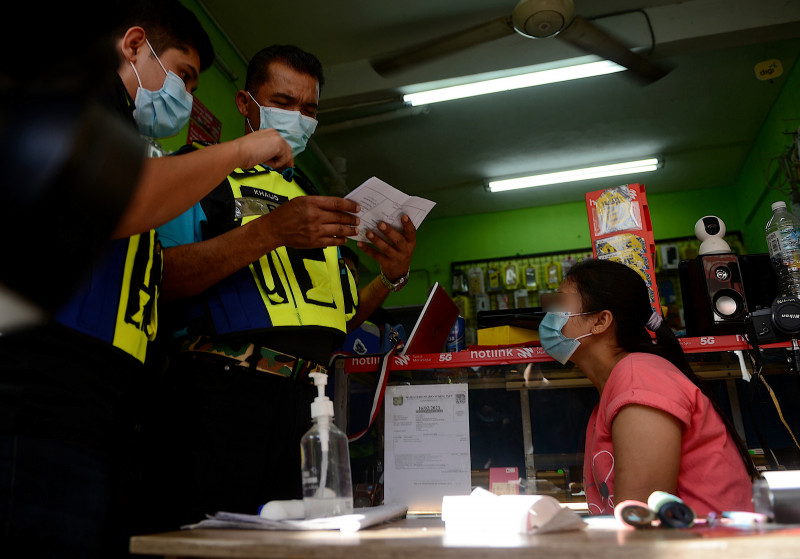
Only several days into the gambling “ban” in Kedah on January 1, Sinar Harian reported at least 14 shops selling 4D numbers discreetly, all within a 1km radius.
The report by Sinar Harian noted that the shops masked the selling of the numbers with other businesses such as restaurants, coffee shops, sundry stores, and telecommunications shops, among others.
It has been said that the majority of non-Muslims buy lottery numbers as a “hobby” and “trying one’s luck” to gain a potential windfall, and without affecting their financial well-being.
Yet, while legal, regulated, and taxed lottery companies are facing the short end of the stick, other illegal gambling apps and sites will have the opportunity to thrive. – The Vibes, January 13, 2022