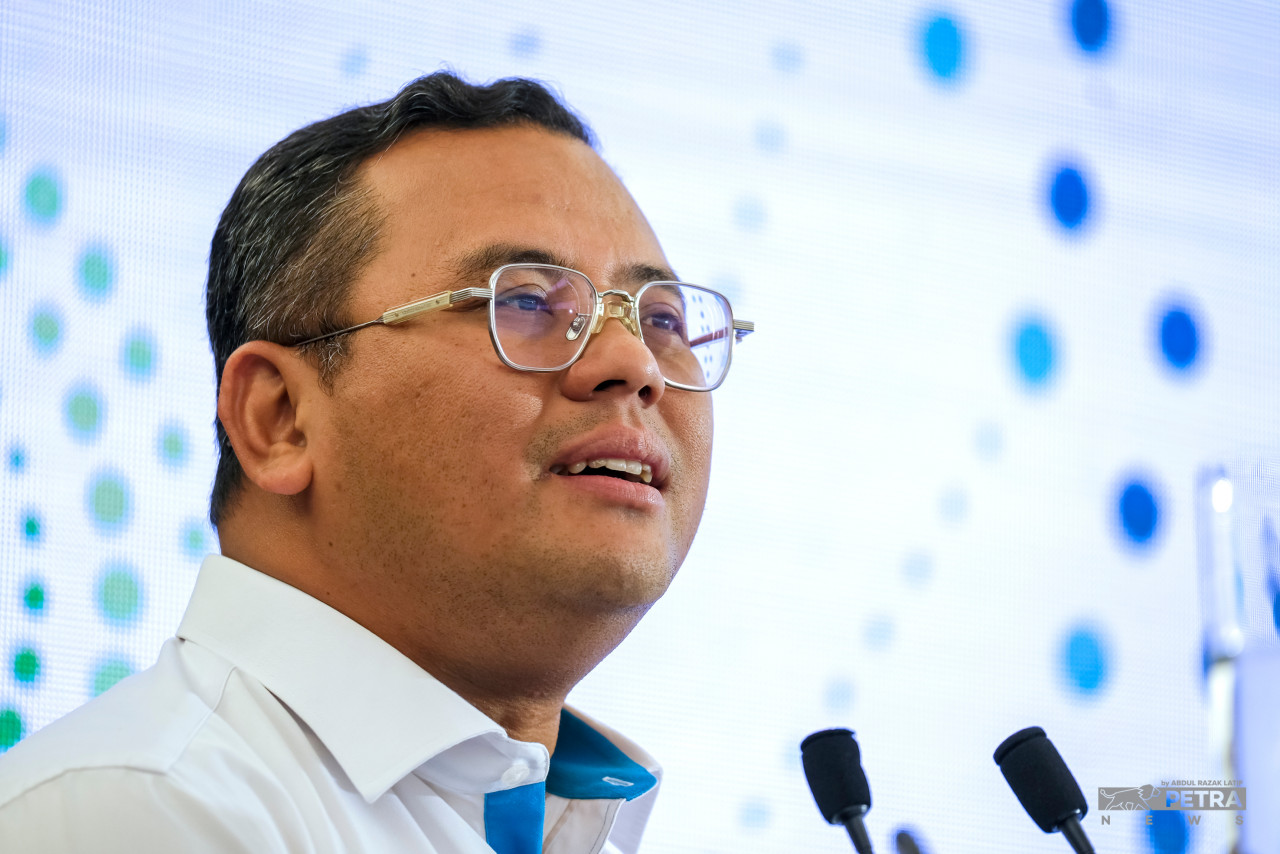
KUALA LUMPUR – The Selangor Maritime Gateway (SMG) initiative has recently been embroiled in controversy following a revelation that Selangor Menteri Besar Datuk Seri Amirudin Shari is a director of a company tasked with works for the project.
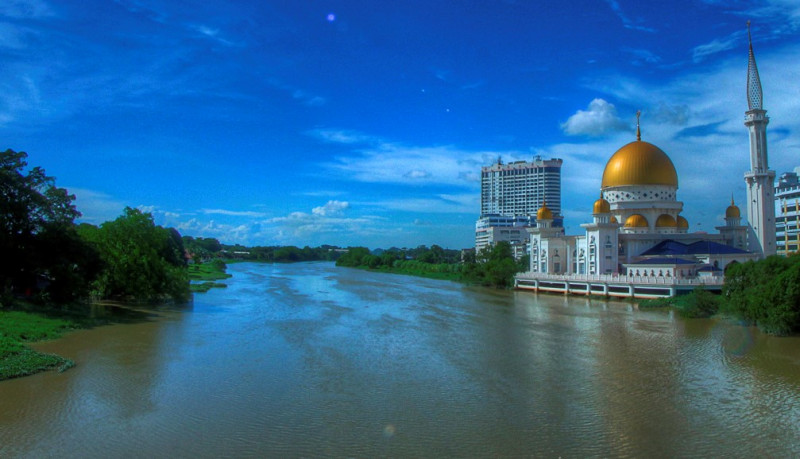
Spearheaded by Landasan Lumayan Sdn Bhd (LLSB) – a fully owned subsidiary of the state government’s major investment vehicle, Menteri Besar Selangor Inc (MBI) – SMG involves the deepening of a 56-km stretch of Sg Klang from Mid Valley City in Kuala Lumpur to Port Klang and other development works.
LLSB managing director Syaiful Azmen Nordin told the New Straits Times in 2019 that in March the previous year, a committee of Selangor state departments had approached the state government with a master plan on “river cleaning, rehabilitation, as well as injecting economic and tourism activities” along Sg Klang.
The idea, he said, was first presented to former menteri besar Datuk Seri Mohamed Azmin Ali, who greenlit the proposal to establish SMG. The plan was then also brought to Azmin’s successor Amirudin, who was purportedly “sceptical at first but, nevertheless, gave his blessings”.
Amirudin said in 2018 that SMG will see Sg Klang being turned into a new economic source for Selangor, stating that the project also aims to improve water quality at the river basin and reserve.
It was reported in the same year that LLSB, incorporated in May 2012, had been appointed by the state government to handle the SMG project, which the company claims will be “highly beneficial to the state’s economy”, as stated on its website.

SMG’s case study cites Azmin’s RM2.88-billion state budget proposal for 2016, where he was quoted saying that Sg Klang “will become a landmark to drive new economic growth and generate a maritime economic ecosystem”.
The document also outlines SMG’s implementation phases, where Phase 1 of the project (2018-2022) included continuing river cleaning activities which commenced in February 2016, rehabilitation works to improve water quality, and five “catalyst projects”.
The catalyst projects include upgrading the interactive destination playground – Pangkalan Batu Urban Park in Klang – and the construction of the eco-tourism attraction Mangrove Point in a Port Klang mangrove forest.
LLSB’s website states that the latter project, kick-started in August 2019 in collaboration with the Selangor Forestry Department, was expected to be completed by the second quarter of 2021.
News articles in November 2021, however, reported that the 28-ha park was scheduled to open its doors to the public early last year, with the project said to be “about 80% complete” then.
The delay in the roughly RM10 million project, Selangor executive councillor Izham Hashim said then, was due to the movement control order imposed during the Covid-19 pandemic.
Meanwhile, Phase 2 (2021-2031) will see “high-impact development, including surrounding islands” while Phase 3 (beyond 2031) centres around the “remaining stretch” of Sg Klang.
Local authorities such as the municipal councils for Klang, Subang Jaya, and Ampang Jaya as well as the city councils for Shah Alam, Petaling Jaya, and Kuala Lumpur are also said to be involved in the project.
The report added, however, that the involvement of six municipalities in the project has raised some issues, including “fragmented structures and policies with non-effective mutual communication”.
As a proposed solution, LLSB recommended that “collaborative governance” be created by establishing a “unified river management entity” for Sg Klang, which it said will “eradicate complex hierarchies while bettering policy output quality and achieving economic scales”.
The case study also asserted that SMG fulfils all the goals outlined in the Smart Selangor programme, which aims to make Selangor a “smart state” in Asean by 2025.
SMG, along with the Integrated Development Region in South Selangor (Idriss) and the Sabak Bernam Development Area (Sabda) schemes, are also part of the First Selangor Plan (RS-1) 2021-2021, which was introduced by Amirudin in August last year.
Besides aiming to propel Selangor’s economic growth and ensure that citizens in suburban and rural areas can enjoy access to development initiatives, Amirudin said RS-1 will assist the state in contributing 30% of the nation’s gross domestic product by 2025.
Selangor MB’s directorship in joint venture company
In November 2021, LLSB formed a joint venture (JV), dubbed Landasan Lumayan Berjaya Sdn Bhd (LLB), with Berjaya Corporation Bhd (BCorp) subsidiary Berjaya Land Bhd (B-Land) to undertake river cleaning, rehabilitation, and development in the Klang Valley.
Some of the river initiatives LLB is set to undertake include the SMG project and housing development along Sg Klang estimated to have a gross development value (GDV) of RM10 billion over eight years, with an average GDV of RM1.25 billion per annum, The Edge Markets reported then.
Based on the report, B-Land holds a 55% stake in the JV while the remaining 45% is held by LLB. Besides Amirudin, BCorp founder Tan Sri Vincent Tan and Izham are listed as directors of the latter company.

Amirudin has since denied any power abuse linked with his or Izham’s directorships, claiming instead that their presence is “to ensure the protection of state interests”.
Effective March 1, Tan relinquished his position as non-independent non-executive chairman of BCorp while B-Land will see Datuk Seri Robin Tan as its new non-independent non-executive deputy chairman and Tan Peng Lam as its independent non-executive director.
Syaiful has since clarified that parts of the SMG project do not involve fund injections from the state government, noting that the estimated cost for river-deepening works to increase the river’s capacity as a way of dealing with pollution issues is RM700 million.
Instead, he said that costs will be financed through premium liability on the to-be-developed land amounting to RM117 million, debt liability of RM54 million, and possible funding from MBI. – The Vibes, March 5, 2023