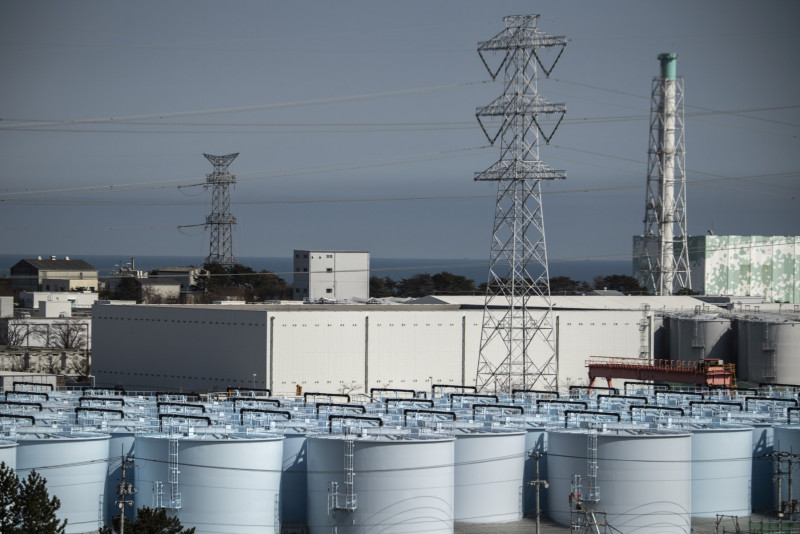

KUALA LUMPUR – As the date for the proposed release of treated wastewater from the Fukushima nuclear power plant into the Pacific Ocean nears, many alarmed parties are calling for the authorities to shed more light on the matter before it is too late.
This includes veteran environmental activist Meenakshi Raman, who said that Asean nations should raise the issue with responsible parties, as they are most likely to be affected by the release’s transboundary implications.
“The Asean environment ministers should be confronting the Japanese government over this,” the Sahabat Alam Malaysia president told The Vibes.
“This is a huge amount of waste and will contain radioactive materials that pose serious risks to human and marine life.
“There are certainly issues of contamination of marine life and the food chain. Even if the radioactive levels are small, any level of radiation has negative and long-term impacts that eventually end up in the human body,” she added.
Meenakshi stressed that Asean governments and the public should be in the loop on studies and assessments conducted regarding the proposal.
“It is incumbent on the Japanese government to make all studies public and for our authorities to also make their assessments, and not just assume that the wastewater is safe.
“This is too serious a matter to be left to the Japanese alone. The agencies of the Asean governments should have access to all information, and should conduct their own assessments,” she said.
In April 2021, Japanese Prime Minister Yoshihide Suga said the country’s government approved a plan to release over a million tonnes of treated water from the Fukushima nuclear plant into the Pacific Ocean in two years’ time.
However, two years later, the release has still not taken place, and debate on the matter is still ongoing.

As of now, tanks filled with water containing radioactive substances sit at the Fukushima Daiichi site, with plant operator Tokyo Electric Power Company (Tepco) and the Japanese government planning for release in the spring or summer of this year.
Tritium, implications for tourism
Meenakshi explained that tritium, a radioactive element that will remain in the released water, may ionise and eventually become carcinogenic, depending on the amount exposed or ingested.
She added that the treated wastewater will expose fish in the region to radiation and make them unsuitable for consumption, although the effects may not be immediate.
“The effects on humans do take time to appear. We have to err on the side of caution and minimise exposure to radioactive material – even in low doses – as much as we can to not cause unnecessary risks.”
Following the “contamination” of the waters, Meenakshi theorised that tourism in affected countries could be jeopardised.
This comes from tourists’ fear of the effects and risks they will be exposed to through swimming or consuming fish caught in the affected areas.
“It is highly irresponsible of Japan to dump the contaminated water and cause negative impacts on countries whose economies are dependent on tourism,” she said.
The International Atomic Energy Agency (IAEA) provides ongoing analyses of reports by the Japanese government on the recovery progress at Tepco’s Fukushima Daiichi nuclear power station.
Its latest report, dated April 10, revealed that radiation levels in the marine environment are low and relatively stable. Similar observations were made regarding food supply safety.
However, as the assessment relies on data provided by the Japanese government, the IAEA encouraged the continuous monitoring of sea areas and food restrictions.
Criticism by environmental organisations

In response to the Japanese government’s announcement, international environmental non-governmental organisation Friends of the Earth (FoE) Japan condemned the former’s preparation to release wastewater into the ocean, opining that the decision sidelined numerous stakeholders.
In a statement, FoE Japan called on the government to disclose information on the total amount of radioactive material contained in the treated water, as well as to conduct open discussions on alternatives and risks to the preparation.
It said that management of the radioactive substances should be done centrally, and not dispersed into the environment.
Instead of releasing the water into the ocean, the organisation said it should be stored on land, either in large tanks via solidified mortar or by expanding the site grounds.
This view was echoed by Greenpeace, which lambasted the G7 nations for allegedly neglecting the protection of the marine environment in favour of a plan that violates the UN Convention Law of the Sea.
Greenpeace’s East Asia chapter also pointed to an analysis that debunked claims regarding the discharge period of the radioactive debris being definite.
“The Japanese government is desperate for international endorsement for its Pacific Ocean radioactive water dump plans.”
“It has failed to protect its own citizens, including the vulnerable fishing communities of Fukushima, as well as nations across the wider Asia Pacific region,” the organisation said in a statement. – The Vibes, May 28, 2023