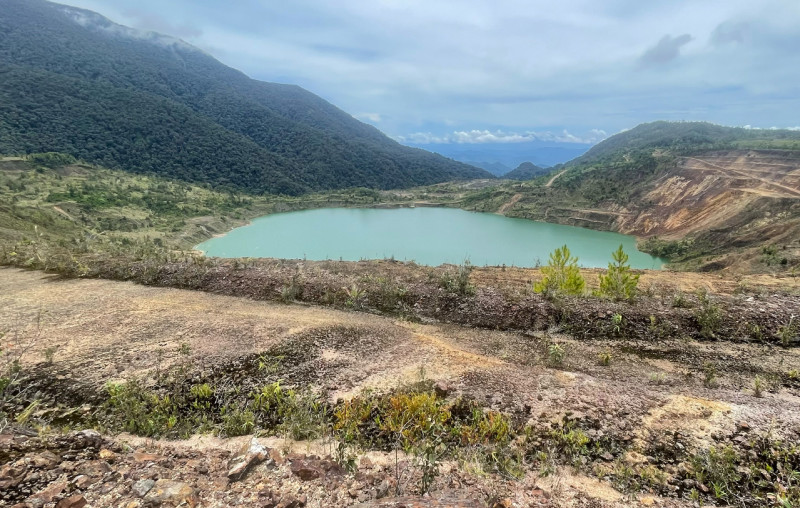

KOTA KINABALU – A group of researchers has reported positive outcomes from an experiment aimed at decontaminating the acidic soil in the abandoned Mamut copper mine pit in Sabah that is at the centre of serious environmental concern.
The state government has expressed intent to turn the giant mining area into an ecotourism spot. However, it was announced last year that the cost to treat the heavily acidic pit and its water would come up to around RM500 million.
Universiti Teknologi Mara senior lecturer Julenah Ag Nuddin said her research team has successfully reduced heavy metal content in the soil from the former mine and grown a plant via the microbe-mediated phytoremediation approach in a pot trial.
Julenah said the microorganisms were meant to break down the heavy metal content in the soil, transforming into nutrients for the plant in the process.
She found the process cut down the remediation time which was 50% faster than relying on hyperaccumulator plants.
“We found that heavy metals were immobilised and were also stopped from leaching out of the soil.
“It also changes the pH balance to be more neutral, providing nutrients for the plant to grow. If you rely solely on the plant itself, the process will be quite slow,” she told The Vibes yesterday.
Julenah was met during a scientific seminar organised by Sabah Parks, which now manages the abandoned mine.

The seminar was held following the launch of the scientific expedition programme organised by the body in August last year to redevelop Mamut in Ranau as an ecotourism spot.
Acidic water and environmental danger
The now abandoned Mamut mine was operational from 1975 to 1999. Although it was Malaysia’s only copper mine, there were other minerals extracted from there as well, including some gold and silver.
There have since been serious concerns about the negative impact brought about by the mining operations and geological excavations on the environment around that area.
Located near Kundasang in Ranau, its 2,112-ha area was gazetted as a nature reserve in 2022.
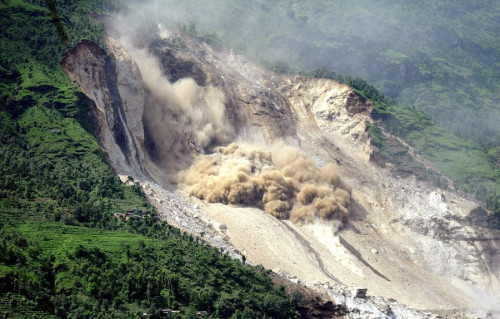
After the deadly 2015 quake in Sabah, there were concerns that the quarry pit walls would collapse, leading to the release of toxic waters, while threatening the safety of more than 20,000 people from 40 villages.
Concerns had also been raised that the contaminated water would leach into the local waterways – the majority of residents rely on gravity-fed water sourced from nearby rivers.
There was also a short-lived idea to treat the acidic water in the man-made crater to provide water to people.
Julenah said chicken manure and other organic compost had been used in the pot trial and it is believed this could be a feasible solution to be implemented on the field.
“These metals are complex within the soil and must be broken down into ions for plants to extract them since plants cannot directly utilise complex soil metals.”
“We can use other types of bio-compost or leaf litter. Fallen leaves can also help break down heavy metals as they also contain microorganisms,” she said.
Julenah proposed planting in abundance hyperaccumulator plants around the mine area, as the leaves shed by these plants can potentially harbour the microorganisms necessary for breaking down contaminants.
However, she acknowledged that the identification of the specific microorganisms responsible for digesting heavy metals in their trial is still an ongoing pursuit.
Still, she believed that natural-based solutions such as these are far more practical than physical and chemical approaches that can be costlier and involve the introduction of foreign substances, which could lead to other possible adverse side-effects.
Meanwhile, Julenah also proposed hyperaccumulator plant planting activities as part of the Sabah government’s effort to redevelop the former copper mine into an ecotourism spot, adding that such activities should be rightfully educational and enjoyable.
More than 50 researchers from 13 universities and government agencies had taken part in the scientific study last year, involving experts in biology, hydrology, geology, sociology, toxicology, biodiversity, geophysics, air quality, water quality and phytoremediation. – The Vibes, August 29, 2023