WHEN CHINA slapped punitive sanctions on Australian goods in retaliation to Canberra calling for an inquiry into the origins of Covid-19, it was a wake-up call.
Beijing's economic coercion highlighted the need for Australia to diversify its export partnerships and to re-assess its reciprocal trade agreements with other trading partners.
Southeast Asia presents a potential USD$3 trillion opportunity.
The region is predicted to become the world's fourth-largest economy by 2040, after the United States, China and India. Its large and growing population is projected to generate greater spending on lifestyle, education and housing.
As the large population ages, there will be increasing demand for health and aged care services, too.
Australia already has relationships with the region, which it can now leverage.
Over the past two decades Australia has committed to negotiating a raft of preferential trade agreements with a range of economic partners, most of whom are in the Indo-Pacific region.
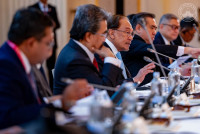
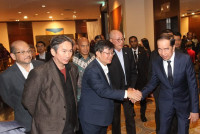
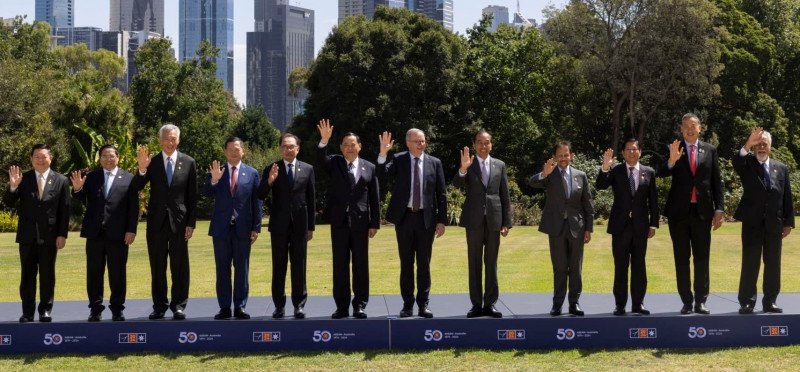
The 10 countries that form the Association of Southeast Asian Nations (Asean) enjoy economic ties with Australia that stretch back 50 years, since Australia became Asean's first dialogue partner in 1974. This week's summit in Melbourne marked that partnership.
Australia's trade and investment partnerships include significant bi-lateral, and regional preferential trade agreements with Southeast Asia including bi-lateral Free Trade Agreements (FTA) with Singapore (2003), Thailand (2005), Malaysia (2011), and Indonesia (2020); and overlapping regional FTAs in Asean — Australia New Zealand Free Trade Area (AANZFTA), Comprehensive and Progressive Trans Pacific Partnership (CPTPP), and the Regional Comprehensive Economic Partnership (RCEP).
Many of these agreements have recently been upgraded to further liberalise the trading relationships.
These agreements in many cases give Australian companies substantial comparative trading, investment, policy and government advantages to trade in markets in Southeast Asia. Australia has weathered the geopolitical storms of the past five years relatively well, aside from the ongoing challenge to reign in stubbornly high consumer inflation.
Economic growth has returned to pre-pandemic levels, unemployment has fallen to the lowest levels since 1974, and merchandise trade has continued to soar to new heights.
But Australia's ongoing prosperity and security is intimately linked to the prosperity and security of its neighbours, just as their security and prosperity is linked to ours.
So it is unsurprising that the Australian government's Southeast Asia strategy, launched in September 2023, focuses on growing economic ties with the area in the years to 2040.
It has a clear message for Australian companies: Southeast Asia is open for business.
Unique economic profile
While Southeast Asia does not have the same economic clout as China, its unique economic profile holds its own opportunities.
Its market size is significant; it's growing to become an economic powerhouse; and more consumers are joining the middle class every year. In Indonesia alone, an estimated 76 million will join the consumer class by 2030.
The region is a melting pot of communities with a population of over 660 million and a mixed range of levels of economic development. It encompasses high-income economies including Singapore and Brunei Darussalam; upper-middle income economies such as Malaysia and Thailand; and lower-middle income economies, such as Indonesia, Philippines, Vietnam, Cambodia, Laos, and Myanmar.
Southeast Asia has merchant bankers, underground train systems, and high-rise apartments, with increasing demand for consumer goods each year. A visit to large cities like Jakarta, Bangkok, Kuala Lumpur and Manila will showcase many of the mod cons of life in modern Australia, such as large shopping malls, luxury clothing outlets, rooftop bars, and thriving metropolises.
Currently, Australian businesses are not making the most of these opportunities.
Australia's Economic Strategy to 2024 makes explicit reference to the low levels of direct investment by Australia in Southeast Asia, identifying that "Australia's direct investment into Southeast Asia has stagnated in recent years, while overall direct investment into the region from other countries has increased materially".
Australia is also well-positioned to support Southeast Asia through trade and investment, and can help our neighbours realise the prosperity through economic growth.
The strategy points out that Southeast Asia is estimated to need USD$3 trillion of significant capital investment in critical infrastructure in the next 16 years.
This provides a significant opportunity for Australian superannuation funds, and other significant investors looking to leverage the emerging middle- class economic growth in the region through the infrastructure growth needs of the fastest growing economies in Asia.
Looking to Southeast Asia for trade and investment should be a part of every Australian company's international strategy as a priority, if for no other reason than to provide the necessary diversification every business needs to guard against the geopolitical risks in trade. – 360info, March 8, 2024
Dr Nathan Gray is a trade economist. He is a senior visiting fellow at the Institute for International Trade, University of Adelaide, and managing partner of AsiaAustralis, an Australian based strategic management advisory firm. Dr Gray has provided strategic, industry and trade policy advice across Asia over the past 15 years, in a range of sectors for clients including the World Bank, APEC, the Australian Government, and a range of corporate and industry organisations.
Published under Creative Commons and in partnership with 360info.org.