JAKARTA – Ten years into its hugely ambitious Belt and Road Initiative, China is facing a reckoning as the combination of Covid-19 disruptions, cost blowouts, and domestic issues force Beijing to reassess the project’s scale.
Launched in 2013 to enhance connectivity and promote economic cooperation beyond Asia and drawing inspiration from the historical success of the Silk Road, the initiative was one of the boldest economic projects ever conceived, spanning more than 140 countries and requiring around US$8 trillion (RM37.4 trillion) in investment.
The Covid-19 pandemic forced China to reassess the initiative’s priorities and scale. China now navigates an inward-looking economic policy, and the outcomes of this reassessment will shape not only Belt and Road infrastructure projects but the economic and geopolitical landscape in the Pacific and beyond.
Key challenges include astronomical costs, debt sustainability, market access, and disruptions to the Chinese domestic economy, as illustrated by the Evergrande case.
Overcoming these obstacles will require a soft power strategy that leverages regional cooperation and economic partnerships and embraces technological advancements.
Rebranding the initiative as a regional collaboration and exploring innovative strategies can help drive its momentum and adapt to changing circumstances.
While the Belt and Road still holds great potential, there are several challenges that could hinder its success in the wake of Covid-19.
Costs
The estimated trillions of dollars in costs pose a significant burden on participating countries.
Although China has established financial mechanisms such as the Asian Infrastructure Investment Bank (AIIB) and the Silk Road Fund, concerns persist regarding the sustainability and availability of funding sources. The scarcity of capital for both China and recipient countries can impede the pace and scale of project implementation.
Debt traps
The initiative’s reliance on loans and investments can lead to concerns over the ability of recipient countries, especially those with weaker economies, to manage and repay substantial loans associated with Belt and Road projects.
This can trap countries in a cycle of debt, compromising their long-term economic stability and sovereignty.
Ensuring sustainable debt levels and providing adequate financial safeguards are essential to mitigating the risk of debt distress.
Collaboration problems
The diverse economic landscapes of participating countries pose challenges to achieving balanced economic development.
Disparities in income levels, technological capabilities, and industrial structures can hinder collaboration and create uneven benefits among partners.
Efforts should be made to promote inclusive growth, foster technology transfer, and support capacity building to address these imbalances.
Market access
Various barriers, such as trade restrictions, inadequate infrastructure, and regulatory complexities, can impede the smooth flow of goods, services, and investments.
Addressing non-tariff barriers, harmonising standards, and streamlining customs procedures are crucial for creating a conducive environment for cross-border trade and investment. Ensuring fair and open access to markets will facilitate economic integration and bolster the success of the initiative.
China’s transparency problem
Uncertainty surrounding China’s domestic economy and the potential for a slowdown in economic growth may make investors hesitant to commit to large-scale infrastructure projects.
For example, the Evergrande Group, one of China’s largest property developers, faced significant financial difficulties over the years, raising concerns about its ability to repay its massive debt obligations.
The potential repercussions of the Evergrande crisis could disrupt China’s domestic economy and have implications for its overseas investments, including those related to the Belt and Road project
The Evergrande case has also highlighted concerns about corporate governance and transparency in China.
The Belt and Road Initiative relies heavily on partnerships and collaborations between Chinese companies and their international counterparts, so questioning the credibility and trustworthiness of Chinese firms involved in BRI projects could lead to increased scrutiny and more stringent due diligence processes for potential partners.
Obstacles in partner nations
Large-scale infrastructure projects may also encounter country-specific obstacles, such as regulatory issues, political disagreements, public opposition, and difficulties in securing funding.
Indonesia’s high-speed rail project, which will finally become operational this year, was delayed for more than four years due to financing, land acquisition, and disagreements between the Indonesian government and the Chinese consortium responsible for construction.
These setbacks can disrupt project timelines, lead to cost overruns, and even result in project cancellations.
The way forward
The road ahead may be uncertain, but new strategies and approaches could shore up its future.
The initiative is often perceived as a manifestation of Chinese geopolitical dominance in the region, particularly by the West. This is understandable given China’s new-found assertiveness.
While China has moderated its approach in recent years, the initial rapid pace of development has created a psychological barrier for many potential collaborators. Friend-shoring activities further complicate the situation.
Economic partnerships
One potential solution could be a soft power strategy that leverages economic partnerships and embraces technological advancements. For instance, a cloud Silk Road strategy could provide a completely innovative approach.
More regional trade cooperation may also hold the key.
If big collaborators such as Japan and Korea were to join the Free Trade Agreement with fellow Asean countries, risks to regional welfare would be mitigated – as opposed to a scenario where China alone were to enter the Free Trade Agreement.
In order for the Belt and Road Initiative to gain momentum, China needs to promote collaboration and rebrand it as a regional initiative instead of persistently pushing the original version.
By acknowledging and effectively tackling these obstacles, China can work towards the initiative’s ambitious goals of enhancing connectivity, promoting economic cooperation, and facilitating regional development. – 360info, July 9, 2023
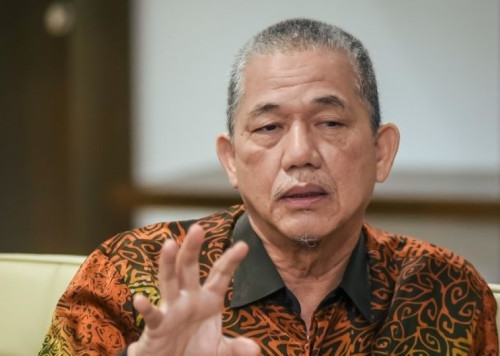
Fithra Faisal Hastiadi is a lecturer at the Faculty of Economy and Business, Universitas Indonesia. His research interests are monetary economics, international trade, development economics, political economy, and disruptive innovation. He published Trade Strategy in East Asia From Regionalisation to Regionalism and Globalisation, Productivity and Production Networks in Asean: Enhancing Regional Trade and Investment, under Palgrave Macmillan in 2016 and 2019. He is the executive director of Next Policy (think tank).
Published under Creative Commons and in partnership with 360info.org