THE Energy Commission of Sabah (ECoS) is reviewing a proposal for a tiered tariff system in the state. Under this system, electricity rates would vary based on service reliability and regional economic status.
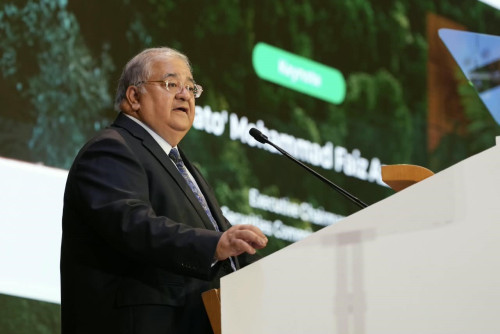
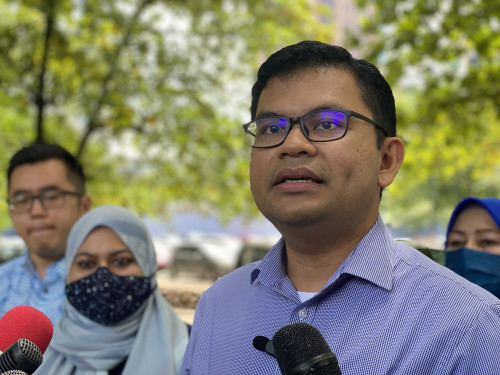
ECoS Chief Executive Officer Datuk Abdul Nasser Abdul Wahid said the commission works closely with authorities to ensure a sustainable power supply.
"We will always collaborate with the authorities to find the most sustainable way of supplying power," he said during a media engagement event in Kota Kinabalu.
Abdul Nasser’s remarks came in response to Sabah Electricity Chairman Datuk Wilfred Madius Tangau, who recently announced that the state utility firm is studying the implementation of a differentiated tariff system.
The suggestion comes as several areas in Sabah, identified by low socioeconomic status, could benefit from lower tariffs, while others have recorded lower System Average Interruption Duration Index (SAIDI) scores.
Abdul Nasser noted that the cost of providing electricity varies significantly depending on location, especially between rural areas and industrial zones near power plants.
"Naturally, the cost of supplying electricity to rural areas is higher than to areas near industries, where power plants are nearby," he said.
He added that the new tariff system would be designed based on the service cost, ensuring there are no hidden costs.
“The tariff will be aligned with the cost of service, without additional hidden charges,” he said.
Abdul Nasser also assured that the targeted subsidy system would remain in place to support those in need.
"We are working with the state government to ensure that those who require assistance continue to receive support through targeted subsidies," he said.
Putrajaya currently subsidises electricity in Sabah with RM200 million to RM300 million annually.
From a business standpoint, Abdul Nasser said ECoS would take margins and profitability into account to ensure that Sabah Electricity remains financially viable.
"We are considering a formula to balance margins, ensuring that costs and revenue are aligned to avoid potential losses," he added.
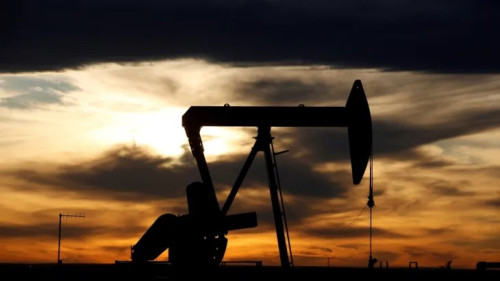
On the state’s energy transition, Abdul Nasser said Sabah remains heavily reliant on gas, which accounts for more than 80% of its energy mix.
While gas is currently the cheapest source of electricity generation, he acknowledged that the shift toward renewable energy (RE) is progressing, though at a gradual pace.
"Building up the renewable energy sector will take time," Abdul Nasser explained.
Sabah benefits from a special gas price of RM6.40 per unit, significantly lower than the market rate of RM50 per unit.
"So, our gas is cheap, and the electricity we generate from it is also cheap. However, we must plan as gas is a finite resource," he added.
Sabah is moving towards alternative energy sources, with hydroelectric power being a key focus and ECoS is finalising the Sabah Hydro Development Masterplan.
Abdul Nasser said it looks "promising," with potential sites like Kinabatangan and Mamut that could generate up to 1,000 MW of power generation through hydropower.
The state is also exploring its solar potential, with many underdeveloped lands suitable for solar farms.
However, Abdul Nasser pointed out the challenges of solar energy’s intermittency, emphasising the need for battery storage systems to ensure reliability.
Looking ahead, ECoS aims to balance gas and renewable energy in a 50:50 mix.
Abdul Nasser said gas prices would rise as exploration moves to deep-sea areas when shallow water resources are exhausted.
He also confirmed that Sabah is on track to meet its 2030 energy transition goals, with all projects already awarded.
"We are still open to investors beyond 2030," he said as he pointed to opportunities in Ocean Thermal Energy Conversion (OTEC). - October 30, 2024