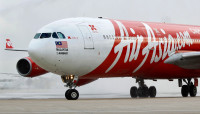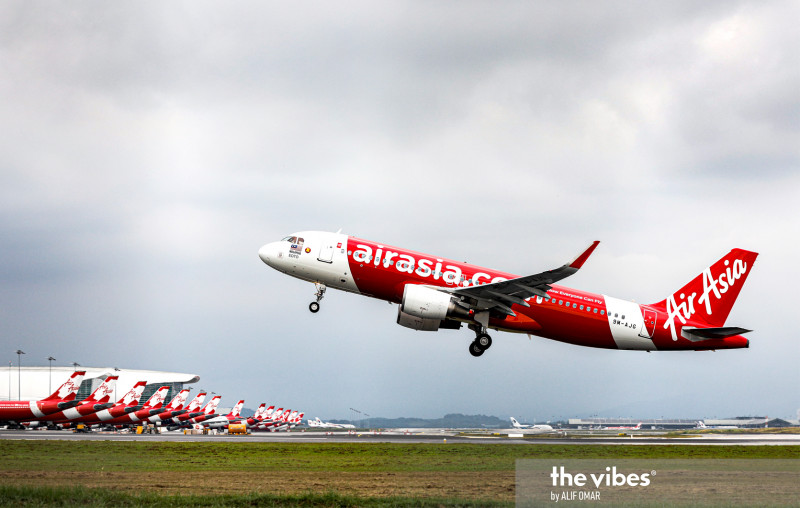
KUALA LUMPUR – AirAsia Group Bhd saw its net loss narrowing to RM580.06 million in the second quarter (Q2) that ended June 30 from RM992.89 million in the same period last year, primarily due to the absence of fuel swap losses and gains in foreign exchange.
Revenue jumped to RM370.61 million from RM142.09 million, driven by better cargo revenues, it said in a filing with Bursa Malaysia.
The airline group’s Teleport unit’s revenue rebounded year-on-year (y-o-y) as it strategically grew its cargo network to establish a presence in the market by operating more charter flights, and also with more delivery services.
“Continuing the revenue growth momentum in Q1, the revenue from Teleport tripled compared with Q2,” said AirAsia Group.
It said Teleport has sacrificed margins to significantly scale up certain routes on charter cargo flights to gain market share and to achieve a consistent and reliable cargo network, while the passenger network operated by AirAsia had minimal operations.
Revenue for the airline business in Q2 was RM187.8 million, almost triple the amount in the previous corresponding period, when the group’s fleet hibernated for most of the quarter following the hit by Covid-19 in early 2020.
In Malaysia, travel demand remains constrained due to the lockdown and interstate travel restrictions imposed since January.
However, through stringent capacity management, AirAsia Malaysia reported a load factor of 64% in Q2.
Meanwhile, aided by the Q1 momentum, AirAsia Indonesia achieved 70% of pre-Covid-19 domestic capacity in May.
However, this was short-lived as it entered hibernation mode in July in support of containment efforts by the government as the number of infections increased.
AirAsia Philippines saw a strong rebound that continued into Q2 with a load factor of 78%, achieving a high load factor of 83% in June.
Thai AirAsia reported a lower revenue of 1.08 billion baht compared with 2.22 billion baht in Q2 of 2020 due to the absence of gains on a foreign exchange of 1.81 billion baht recognised in revenue.
Excluding the gain on foreign exchange, revenue from sales and services increased to 983.2 million baht in Q2 due to the low base caused by fleet hibernation in April last year.
The group said Thai AirAsia’s performance remains subdued due to external factors such as a more severe domestic Covid-19 outbreak than expected, including a new wave of infections that erupted in April.
“With travel restrictions still in place in most of our operating entities, the group continues to actively manage capacity and will continue to ensure cash burn remains low and cost optimisation measures continue to be implemented.
“We remain focused and committed to further strengthening our domestic position at this juncture as we await developments to international air travel,” it said.
Going forward, AirAsia Group expects to see “improved stability in our operations as vaccinations continue to be rolled out in phases across all key markets, coupled with better education and testing, alongside strong support for leisure travel bubbles among low-risk countries and territories, and the push for global digital health passports”.
In addition, Teleport is focusing on building up a reliable cargo network and 24-hour delivery end-to-end infrastructure, and is in the midst of leasing a freighter aircraft.
Teleport has converted two A320 passenger planes to cargo-only planes, and is currently operating out of Malaysia and Thailand.
“We are also encouraged by the early signs from our digital transformation to become Asean’s super app of choice, and expect our digital revenues to contribute around 50% to the group in five years.”
To preserve cash, the group is in negotiations with lessors to restructure lease terms and have, to date, successfully secured some restructured leases in Q3. – Bernama, September 8, 2021