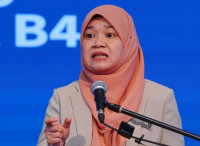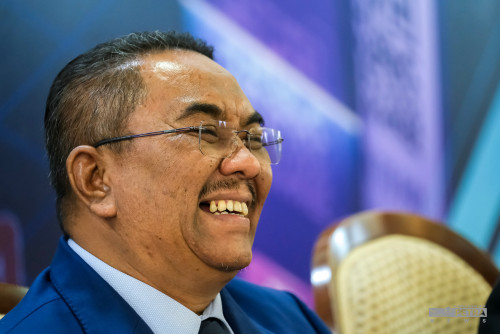
EDUCATION Minister Fadhlina Sidek says the ministry’s current direction is yielding clear progress, particularly in teacher placement, upgrading dilapidated schools, and reducing administrative burdens on educators.
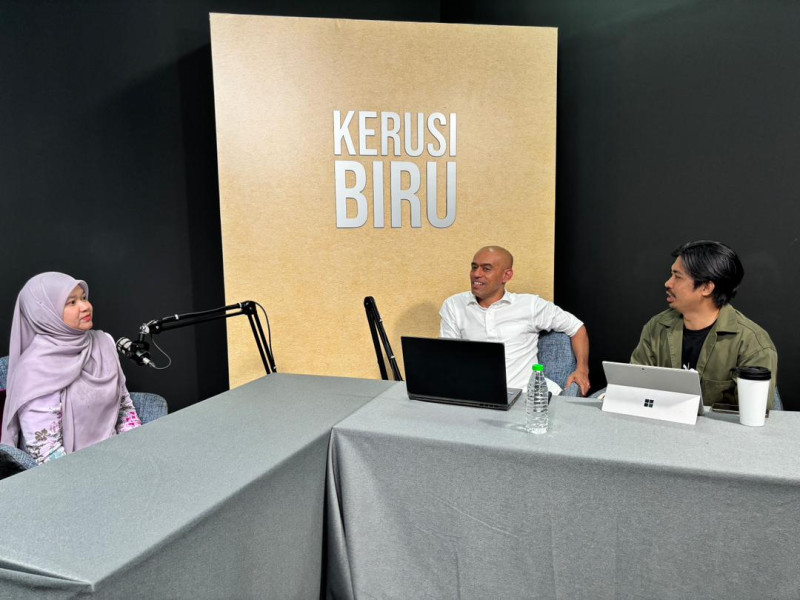
Speaking on the Kerusi Biru podcast, Fadhlina stressed that addressing teacher shortages remains a top priority as it directly affects classroom learning.
“It would be a disaster if we do not have enough teachers, and it will impact students in the classroom,” she said. “But the Madani government has managed to fill 98% of teaching positions over the last three years. This effort cannot stop — we must continue addressing shortages back to back.”
Dilapidated Schools See Strong Improvement
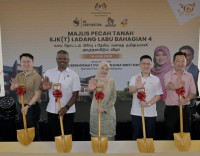
Fadhlina highlighted significant progress in resolving issues involving dilapidated schools, noting that the government has consistently allocated funds across three consecutive budgets to tackle the problem.
“No previous administration has shown this level of commitment in addressing dilapidated schools,” she said, adding that current upgrades demonstrate “very good progress”.
Reducing Teachers’ Workload
According to Fadhlina, easing teachers’ workload has been a longstanding challenge inherited by every government, but the ministry has taken concrete steps to improve educators’ wellbeing.
“In the first year of the Madani government, we introduced seven measures to reduce teachers’ workload. In the second year, we introduced the Teacher Wellbeing Index,” the PKR lawmaker said.
She added that the ministry has also abolished the requirement for teachers to fill in the SSDM student behaviour form, a move aimed at further reducing administrative tasks.
The ministry is also working to reduce the number of students who choose not to sit for the Sijil Pelajaran Malaysia (SPM) examination.
“In the first year, the number was around 10,000. In the second year, it dropped to 8,000,” Fadhlina said.
“We are studying further steps to continue lowering this figure.”

No Plan to Abolish SPM
Fadhlina dismissed speculation that the government intends to abolish SPM, stressing that it remains Malaysia’s most important school-leaving qualification.
“The government has no intention of abolishing SPM. It is the highest certification in Malaysian schooling,” she said.
She noted that while public debate has arisen due to the abolition of UPSR and PMR, these assessments were fundamentally different. UPSR functioned as a test, while PT3 — which replaced PMR — was a form of ongoing assessment.
“We still have exams like UASA, as well as special assessments for entry into MRSM and fully residential schools,” she added.
Fadhlina reiterated that modern assessment methods are designed to capture students’ abilities more holistically rather than relying solely on standardised tests.
“Assessments are more effective because they do not just measure students through exams.”
“Every child has different attitudes and talents, and holistic assessment helps us understand them better,” she said. – November 21, 2025