KUALA LUMPUR – The authorities have been taken to task for practising double standards by selectively clamping down on protesters against the imposition of Jawi in schools, but not doing anything about those opposed to the development of a Chinese school recently.
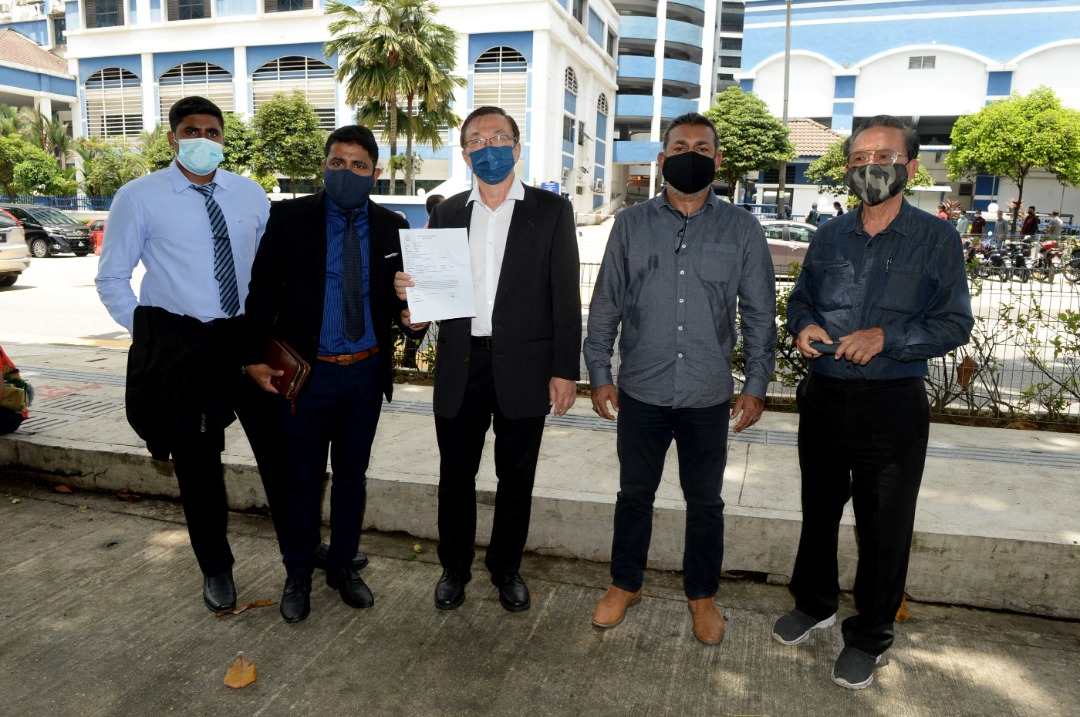
Malaysian Chinese Language Council chairman Datuk Eddie Heng described the contrasting police actions as distressing.
“We believe vernacular schools are not a stumbling block to unity.
“We are troubled by the case of selective punishment by the government, where in Jerantut, Pahang, a group of peaceful demonstrators, who were protesting against the use of Jawi in the Bahasa Malaysia textbook, were arrested and charged in court for illegal assembly,” he said, referring to an incident that occurred in August 2019.
“But when a group of protesters headed by the Subang Umno division chairman gathered in Bandar Kinrara in Puchong (on April 18 this year) to protest against the building of a vernacular school there, nothing was done by police.”
Heng was addressing a press conference today on “Empowering unity and preserving the rights of vernacular schools” at the Kuala Lumpur-Selangor Chinese Assembly Hall here.
Present were Gabungan Seni Khat Action Team (Sekat) secretary Arun Dorasamy and educationist Prof Mohd Tajuddin Mohd Rasdi.
Heng said vernacular education has been in existence for nearly 200 years, even before Malaysia gained independence, and is provided for in the federal constitution.
All vernacular schools have the same curriculum and textbooks, and follow the Education Ministry’s guidelines, he said.
“Their system is the same (as national schools),” he said, stressing that there is no problem in attending vernacular schools.
“The only problem is with politicians who distort the truth.”
Tajuddin was emphatic in his remarks that the rights of these schools cannot be challenged.
Malaysia’s education system does not have to rely solely on the national curriculum, he said, as there are also Chinese and Tamil schools, international schools, madrasahs and tawfiq schools.
“There are so many advantages to learning in different languages.
“And, what is most important is that Malaysians (who are multilingual) can work overseas, as they have had the opportunity of a global education in these various types of schools.”
Ask why national schools are unpopular
Arun said vernacular schools are treated as “punching bags”, with claims that they are not conducive to unity, despite the facts showing otherwise.
“There are 7,779 schools, of which 1,826 are vernacular schools, of both Chinese and Tamil denominations.
“Of this number, 1,299 are Chinese schools and 527 are Tamil schools.”
He stressed that 20% of non-Chinese pupils attend vernacular schools.
“How can it be that vernacular schools contribute to disunity?
“In fact, it is the other way around, as vernacular schools are making a great contribution to Malaysia.
“We have to ask ourselves why national schools are not popular.”
He questioned if it is due to the excessive religious influence in national schools, and called for soul-searching on the matter.
“Vernacular schools are popular because of the quality of teaching. If not, why do the non-Chinese choose to send their children to vernacular schools?”
Malaysian children should be educated according to global, not local, standards, he added.
Heng, Arun and the others present later lodged a report at the Dang Wangi police station on the protesters opposed to the establishment of a Chinese school in Bandar Kinrara. – The Vibes, April 23, 2021









.JPG)