PRIME MINISTER Datuk Seri Anwar Ibrahim stressed for an end to the culture of setting up and sustaining unprofitable companies, urging immediate action to close such entities under government-linked investment companies (GLICs) and government-linked companies (GLCs).
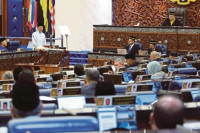
Speaking during the Dewan Negara’s question-and-answer session today, Anwar emphasised that the government is now implementing stringent oversight on these companies to ensure they serve their intended purpose.
"The government is actively monitoring GLICs and GLCs, and if any of them are not generating profits, we will close them down," he said.
While acknowledging that only a few GLICs and GLCs have been closed to date, the Prime Minister pointed out that many of these closures have involved small entities under government agencies such as the Rubber Industry Smallholders Development Authority (Risda) and the Federal Land Development Authority (Felda), which did not meet their original objectives.
“These companies were not fulfilling the requirements they were set up for. If they are unprofitable, we will shut them down,” Anwar added.
The Prime Minister’s comments reflect a growing push towards accountability and transparency in the management of state-linked companies.
He explained that maintaining companies that continually incur losses—especially when they involve paying board members and providing allowances—is simply not sustainable. “We feel this practice is unbeneficial and must end,” he stressed.
Anwar was responding to a supplementary question from Senator Datuk Mustafa Musa, who inquired about the effectiveness and governance of GLICs and GLCs, particularly in their investment operations and performance.
The Prime Minister assured that monitoring of these companies has become more rigorous. “I can guarantee that in 2023, comprehensive and stricter monitoring was implemented. Management will be held accountable for any weaknesses that need addressing," he stated.
On the matter of procurement, Anwar revealed that GLICs and GLCs had spent RM59 billion, accounting for 32 per cent of the total expenditure from 2020 to 2024, in supporting Bumiputera companies.
This includes creating job opportunities, providing training, and contributing to education through Bumiputera GLC vendor development programmes.
"For instance, a subsidiary of UEM Group uses the Malaysian Productivity Business Excellence framework to help businesses gain certifications like ISO and participate in prestigious industry awards such as the Global Performance Excellence Award to boost their competitiveness," he explained.
Furthermore, Anwar highlighted that GLICs and GLCs are also focused on employee welfare and community development, offering support to vulnerable groups, disaster-affected families, and even contributing to the revitalisation of Kuala Lumpur.
He reiterated that under the Bumiputera Economic Transformation Plan 2035 (PUTERA35), GLICs and GLCs have specific roles to play in driving investments into high-potential Bumiputera companies, enhancing vendor development, and advancing Bumiputera human capital.
In another key focus area, Anwar underscored the importance of developing local talent in blockchain technology.
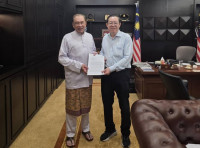
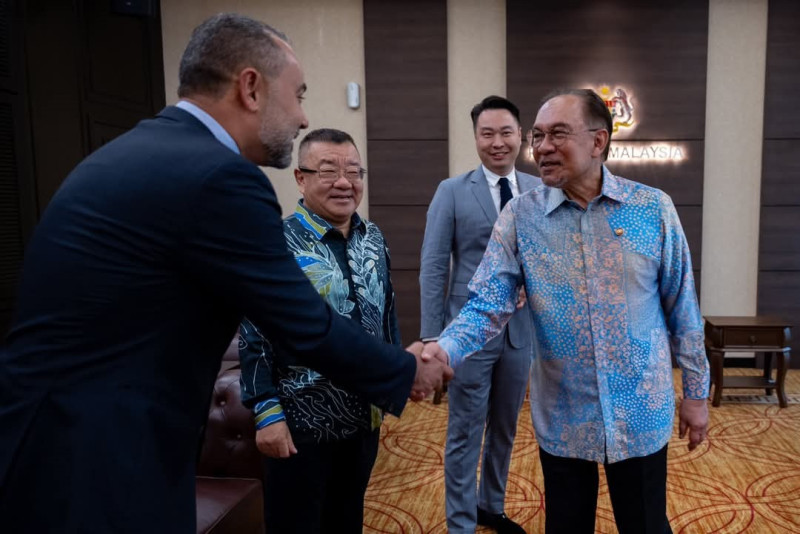
He recently met with representatives from Klickl, a company operating in the digital and blockchain ecosystem, to discuss how Malaysia could leverage this emerging technology.
“We discussed the latest global developments in blockchain, including model frameworks and regulations that Malaysia could adopt to enhance our own regulatory landscape,” Anwar noted in a Facebook post.
Highlighting the growing potential for blockchain across various sectors, he said: "Blockchain can also be used in government services and the halal industry, which is an exciting prospect for our country," he concluded. – March 20, 2025