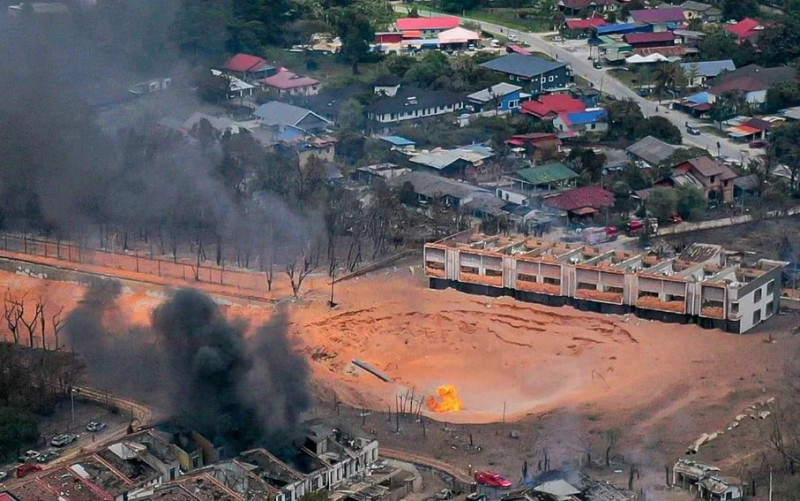
ESTIMATED losses from the underground gas pipe explosion in Putra Heights, Subang Jaya last Tuesday could reach over RM1 billion, raising a significant question of who will compensate the more than 250 affected homeowners.
Economic expert Prof Emeritus Dr Barjoyai Bardai, from Universiti Tun Abdul Razak (Unirazak) said the amount includes physical damage to residences, destruction of vehicles, and various household items including electrical goods, as well as a comprehensive decline in property value in the affected areas.
He said that every house purchased at a price of around RM500,000 to RM1 million might incur multiplied losses when considering vehicle damage, furniture, household appliances, and structural repairs.
Infrastructure such as wiring and piping systems are also considered no longer usable due to exposure to high heat pressure exceeding 1,000 degrees Celsius.
"The cost of rebuilding the infrastructure, including piping and drainage systems, also contributes to the significant loss.
"In fact, it is highly likely that the entire area will need to be evacuated and rebuilt to ensure long-term safety," he said when contacted by Harian Metro.
He said that the government had earlier announced an immediate aid of RM5,000 to each affected family, but the amount was insufficient because the estimated minimum loss for each family reached RM100,000.
According to Barjoyai, the incident was not an ordinary accident or disaster, but rather stemmed from risks related to business infrastructure and should be fully borne by the responsible parties.
"It needs a thorough investigation. If it is proven to be due to the negligence of certain parties, then almost the entire cost may need to be borne by those responsible.
"The question now is, how much compensation is allocated and who will bear it, the government or the company?" he said.
He also suggested that compensation be given at 100 percent of the property value, considering that this incident is not a natural disaster like a flood or a common fire, but rather due to technical factors and business risk management.
He added that the incident opened a new chapter regarding the transparency and accuracy of the monitoring system for mega projects such as the installation of a 1,400-kilometer gas pipeline.
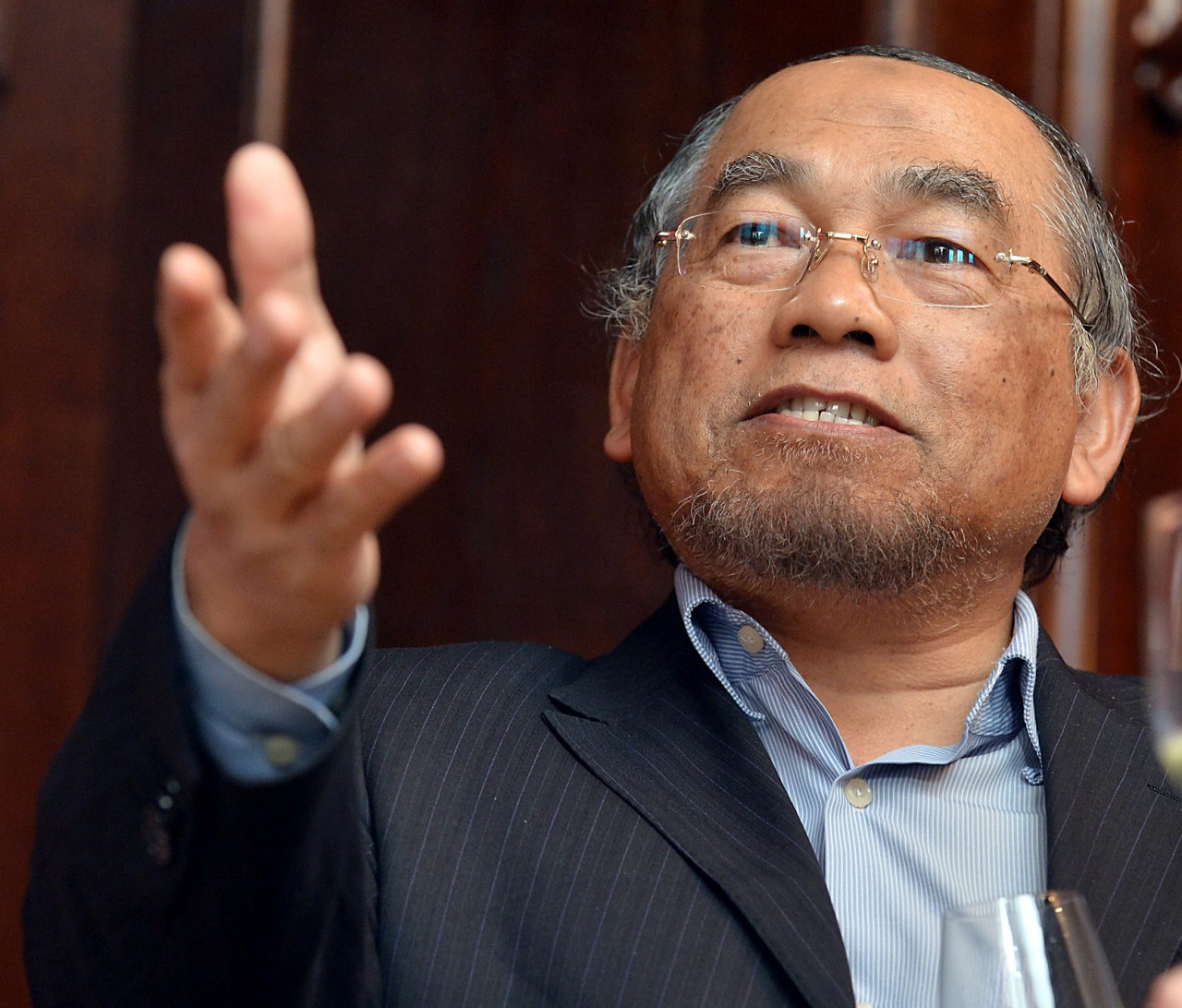
"There should be a closed buffer zone that is not accessible to the public.
"However, we see that this location seems to be open and easily accessible by machines and people.
"There needs to be a continuous monitoring system to ensure the safety of the pipes and the surrounding community in the long term," he told Harian Metro.
He said that this time the incident was brought under control in about seven hours, but it also exposed potential risk weaknesses in the country's modern settlement areas.
He also praised the efficiency of the fire and rescue teams in controlling the situation, but emphasised the need for stricter safety measures for projects involving flammable materials such as gas, petroleum, and electricity. - April 7, 2025



.jpg)



_director_Datuk_M._Kumar.jpg)