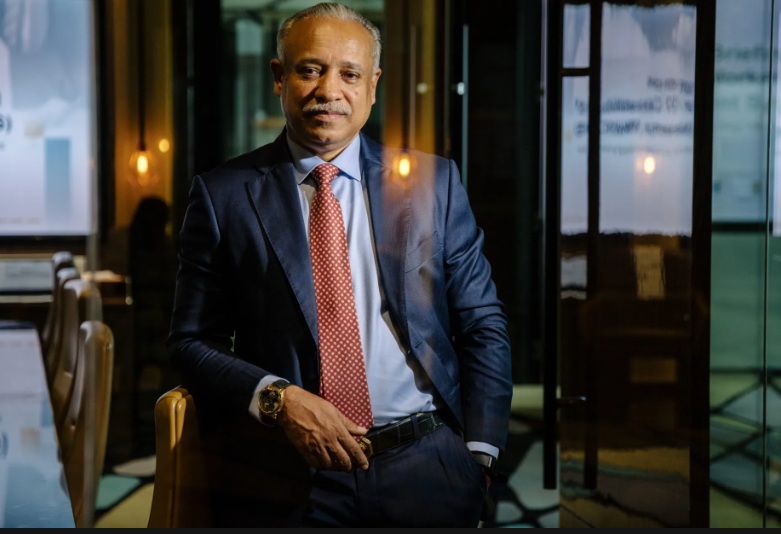
THE government has questioned a Bloomberg report which states that Malaysia is planning to adopt a new foreign worker recruitment system developed by Bestinet Sdn Bhd, the company founded by labour tycoon Aminul Islam.
The report stated that the software is being marketed to allow companies to hire workers directly, rather than using middlemen who charge them excessive fees.
Called The Universal Recruitment Advanced Platform, or Turap, it will have a digital portal where employers can sign up and find employees, the report said.
The report, once again, puts the spotlight on Aminul —a figure whose name has, for years, been tied to some of the industry’s most persistent controversies.
“Bestinet is only one of those proposing a new foreign worker recruitment system.
“To date, nothing has been discussed nor tabled in Cabinet, and definitely no company has been awarded any said project,” revealed a highly-placed government source.
Bestinet already operates the Foreign Workers Centralised Management System (FWCMS), a platform that has long been at the centre of questions over how migrant workers are recruited into Malaysia.
An investigative report by The Vibes in December 2022 detailed how the system became mired in controversy, particularly in the Bangladesh corridor, where layers of intermediaries and opaque processes left workers exposed to excessive fees and exploitation.
Those concerns have never fully gone away. If anything, they have followed every iteration of reform tied to the same ecosystem.
Aminul, through his lawyers, has denied contributing to the problem. He has argued that systems like FWCMS are merely infrastructure—tools used by others—and that responsibility lies with enforcement agencies and recruiters who misuse them.

In a previous interview, he compared the system to a “highway,” distancing himself from how it is ultimately used.
Critics aren’t convinced. The analogy has been repeated, but so have the allegations.
In 2024, Bangladeshi authorities went further, calling for Malaysia to stop using FWCMS altogether and seeking Aminul’s extradition.
Police there alleged the existence of a system that “fraudulently extorted” workers—claims that strike at the heart of how recruitment has been structured for years.
Malaysian authorities have acknowledged contact with their counterparts, but no further action has been taken.
Against that backdrop, the proposed rollout of Turap raises a more fundamental question: what exactly is changing?
Sources familiar with the discussions say any such contract could reportedly be up to 12 years—under a model that includes significant per-worker charges.
With more than two million low-skilled foreign workers in Malaysia, the financial stakes are considerable.
There is also unease within government circles. Several officials, past and present, have reportedly questioned whether expanding Bestinet’s role would consolidate too much influence in a system already criticised for its lack of transparency.
The previous human resources minister is understood to have raised concerns before the recent cabinet reshuffle.
Even on a practical level, doubts remain. The idea of fully eliminating intermediaries has been met with scepticism, particularly in source countries where local networks operate beyond Malaysia’s direct control.
Some officials warn that pushing recruitment into a purely digital framework may not remove middlemen—but instead drive parts of the process further underground.
Publicly, the government has framed the proposal as part of a broader reform agenda.
But details remain limited, and key questions—about oversight, accountability, and safeguards—are still unanswered.
For Aminul, the push for a new system fits a familiar pattern: positioning technological solutions as the answer to structural problems.
In earlier remarks, he even suggested such reforms could elevate Malaysia’s global standing.
That may be the pitch. The reality, critics argue, is harder to ignore.
After years of investigations, allegations, and unresolved concerns, the issue is no longer just about building a better system. It is about whether the same actors, operating under a different framework, can deliver a different outcome. – April 16, 2026