By Murray Hunter
JOHOR is among Malaysia’s standout economic performers.
In 2024, it recorded the highest GDP growth among all states at 6.4 per cent, surpassing the national average.
In 2025, it drew a record RM110 billion in approved investments, outpacing even Selangor and Kuala Lumpur.
Major projects like the Johor-Singapore Special Economic Zone (JS-SEZ) and the upcoming Johor Bahru-Singapore Rapid Transit System (RTS) Link promise to draw more businesses and cross-border activity.
Yet for many ordinary Johoreans, this success story feels distant.
Wages have not kept pace with rising home prices, rents, and everyday living costs.
The disconnect between headline growth and household realities has become one of the most pressing political issues facing the current leadership.
According to the Department of Statistics Malaysia (DOSM) data for 2024/2025, Johor’s median household income stood at around RM7,712 per month.
This is a notable 12.1 per cent rise from RM6,879 in 2022.
However, this pales in comparison to Singapore’s median monthly household income of S$12,446, which is about RM 38,276.
Property prices in parts of Johor Bahru have surged by as much as 20 per cent since 2024, often reflecting Singapore’s purchasing power more than local earning capacity. Condominiums and rents have climbed sharply.
Consequently, a person earning S$4,000 monthly effectively enjoys far greater purchasing power in this border ecosystem than a local earning RM4,000.
The cost-of-living squeeze is now a hot-button topic that no contender can easily ignore.
The upcoming Johor state election will test these tensions in a complex multi-cornered fight.
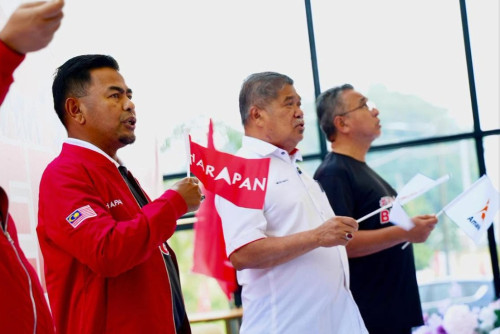
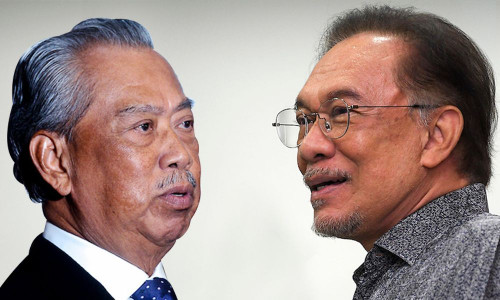
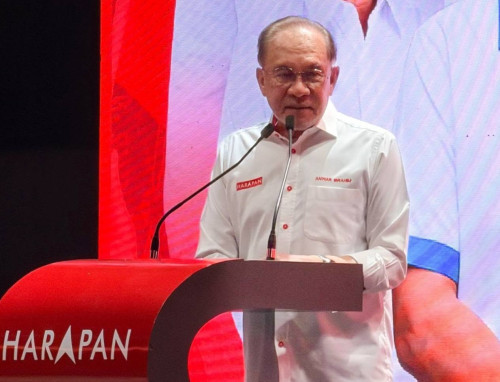
Pakatan Harapan, Umno/Barisan Nasional, Datuk Seri Rafizi Ramli’s untested Bersama, and Datuk Seri Hamzah Zainudin’s Parti Wawasan Negara, coupled with PAS, and perhaps Bersatu, will compete for seats in what promises to be a fragmented contest.

There are concerns that Umno may largely escape voter backlash on affordability, while PH partners, particularly PKR and DAP, could bear much of the anger over governance and living costs.
The DAP has 10 state seats in Johor, and PKR has one.
PAS with many well-established communities in Johor may increase its seat tally from a single seat in 2021.
Johor’s proximity to Singapore amplifies these pressures. Development plans have already begun reshaping price expectations in key areas, creating a dual economy of sorts where local wages struggle against imported cost structures.
Many residents feel the benefits of investment flows have not trickled down sufficiently into affordable housing and wages.
No one can be really sure how voters will respond.
Economic pride in Johor’s growth may bolster the incumbent BN-Umno administration under Menteri Besar Datuk Onn Hafiz Ghazi in some quarters.
Yet frustration over housing, rents, and daily expenses could sway marginal seats toward opposition alternatives or new challengers offering fresh voices.
With nearly half the 56 state seats potentially in play as battlegrounds, and multiple competitors fragmenting the vote in many constituencies, outcomes remain highly uncertain. Turnout, candidate appeal on local issues, and last-minute sentiment shifts could prove decisive.
This Johor poll may offer early signals for the broader national landscape.
Local pocketbook concerns, rather than grand national narratives, could once again demonstrate their power to reshape political fortunes.
As in past contests, the only certainty is that predictions will be tested harshly by the voters themselves.
No analyst or party insider can claim to know the final result with any confidence. - June 22, 2026