
SANDAKAN – Sabah is the largest oil-producing state in the country, so why is it still the poorest?
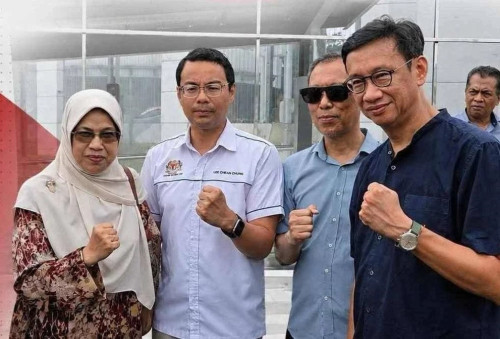
Sabah party United Progressive Kinabalu Organisation deputy secretary-general Peter Jr Naintin, who had conducted research on the poverty issue in Sabah, shared several points with The Vibes on what the government could do to solve the poverty issue in Sabah.
Highest poverty rate in Malaysia
The Land Below the Wind once again maintained its record as the poorest state in the country, with a 25.3% poverty rate, followed by Kelantan (21.2%) and Sarawak (12.9%) in 2020.
This means that about a quarter of the population in Sabah – roughly around a million people – lives below the poverty line, with a monthly income of under RM2,208.
Despite being a major contributor to the nation’s gross domestic product (GDP), Sabah’s GDP per capita is at RM21,484, compared with Selangor (RM51,966) and Penang (RM54,718).
On average, Sabah’s household income is at RM5,215 compared to Putrajaya (RM12,322) and even the nation (RM7,089) in general.
The middle-income in Sabah only earns an average of RM3,773.
Naintin’s research identified income levels according to districts, and his data showed an obvious imbalance throughout the state.
The Income Poverty Line in 2019 showed that Tongod had the highest poverty rate (56.6%), followed by Pitas (53.6%), Kota Marudu (46.2%), Beluran (45%), and Telupid (40.7%).
“These districts are rural areas, and most of their residents rely on agriculture and fishery for a living.
“The difference in income level between districts has made Sabahans move to West Malaysia to find job opportunities with a higher salary,” he said.
Factors behind Sabah’s poverty
Naintin listed several points to this question – one of them being money politics.
He accused West Malaysian politicians of distributing “candy” to the locals to entice them to choose corrupt parties, despite the fact that Sabahans in general are not keen on asking and waiting for assistance.
In fact, he observed that they would much prefer to succeed by working hard.
“The demographic of the population in Sabah may also have made the government’s focus placed only in particular areas while neglecting the others, especially in the rural areas with lower population.
In Sabah, our population is scattered over a vast area. This may have made the government decide on policies and distribute allocations based on the economic scale, size of the population, the distance of an area to the city, or other particular interest of an area.
“This contributes to an imbalanced development – with dilapidated schools and poor internet connectivity in rural areas.”
He said the outdated e-Kasih system has also made it difficult for the government to channel assistance and implement a poverty eradication programme to the target group: low-income families.

The service sector in Sabah comprises 47.1% of its economic structure, followed by mining and quarry (25.4%), agriculture (16.5%), manufacturing (7.8%), construction (2.8%), and import duty (0.3%).
Naintin’s study showed that the state needs to increase its manufacturing sector to 30% of the state’s GDP.
At the moment, Sabah’s manufacturing sector is only valued at RM6 billion, which is very low, compared to Penang (RM41.6 billion or 45%), Johor (RM38.6 billion or 30.2%), and Selangor (RM95.3 billion or 29.2%) from their respective states’ GDP,” he said.
While Sabah is known for its raw petroleum and natural gas extracted by giant companies like Petronas, the state does not have its own refinery.
He added that Sabah needs to attract more foreign investors with a more flexible approach and introduce the Client Participation Policy in preparing the site and facilities for them.
The state administration needs to open more opportunities for the youth to be involved in the agriculture sector, by increasing the minimum wage for skilled workers and providing a quota of 85% for local workers in the sector.
“Sabah’s local economic cycle does not have sufficient supply compared with other states. In turn, certain rural districts have very slow economic activity, making the government sideline their need for infrastructure development.
“The presence of an undocumented population and irregular migrants have also halted the economic development in Sabah, as they serve as a cheaper option for labour in the agriculture and construction sectors in the state.”
Human capital in need of development
The lack of investment in increasing labour development and business activities has also driven local talent and skilled workers out of Sabah for job opportunities elsewhere, said Naintin.
“Investors would look into the cost before setting up their businesses in an area, including the cost of labour, materials, electricity, water, and transportation.
“If Sabah wants to keep our human resources, the government must introduce a special incentive to investors to create more high-quality job opportunities in the state.”
As such, Naintin suggested the government implement a more inclusive policy, focused on eradicating poverty by empowering human capital through education, skills training, and business.
Sabah needs to focus on solutions based on the latest data acquired by researchers from universities, non-government organisations and local authorities, he said.
Such data needs to be coordinated and updated from time to time so that the work of the relevant government agencies can be monitored systematically, Naintin added.
The culture of sharing information is vital in the effort to eradicate poverty, he said.
To become a competitive region, Sabah must not only focus on natural resources but also the development of human resources.
Thus, the government should form a special committee to implement a career guidance programme to introduce the key industries in Sabah, which could be adopted by the education system in schools, said Naintin.
This can be put in place as early as Form 1 in secondary schools so that students would be confident in choosing the course that they want when they reach Form 4.
At the same time, the government and private sectors should work together to build more technical education institutions close to the natural resources relevant to the courses, said Naintin.
“The spirit of Keluarga Malaysia and shared prosperity could only be achieved if the government is able to provide opportunities that are fair, just, and equal as stated in Article 8 of the federal constitution.” – The Vibes, January 3, 2022