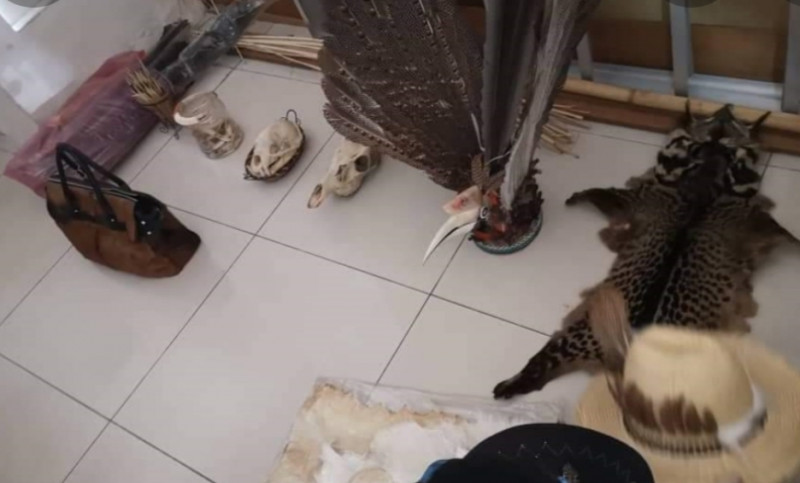
MIRI – Four handicraft shops in Miri city were found selling wildlife parts during a raid by the Sarawak Forestry Corporation’s (SFC) wildlife enforcement unit yesterday.
In all, about 700 items were seized, including bear paws, eagle claws, body parts and feathers of peacocks, deer antlers, furs, skins and a handbag made of deerskin.
The operators of the retail premises are being probed for offences under the Wild Life Protection Ordinance 1998, SFC said in a media statement.
Trapping and poaching of wildlife is carried out by industrial and estate workers, and also residents of squatter settlements and kampungs throughout Sarawak, on a widespread basis.
In January, The Vibes quoted a member of a nature society here reporting that workers in logging zones, oil palm estates and industrial sites, squatters and residents of resettlement schemes and kampungs are the main culprits who go around trapping the wildlife.
“Pangolins are among the most popular animals being trapped, aside from songbirds, colourful birds, monkeys, squirrels, slow loris and other mammals, including wildcats.
“Often, they are sold as pets, but many mammals are often slaughtered and eaten, and their parts sold, such as the pangolin scales,” he said today.
He pointed out that SFC has put in great effort to try to tackle these wildlife abuses.
“The SFC enforcement teams are doing their best, but those who capture the wildlife often carry out entrapments in the forested areas around Miri and Kuala Baram districts during the night and pre-dawn hours.
“That is why it is so difficult for the authorities to tackle these wildlife crimes,” he said.
The World Wide Fund for Nature (WWF) recently urged the Sarawak authorities to categorise pangolins as “totally protected animals” to curb the trade in pangolin meat and scales in the state.
Jason Hon, head of WWF Sarawak Conservation Project, recently said that the population of pangolins in Sarawak is depleting fast due to the illicit capturing and killing of these animals.
“Pangolins should be included in the list of totally protected animals under the Sarawak wildlife protection ordinance.
“The enforcement side can then exert more authority to curb the killing, capturing and trade of pangolins. The strict enforcement plus harsher penalties can help protect these animals.
“The population of these pangolins in the state are being depleted through their capture and killing, especially for their scales,” he had said in a press statement. – The Vibes, April 22, 2022