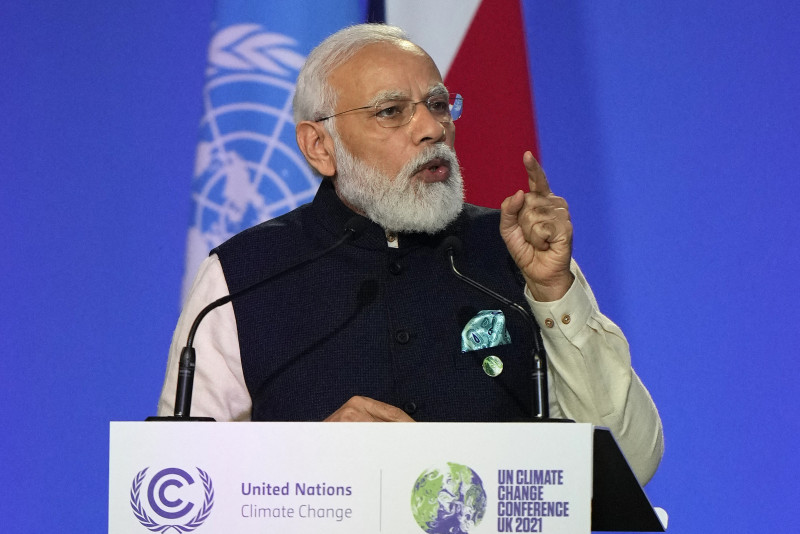
INDIA’S Prime Minister Narendra Modi has delivered a stinging critique of modern global governance at the G7 outreach summit in France, asserting that a critical depletion of mutual trust between nations has surpassed resource scarcity as the primary obstacle to international solidarity.
The intervention carries profound domestic and international weight, arriving at a moment when traditional multilateral frameworks are fracturing under the weight of geopolitical rivalries and trade wars.
By reframing the debate from financial aid to systemic bad faith, the Indian leader has positioned New Delhi as an assertive ideological referee on the world stage, rather than a mere participant in Western-dominated forums.
“Mutual trust is the most important strategic asset today. But, sadly, today, the world does not suffer from a shortage of resources…it suffers from a shortage of trust,” the Prime Minister observed in a subsequent dispatch, highlighting a systemic paralysis within global institutions.
This philosophical challenge to the assembled world leaders served as the foundation for a broader geopolitical strategy, as India aggressively championed the aspirations of the Global South.
Addressing the session on Forging New Partnerships and Rebuilding International Solidarity, the Prime Minister demanded an end to archaic, paternalistic donor-recipient dynamics in favour of equitable alliances.
Emphasised that the Global South has immense expectations from the world. More than support, it seeks partnership, he stated, pointing to India's non-conditional infrastructure, agricultural, and energy initiatives across Africa as the blueprint for future international cooperation.
The assertion of independence was underscored by India's calculated refusal to sign a G7 communique regarding the restructuring of international development finance, even as New Delhi endorsed separate humanitarian frameworks targeting the Bundibugyo Ebola outbreak and oncology research.
The subtext of the trust deficit became acutely visible during a highly anticipated face-to-face encounter between the Indian Premier and United States President Donald Trump, their first meeting since February 2025.
Although the leaders shared an outward display of diplomatic courtesy during the proceedings, the dialogue took place against a backdrop of severely deteriorating bilateral relations.
Washington and New Delhi remain locked in bitter disputes over punitive trade tariffs, tightening visa restrictions on skilled Indian professionals, and rising anxieties over the treatment of Indian nationals in America.
Furthermore, deep diplomatic resentment persists in New Delhi over the American President's repeated assertions that he orchestrated a ceasefire during the 2025 India-Pakistan conflict, an intervention India views as an infringement on its sovereign affairs.
The strategic friction has been further exacerbated by a recent military flashpoint involving the tragic deaths of three Indian merchant sailors during a United States military strike on an oil tanker off the coast of Oman.
By raising the issue of international bad faith in Evian, the Indian leader has effectively signaled that future economic and security cooperation with the West, particularly with Washington, cannot be sustained on transactional terms alone while fundamental diplomatic confidence continues to erode. - June 17, 2026