

The month of March has become significant for many of us. It not only marks the anniversary of the onset of the Covid-19 pandemic and our newfound resilience against it, it is also the month when light is shed on important issues in connection to International Women’s Day, World Wildlife Day, and — one that’s close to my heart — Endometriosis Awareness Month.
As an inflammatory condition that affects 10% of women worldwide, endometriosis is not a familiar term to many. According to the Mayo Clinic, endometriosis (pronounced en-doe-me-tree-o-sis), which affects one in 10 women, is a painful disorder where tissue that lines the insides of your uterus — the endometrium — starts to grow outside of it.
Although endometriosis commonly involves the ovaries, fallopian tubes, and the tissue lining your pelvis, it rarely spreads beyond the pelvic organs. However, in my case, I was one of those rare exceptions when my endometrial tissue developed beyond my pelvic region and spread to my small intestine.
I went through a long and arduous journey to be diagnosed with this condition. Prior to my diagnosis ─ although there were many doctor's appointments, a few painful middle-of-the-night drives to the hospital's ER and last-minute cancellations of important meetings ─ an overwhelming unpredictability loomed over my work and life commitments; to say the least, my quality of life was borderline bearable.
Despite it being the 21st century, discussing periods or topics pertaining to the menstrual cycle is still considered taboo and not common banter for most Malaysians. However, when talk about menstrual cramps come up, the all-too-familiar narrative is often heard: ‘stop complaining’ or ‘just take a Panadol and you’ll be fine.’ As their predecessors were told the same thing, these are the words heard by girls from a young age, but the pain should never be ignored.
More than just discomfort, pain is when our brain communicates to our body that something is not right. As an athlete, dismissing pain is something I was used to from a young age. When I was performing gymnastics, ‘no pain, no gain’ was the propaganda drilled into my head.
However, the downside to this type of pep-talk and others, such as, ‘period pain is not an excuse’, results in individuals not being in-sync with their bodies, often leading to the subconscious dismissal of important warning signs from your body. In women, this can lead to pain suppression, especially when it relates to pelvic matters.
We need to do better as a society. Increasing awareness of women’s menstrual cycles and its related illnesses, such as endometriosis, is key to welcoming more open conversations. Women of all ages should be able to share their experiences comfortably or pluck up the courage to seek medical assistance when something’s not quite right.
Instead of brushing it off as ‘just another PMS situation’, let’s encourage our mothers, daughters, sisters, and friends to seek professional help when recurring pain is present; you might just be saving their life.
If you have endometriosis and find it difficult to move due to a flare-up of pain or adjoining symptoms, such as fatigue or anxiety, I hear you. In fact, endometriosis is not just a period that’s painful. Even though some don’t experience any pain, the danger is quite real.
Amidst all of this, don’t let this illness define you. Choose to incorporate some consistent forms of movement into your day, which promote blood circulation and increase anti-inflammatory markers in your body; rest assured, you will be able to conquer this battle!
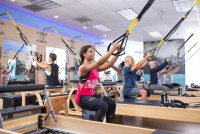
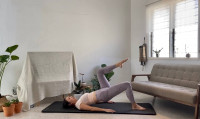
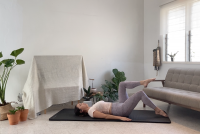
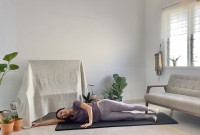
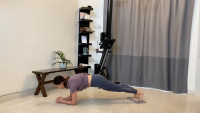
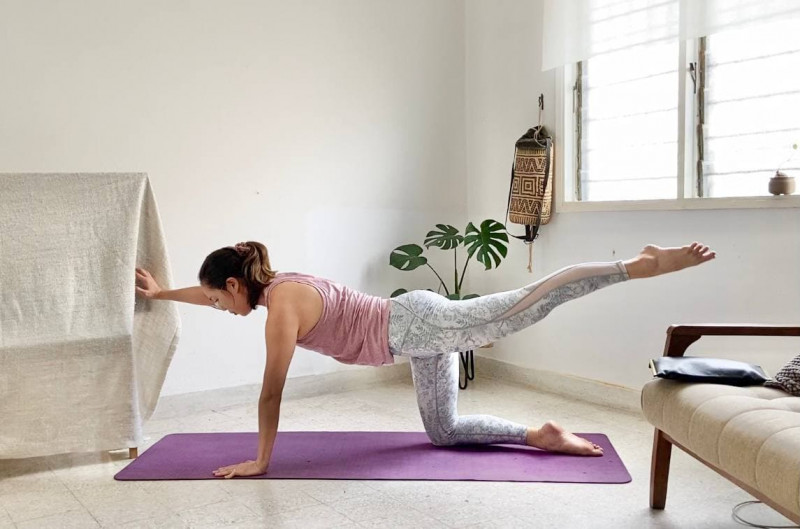
Join me in this week’s Pilates movement flow as we focus on exercises that encourage length and strength in the anterior muscles of your body, including the chest, abdominal wall, and the thighs, which often get tight due to flare-ups or cramps. ─ The Vibes, 24 March, 2021