MUNICH – Israel and Germany’s presidents will jointly commemorate the 1972 Munich Olympics attack that left 11 Israeli athletes dead, after a last-minute compensation deal averted a feared boycott by bereaved relatives.
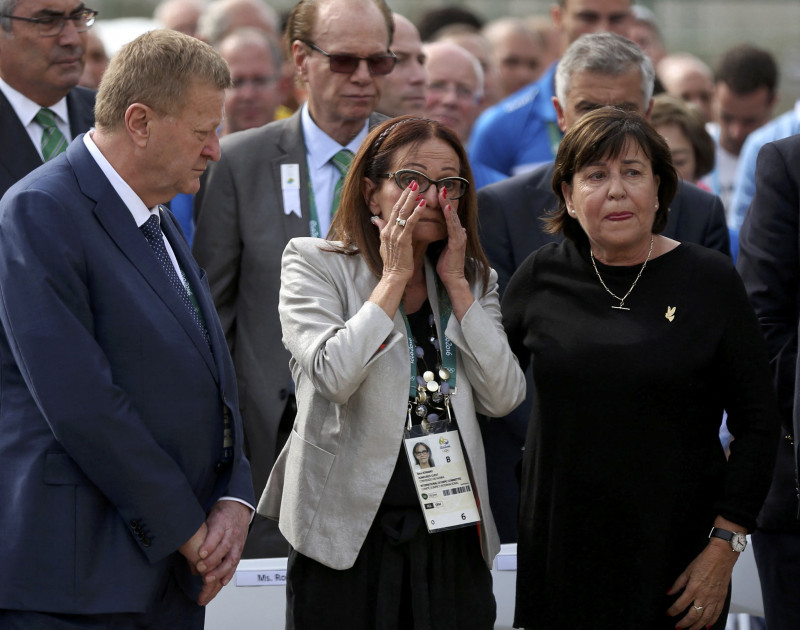
Around 70 relatives of victims will join in next Monday’s solemn 50th-anniversary ceremony, Ankie Spitzer, whose husband Andre Spitzer counted among the dead, said. Separately, the Israel Olympic Committee confirmed a delegation at the event.
The long-planned ceremony had risked descending into a fiasco over a row between relatives and the German state over financial compensation for their suffering.
But an 11th-hour deal on “historical clarification, recognition, and compensation” was announced on Wednesday, with Germany offering €28 million (RM125.08 million) in reparations, six times the amount previously provided.
With the agreement, the German state acknowledges its “responsibility and recognises the terrible suffering of those killed and their relatives”, said Frank-Walter Steinmeier and his Israeli counterpart Isaac Herzog in a statement.
“The agreement cannot heal all wounds. But it opens a door to each other,” they added.
At the ceremony at the Fuerstenfeldbruck air base, west of Munich, where the hostage-taking reached its tragic climax, bereaved relatives are also hoping Steinmeier will become the first German head of state to publicly take responsibility for the failings that led to the carnage.
Held almost three decades after the Holocaust, the Games in Munich were meant to showcase a new Germany. But it instead opened a deep rift with Israel.
On September 5, 1972, eight gunmen from the Palestinian militant group Black September stormed the Israeli team’s flat at the Olympic village, shooting two dead and taking nine others hostage.
Former East German handballer Klaus Langhoff saw the scenes unfold from the balcony opposite the Israeli team’s quarters.
He described the terrifying moments when he saw the hostage-takers bringing out the lifeless body of Israeli coach wrestling coach Moshe Weinberg and leaving it on the street.
“It was awful. Whenever we looked out of the window or on the balcony, we saw this dead athlete there,” he said.
West German police responded with a botched rescue operation in which all nine hostages were killed in a shootout, along with five of the eight hostage-takers and a police officer.
Then chancellor Willy Brandt spoke of the chain of events as a “shocking document of German incompetence” and created the commando team GSG9 within the month.
But only weeks later, three hostage-takers who were captured were also freed in an exchange when terrorists hijacked a Lufthansa plane on October 29, 1972, and demanded their release.
Incensed by the chain of events, Israel subsequently launched the operation “Wrath of God” to hunt down the leaders of Black September.
Four decades after the massacre, Israel released official documents on the killings, including specially declassified material and an official account from the former Israeli intelligence head, lambasting the performance of the West German security services.
Police “didn't make even a minimal effort to save human lives”, former Mossad head Zvi Zamir said at the time after returning from Munich.
For years following the tragedy, relatives of victims battled to obtain an official apology from Germany, access to official documents, and appropriate compensation.
In the immediate aftermath, they were offered only a million deutschmarks (RM2.28 million) in what was described as a “humanitarian gesture” in order for it not to be viewed as an admission of guilt.
Further financial compensation was provided in 2002 but still a fraction of what the victims’ families were seeking.
“I came home with the coffins after the massacre,” said Spitzer.
“You don’t know what we've gone through for the past 50 years.”
German officials acknowledged that Wednesday’s deal was only the beginning of a long road to laying to rest the wrongs of the last decades.
“After 50 years, the conditions have been created to finally come to terms with a painful chapter in our common history, acknowledging it and laying the foundation for a new and lively culture of remembrance,” said government spokesman Steffen Hebestreit in a statement. – AFP, September 2, 2022
_-_AZIM_RAHMAN_2.jpg)