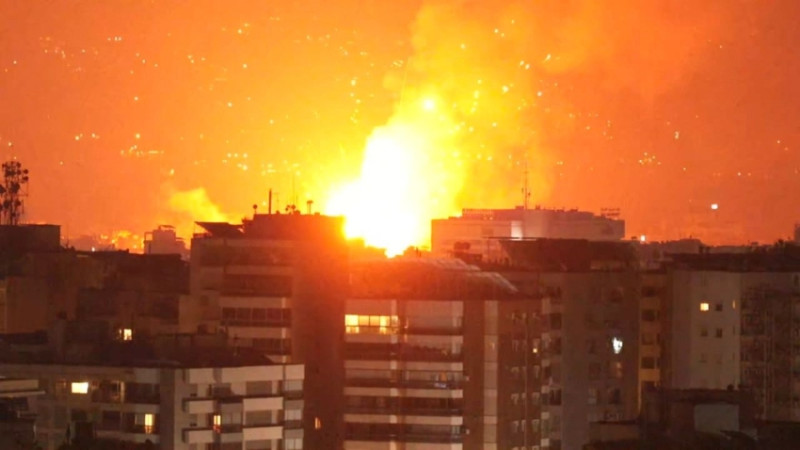
IRAN has launched a missile strike on an Israeli hospital in the southern city of Beersheba, prompting a fierce response from Israel, which struck nuclear facilities and security infrastructure deep inside Iranian territory. The escalation marks a new and dangerous phase in a week-long aerial conflict with no clear exit strategy in sight.
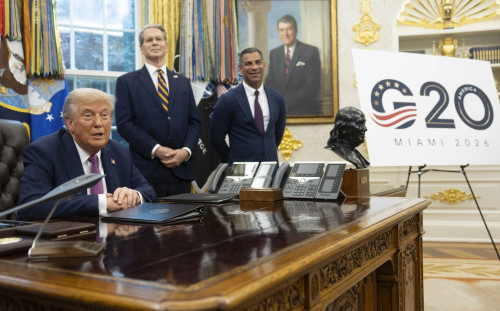
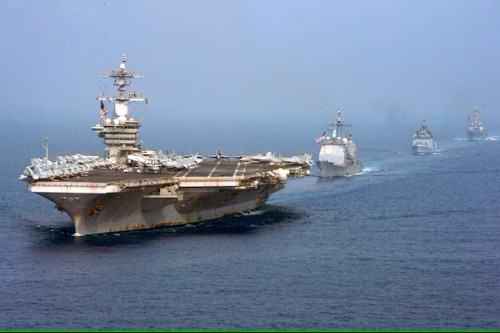
Reuters reported today that United States may soon be drawn in. President Donald Trump is expected to decide "within two weeks" whether the U.S. will formally intervene on Israel’s side, the White House said.
However, the timeline may not be definitive, as Trump has frequently used similar language for pending decisions. According to sources, his special envoy Steve Witkoff has been in repeated contact with Iranian Foreign Minister Abbas Araqchi in recent days.
Since last Friday, Israel has conducted sustained aerial assaults on Iranian targets, which it claims are aimed at halting Tehran’s nuclear ambitions. Iran, which denies seeking nuclear weapons, has retaliated with drone and missile attacks across Israel.
The latest Iranian attack targeted the Soroka Medical Centre in Beersheba, where Israeli officials say civilians were intentionally targeted with cluster munitions.
“That is state-sponsored terror and a blatant violation of international law,” said Israeli military spokesperson Brigadier General Effie Defrin.
Prime Minister Benjamin Netanyahu vowed that Iran’s "tyrants" would "pay the full price" for the strike on the hospital. “Are we targeting the downfall of the regime? That may be a result, but it’s up to the Iranian people to rise for their freedom,” he added.
Iran's Revolutionary Guards claimed they had aimed at military and intelligence installations near the hospital, a claim flatly denied by the Israeli military. Brigadier General Defrin said Israel had responded by targeting Iran’s internal security apparatus headquarters in Tehran and was escalating strikes on strategic targets to destabilise the rule of Supreme Leader Ayatollah Ali Khamenei.
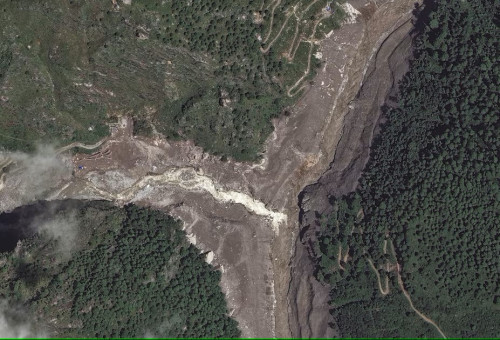
Iranian media reported late on Thursday that air defences were responding to “hostile targets” in northern Tehran. Satellite imagery published by the London-based Open Source Centre showed extensive damage to Iran’s Arak heavy-water research reactor, also known as Khondab. The facility was scheduled to begin operation next year.
David Albright, a former UN nuclear inspector, said: “The Iranians play all these different games, so Israel took it out.”
Israel also struck the Natanz and Isfahan nuclear sites in recent days. Its goal, according to Israeli, Western and regional sources, is not merely to cripple Iran’s nuclear and missile capabilities but to weaken the Islamic Republic to the point where it is forced to abandon its enrichment programme and military proxies across the region.
Iran has signalled that a broader response could be forthcoming if a "third party" joins Israel in the war. The warning came from the country’s Supreme National Security Council.
Meanwhile, Iran has launched combined missile and drone attacks on military and industrial targets in Haifa and Tel Aviv. Though Iranian officials claim they targeted defence infrastructure, Israeli officials report that dozens of civilians have been killed or wounded in the exchanges. Iranian losses are believed to be extensive, but with internet access cut across much of the country and reporting restricted, the full scale remains unclear.
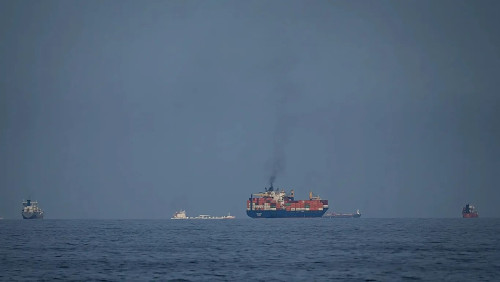
Iranian MP Behnam Saeedi warned that Tehran may consider closing the Strait of Hormuz, a critical global oil artery through which one-fifth of the world’s petroleum flows.
Inside Tehran, residents have reported widespread devastation. “I saw at least three dead children and two women in that building,” said Arash, 33, a government employee in Shahrak-e Gharb. “Is this how Netanyahu plans to ‘liberate’ Iranians? Stay away from our country.”
Israel, the region’s most advanced military power, has been active on multiple fronts since the Hamas-led assault on 7 October 2023. It has conducted strikes against Hamas in Gaza, Hezbollah in Lebanon and the Houthis in Yemen.
As of now, both sides appear to be digging in for a prolonged and dangerous confrontation — one that could soon widen further. - June 20, 2025