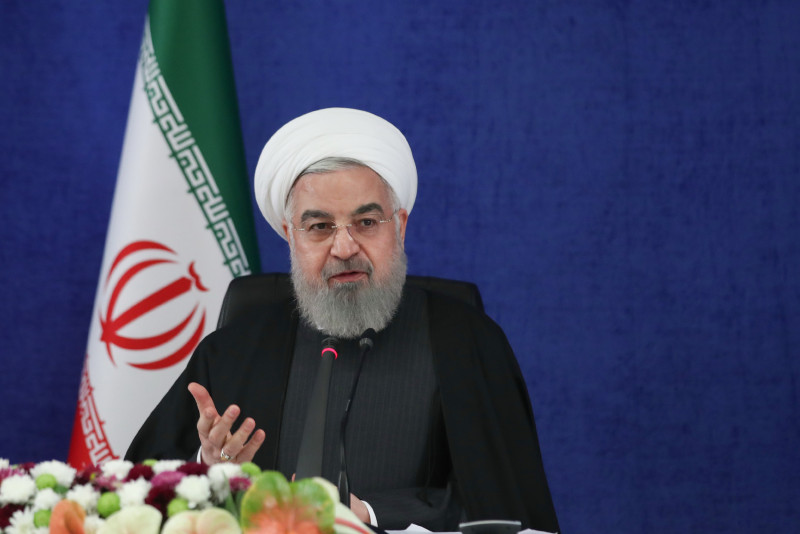
TEHRAN – President Hassan Rouhani yesterday said Washington is demanding that Iranian transactions for coronavirus vaccines pass through United States banks, and expressed fear that the money could be seized.
His US counterpart, Donald Trump, has imposed wave after wave of sanctions on the Islamic republic since 2018, when he unilaterally withdrew from the Iran nuclear deal.
Tehran has assets frozen in several countries, including the US.
“We want to transfer money from a country where our money is” to buy the vaccine, and “this country has accepted”, said Rouhani during a meeting of Iran’s coronavirus task force, without identifying the country in question.
In theory, medicines are exempt from the sanctions, but in reality, international banks tend to turn down transactions involving Iran to avoid being exposed to potential litigation.
The US Treasury’s Foreign Assets Control Office initially indicated that “it didn’t have a problem” with such a transfer of funds, he said.
But, “it said later that the money had to first pass through a US bank before being transferred” for the vaccine purchase.
In April, Rouhani said the country had won a legal “victory” over US$1.6 billion (RM6.5 billion) of its assets long frozen on a US request in Luxembourg.
“Who can trust people like you? You have stolen our money everywhere you found it,” he said yesterday, addressing the US administration.
The Islamic republic has been battling the Middle East’s deadliest outbreak of Covid-19 since February, with almost 1,195,000 cases and over 54,500 deaths, according to official figures.
Health Minister Saeed Namaki early this month said Iran has “pre-purchased” about 16.8 million vaccine doses “via Covax”, without specifying which vaccine.
Covax is an international initiative that aims to ensure equitable access to coronavirus vaccines for all countries.
The purchase “could be more costly and be delayed, but it will certainly happen”, said Rouhani.
Iran has also called for volunteers for the start of clinical trials for its own vaccine, which it began to develop in the spring, said the Health Ministry. – AFP, December 27, 2020

.jpeg)