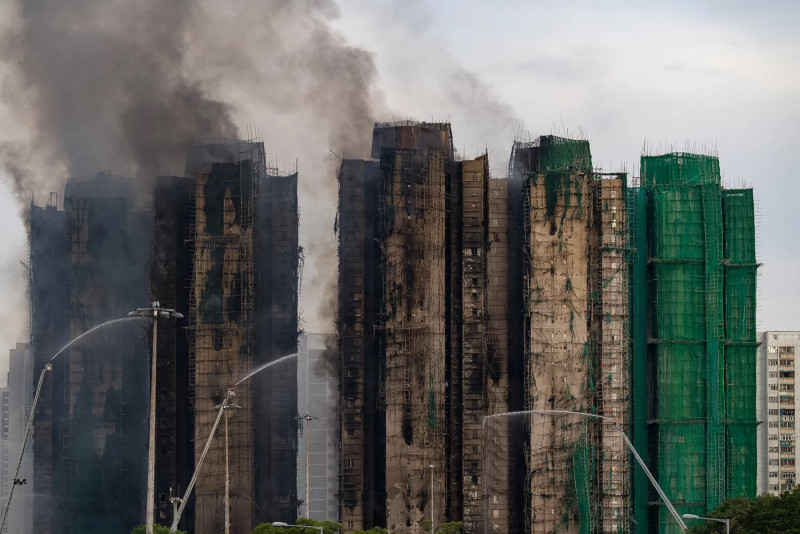
SURVIVORS of one of Hong Kong’s worst fire disasters are beginning to return to their charred homes for the first time, confronting the emotional toll of a tragedy that claimed 168 lives and destroyed entire residential blocks.
Among them is Dorz Cheung, 34, who described a profound sense of suffocation as he stepped back into his burnt apartment, revisiting the scene of devastation months after the blaze broke out in November.
“Why did this tragedy happen?” Reuters quoted him saying as he left the flat, carrying a handful of treasured belongings, including running medals, family photographs and his grandmother’s 50-year-old journals documenting her reflections on the Bible.
“My emotions swing between anger and sadness,” he said. “When I first saw the kitchen, I was very shocked, I felt suffocated.”
Authorities this week began allowing residents of the affected complex, where seven residential towers were engulfed by fire, to re-enter their homes under government supervision to retrieve any surviving possessions.
The disaster, which eclipsed the scale of the 2017 Grenfell Tower fire in London, left homes gutted and communities displaced.
Inside Cheung’s apartment, remnants of daily life remain frozen in time. A large plush toy lay on dishevelled bedsheets, while ash and dust blanketed a small piano in the living room. Soot-streaked walls and broken windows bore the marks of intense heat and smoke.
During his visit, Cheung recovered personal items including his smartwatch, an old passport and boarding passes he had kept as mementoes of past travels.
He also discovered belongings of his late grandfather, including documents, rings and plaques inscribed with the words “good heart and great skills”, although he could only carry one out.
“After I finished packing these things up, I just stood there and looked at the apartment for a while,” he said.
“At that moment, I couldn’t help but cry,” he added. “All the mental preparation I had done beforehand seemed to have been useless.”
Following the fire, Cheung and his 88-year-old grandmother were relocated to separate temporary housing units of about 100 square feet within the same building elsewhere in the city.
He had moved into the flat after his grandfather’s death during the pandemic to care for her. Now, their lives have been reshaped by the disaster.
His grandmother had asked him to retrieve some of her clothes, but he declined, despite her room being the only part of the flat left untouched.
“Those clothes, when you smell them, it's still there — the smell of burning,” he said.
On the day of the fire, she had been on her way home when she alerted Cheung via text message. He advised her to wait at a nearby church, but she returned briefly to cook before being warned by a neighbour that the flames were spreading, prompting her to flee. The pair were reunited later that evening.
Despite the trauma, Cheung said the experience has brought them closer. His grandmother has since adapted to their new living arrangements and continues to visit her old church twice a week, maintaining a sense of normalcy amid the upheaval. - April 22, 2026
.jpg)