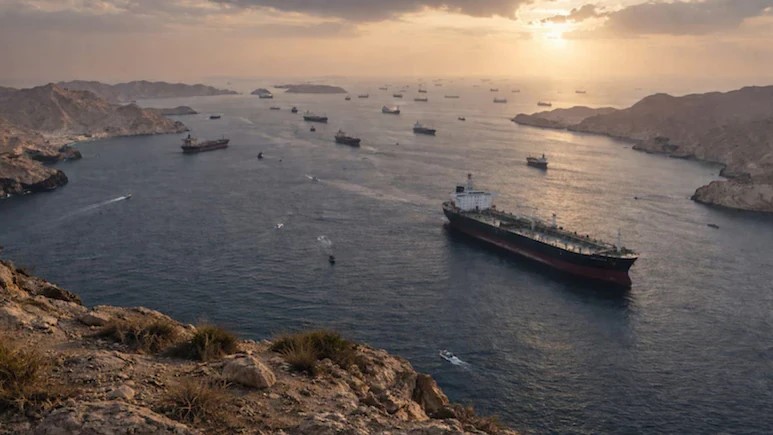
OIL markets opened the week with strong gains after renewed hostilities between Israel and Lebanon reignited fears of a broader Middle East conflict, threatening global energy supplies and undermining diplomatic efforts aimed at easing tensions in the region.
Reuters reported on Monday that benchmark crude prices climbed by more than US$2 a barrel on Monday following Israeli strikes on targets in Lebanon, a move that cast fresh doubt over the durability of a recently negotiated ceasefire and raised concerns that key oil transit routes could remain disrupted for longer than anticipated.
US West Texas Intermediate (WTI) crude futures rose US$2.10, or 2.32 per cent, to US$92.64 a barrel, while Brent crude advanced US$2.33, or 2.5 per cent, to US$95.42 a barrel.
The gains reversed much of the decline recorded at the end of last week, when traders had become increasingly optimistic that diplomatic progress between Washington and Tehran could lead to a de-escalation of regional tensions and eventually restore normal shipping operations through the Strait of Hormuz.
That optimism has now been significantly weakened following the latest military developments.
Market analysts said the renewed violence presents another major obstacle to any prospective agreement between the United States and Iran, while further delaying the reopening of the Strait of Hormuz, one of the world's most important energy chokepoints through which a substantial share of global oil and liquefied natural gas exports pass.
Iran has reportedly maintained that any comprehensive peace arrangement with Washington must include a lasting ceasefire involving Lebanon.
Tensions escalated further after Iran responded to the strikes on its ally Hezbollah by launching missile attacks against Israel, raising fears that the conflict could once again expand beyond its current theatres.
Amid mounting concerns, United States President Donald Trump said he would urge Israeli Prime Minister Benjamin Netanyahu not to retaliate against Iran, signalling continued efforts by Washington to prevent a wider regional war.
The latest confrontation marks a setback for diplomatic efforts that had led to a ceasefire agreement between Israel and Lebanon earlier this month following negotiations in Washington.
Although both sides previously agreed to suspend hostilities, sporadic violence continued, highlighting the fragility of the truce and the difficulty of securing a lasting settlement.
The broader regional conflict has remained largely subdued since the United States and Israel suspended military operations against Iran in early April. However, energy markets have remained under pressure due to continuing restrictions affecting maritime traffic through the Strait of Hormuz.
Against that backdrop, the Organisation of the Petroleum Exporting Countries and its allies (OPEC+) announced a fourth consecutive increase in production quotas over the past four months in an effort to address supply concerns.
Nevertheless, industry observers questioned the practical impact of the decision, noting that several member states remain unable to achieve their production targets due to logistical constraints, security challenges and infrastructure disruptions.
Russia, in particular, continues to face difficulties restoring full production capacity following attacks on key energy infrastructure, while other producers remain constrained by shipping and export bottlenecks linked to the Hormuz situation.
Rystad Energy Head of Geopolitical Analysis Jorge Leon said the market impact of the latest OPEC+ decision would be limited under current conditions.
"In the current market, the physical impact of such a decision would be close to zero," he said in a note.
With geopolitical risks once again dominating market sentiment, traders are expected to remain highly sensitive to developments in the Middle East, particularly any signs of further military escalation that could jeopardise already strained global energy supplies and push crude prices even higher in the coming weeks. - June 8, 2026









.jpg)