US President Donald Trump has announced that the United States and Iran have signed a preliminary agreement aimed at ending the war that has destabilised the Gulf region, reopening a critical global shipping route and paving the way for negotiations on a permanent peace settlement.
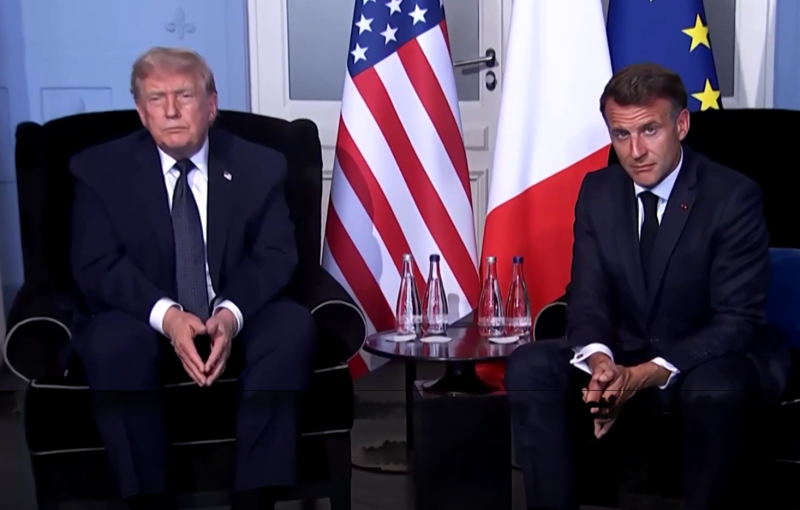
Speaking after arriving in France for the G7 summit, Trump declared: "The deal's all signed," adding that Vice President JD Vance would attend a formal signing ceremony in Geneva on Friday.
Reuters cited on Tuesday that the breakthrough extends a fragile ceasefire first reached in April by a further 60 days and is expected to facilitate the reopening of the Strait of Hormuz, the strategically vital waterway through which roughly one-fifth of global oil supplies pass.
Financial markets responded swiftly to the development, with oil prices falling to their lowest level since March amid expectations that energy exports and commercial shipping would gradually return to normal.
The agreement marks the most significant diplomatic advance since hostilities erupted following joint US and Israeli military strikes against Iran in February, a conflict that has claimed at least 7,000 lives, predominantly in Iran and Lebanon, while triggering severe disruption across international energy markets.
Despite the optimism, major questions remain unresolved. Neither Washington nor Tehran has released the full details of the memorandum, while both governments have acknowledged that negotiations towards a permanent truce have yet to begin in earnest.
Iranian President Masoud Pezeshkian described the memorandum as an "important step" towards ending the conflict but cautioned that a final agreement capable of delivering a lasting peace "has yet to take shape."
Vice President JD Vance similarly downplayed expectations of an immediate comprehensive settlement, revealing that the document was only about one and a half pages long and describing it as "a very general document."
According to Vance, the memorandum includes "a very significant sanctions relief package" for Iran, with further details expected to be released within days.
US and Iranian officials have indicated that a future agreement could unlock substantial economic benefits for Tehran, including sanctions relief, access to frozen overseas assets and participation in a proposed US$300 billion reconstruction fund backed by Gulf states that host American military installations.
However, US officials insist such benefits will depend upon Iran meeting key conditions, including guarantees that it will never develop a nuclear weapon and the curtailment of support for regional armed groups such as Hezbollah.
The next phase of negotiations is expected to focus on the most contentious issues, including the future of Iran's nuclear programme, its stockpile of enriched uranium and broader regional security concerns that remain unresolved despite the latest breakthrough.
While the reopening of the Strait of Hormuz has been welcomed as a critical confidence-building measure, shipping operators have indicated that commercial traffic is unlikely to resume fully until security conditions can be guaranteed.
Iran has suggested that it will continue to share oversight of the strategic passage with Oman, while Washington maintains that the route should remain open without tolls throughout the duration of the agreement and under any future permanent settlement.
The conflict in Lebanon remains another major obstacle to a comprehensive peace accord.
Iran has argued that any final deal must include a complete cessation of hostilities involving Hezbollah, but Israeli Prime Minister Benjamin Netanyahu signalled little willingness to compromise.
"Iran wanted us to withdraw from it, but I stood firm," Netanyahu said, confirming that Israeli forces would remain deployed in southern Lebanon and retain the right to respond to future attacks.
Although security officials reported a reduction in fighting following the announcement, violence has not entirely ceased. Lebanese media reported a deadly Israeli drone strike in southern Lebanon, while Iranian Foreign Minister Abbas Araqchi insisted that Israeli military operations must stop immediately.
Behind the scenes, the agreement has reportedly generated deep unease within Israel's leadership. One senior Israeli official described the deal as "terrible for Israel," reflecting concerns that the arrangement may leave many of Tehran's military and strategic capabilities intact while offering substantial economic incentives in return.
For now, the accord represents a rare diplomatic opening after months of warfare, but its ultimate success will depend on whether negotiators can transform a broad framework into a durable agreement capable of resolving some of the region's most entrenched disputes. - June 16, 2026




.jpg)