![[UPDATED] Twin suicide blasts rip through Baghdad market, 20 killed](https://media.thevibes.com/images/uploads/covers/2021/Jan_2021/_large/IRAQ_POLICE_BAGHDAD_December_22__2020_afp.jpg)
BAGHDAD – The toll in a twin suicide bombing at an open-air market here this morning has topped 20 dead and 40 injured, an Interior Ministry official told AFP.
It said the first suicide bomber had rushed into the market and claimed to feel sick, so that people would gather around him.
He then detonated his explosives.
As people gathered around the victims, a second attacker detonated his bomb, said the ministry.
Military spokesman Yahya Rasool said the two suicide bombers detonated their explosives as they were being pursued by security forces.
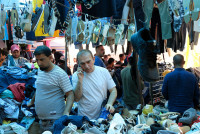
An AFP reporter at the scene said the bombers struck a market for second-hand clothes in Tayaran Square.
It had been teeming with people following nearly a year of restrictions imposed to halt the spread of Covid-19.
Security forces have cordoned off the area, and paramedics are working to help those injured.
After years of deadly sectarian violence, suicide bombings have become relatively rare in the Iraqi capital. The last such attack took place in June 2019 and left several people dead.
In January 2018, a suicide bombing in Tayaran Square killed more than 30 mere months before the last parliamentary election.
Elections in Iraq are typically preceded by escalating violence, including bombings and assassinations.
Iraq is gearing up for a general election this year, which Prime Minister Mustafa al-Kadhemi originally set for June – nearly a year ahead of schedule – in response to widespread protests in 2019.
But, authorities are in talks to reschedule them for October in order to give electoral authorities more time to register voters and new parties.
Today’s twin blasts were not immediately claimed, but suicide bombings have been used by ultra-conservative Islamist groups, most recently the Islamic State.
Iraq declared IS defeated at the end of 2017 after a fierce three-year campaign to retake a third of the country seized by the jihadists.
But, the group’s sleeper cells have continued to operate in desert and mountain areas, typically targeting security forces or state infrastructure with low-casualty attacks.
Still, the United States-led coalition that had been supporting Iraq’s campaign against IS has significantly drawn down its troop levels over the past year, citing the increased capabilities of Iraqi forces.
The US, which provides the bulk of the force, has 2,500 troops left in Iraq – down from 5,200 a year ago.
They are mainly in charge of training, providing drone surveillance and carrying out air strikes, while Iraqi security forces handle security in urban areas. – AFP, January 21, 2021


.jpg)