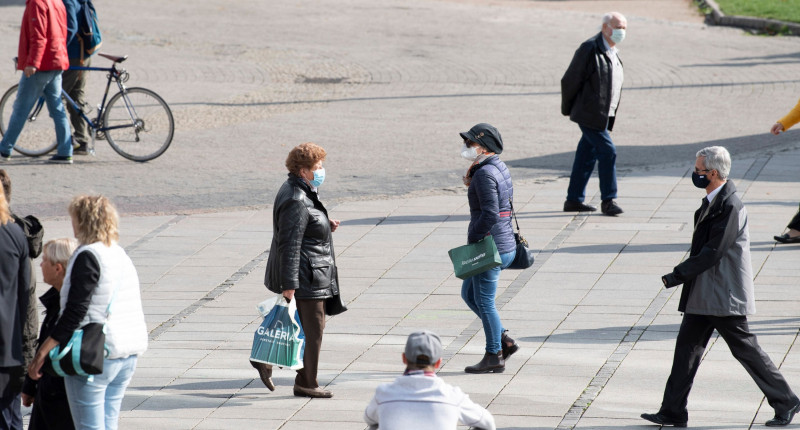
BERLIN – German Chancellor Angela Merkel yesterday unveiled plans to gradually ease coronavirus curbs in Europe’s top economy, while President Joe Biden slammed “Neanderthal” decisions to drop mask-wearing mandates in some US states.
Merkel and Germany’s 16 regional leaders revealed a step-by-step plan to relax restrictions, despite concern over the spread of more aggressive virus variants, as Merkel caved to political pressure and public discontent.
“Today, we can talk of hope and a transition to a new phase” in the fight against the pandemic, she told a press conference here, citing the imminent ramp-up in vaccinations and the arrival of mass rapid testing.
The relaxations will happen gradually and many of the current virus restrictions will stay in place until March 28, but from Monday, Germans will be allowed to socialise more, with up to five adults from two households allowed to meet up.
The desire to leave pandemic regulations behind is widespread throughout the rest of Europe, too, as the Swiss government said a referendum would be held in June on the legality of government powers to order lockdowns.
In the Dutch town of Bovenkarspel, a suspected bomb went off at a coronavirus testing centre, breaking windows but not causing any injuries.
The Netherlands has been shaken by riots against coronavirus curfews and the torching of another testing centre in January.
Biden is touting a surge in vaccine production in the US and says that by May, there will be enough supply for everyone in the country – although it could take months more for the whole population actually to receive the jabs.
As US states Texas and Mississippi defy federal guidelines and ditch mask requirements, Biden told reporters at the White House that this is no time to relax, despite declining case counts. More than half a million Americans have died from the coronavirus, and the toll ticks upward daily.
“The last thing we need is Neanderthal thinking that in the meantime, everything’s fine – take off your mask, forget it. It still matters.”
Rochelle Walensky, the director of the Centres for Disease Control and Prevention (CDC), echoed the warning, and said, “The next month or two is really pivotal in terms of how this pandemic goes”.
Greece, Brazil hit hard
Increasingly, the now year-long global pandemic is boiling down to a race between the virus’ spread and governments’ ability to administer an ever-growing line-up of vaccines.
While cases are dropping in some countries, Greece yesterday extended its lockdown to March 16 and called on additional private health resources as it clocked its highest rate of daily infections this year.
“We are at the toughest part of this pandemic,” Health Minister Vassilis Kikilias told reporters.
Meanwhile, the Czech Republic launched new mass testing at private companies to try and control soaring infection rates.
“The situation in our hospitals is really critical. We have to employ all reserves to save lives,” Health Minister Jan Blatny told reporters, as Germany, Poland and Switzerland have all offered hospital beds for Czech patients.
US starts to reopen
Fewer than 10% of over-18-year-olds in Texas have had two vaccine doses, but Republican state Governor Greg Abbott said the vaccine and better testing mean normal life can resume.
“For nearly half a year, most businesses have been open either 75% or 50% and during that time, too many Texans have been sidelined from employment,” he told a business forum Tuesday.
“This must end. It is now time to open Texas 100%,” he said to cheers from his audience, as many Texans say mask-wearing is a matter of personal choice.
But the Democratic mayor of Houston described the decision as “disheartening”.
Iowa and Montana eased restrictions last month, and in Massachusetts, restaurants now have no capacity limit.
San Francisco is taking steps towards a post-pandemic life by allowing indoor eating and museums to open with limited capacity.
And, New York state announced yesterday that some theatres could open at 33% capacity – with mask-wearing and social distancing – from April 2. – AFP, March 4, 2021