SINGAPORE – A team of clinician-scientists in Singapore has found that oral hydroxychloroquine and povidone-iodine throat spray is effective in reducing the spread of Covid-19 infection in high-transmission settings.
The findings are published in the International Journal of Infectious Diseases, following a randomised clinical trial conducted among 3,037 healthy migrant workers quarantined in Tuas South Dormitory, a large multistorey dormitory, in Singapore.
“The repurposing of existing drugs is an important global strategy against Covid-19,” said Assoc Prof Raymond Seet.
Seet is senior consultant at the Neurology divisions of National University Hospital’s Medicine Department and Yong Loo Lin School of Medicine’s Medicine Department.
“Until mass vaccination is successfully implemented internationally, non-pharmacological interventions, such as masking and physical distancing, are the only proven measures to mitigate transmissions of Covid-19,” said Seet, who is the lead author of the interventional clinical study.
The frequency of Covid-19 infection is significantly lower in participants receiving hydroxychloroquine and povidone-iodine throat spray as compared with the use of vitamin C as a comparator medication, while no statistical differences were observed between zinc/vitamin C and ivermectin, compared with vitamin C.
Reduction in the incidence of infection in the hydroxychloroquine and povidone-iodine throat spray groups remains statistically significant after adjustments are made for potential confounders – such as previous room exposure, age categories, nationalities, compliance to medications and baseline seropositivity within the same cluster.
“These existing drugs could be used to complement existing safety measures in settings where transmission is high, while awaiting the roll out of a vaccine,” said Seet.
“Further research could analyse the effects in other populations, such as older people and women, and in those with compromised immune systems and other significant comorbidities, over more prolonged periods of time.”
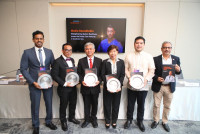
The team of clinician-scientists are from the National University Hospital; Yong Loo Lin School of Medicine; NUS Saw Swee Hock School of Public Health; National University Cancer Institute, Singapore; and, National University Heart Centre, Singapore. – Bernama, April 26, 2021