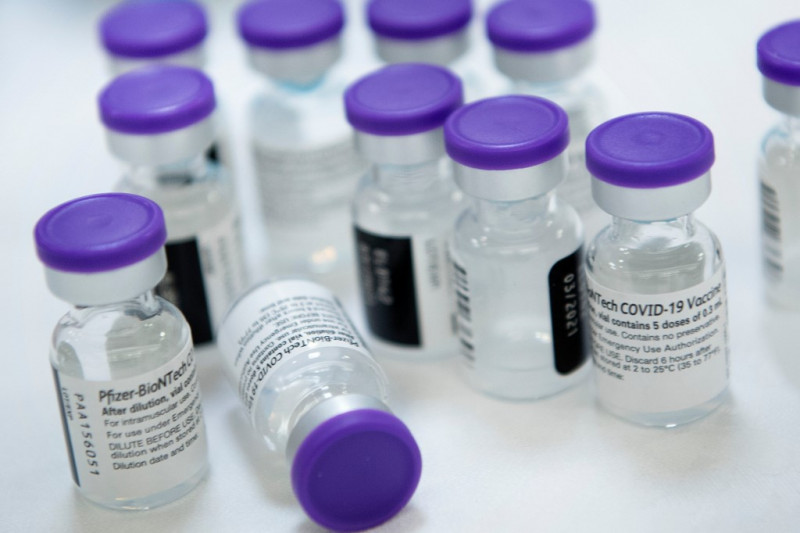
THE HAGUE – The European Union’s drug watchdog yesterday approved the Pfizer-BioNTech coronavirus jab for 12- to 15-year-olds, the first vaccine to get the green light for children in the bloc.
The vaccine is “well tolerated” in adolescents, and there are no “major concerns” in terms of side effects, said the Amsterdam-based European Medicines Agency (EMA).
The move will be a further boost for Europe’s vaccination programme, with Germany saying it will start giving the jab to children over the age of 12 from next month.
The United States and Canada have already authorised Pfizer for adolescents.
“As anticipated, EMA’s Committee for Human Medicines has today approved the use of the vaccine from Pfizer-BioNTech in adolescents from 12 to 15 years old,” Marco Cavaleri, EMA’s head of vaccine strategy, told a news conference.
Until now, the shot made by US pharmaceutical giant Pfizer and German research firm BioNTech had been authorised by the EU only for people aged 16 and older.
‘Parents’ decision’
EU health commissioner Stella Kyriakides hailed it as “one step closer to ending the pandemic”, but said people will still have the choice on whether their children should get the jab.
“Beyond the decisions of governments, this is ultimately a decision to be made by parents for their children,” she tweeted.
With EU countries trying to expand their vaccination coverage, EMA chief Emer Cooke has said the regulator fast-tracked the approval, which was originally expected next month.
The watchdog insisted that it has taken the necessary steps to ensure the vaccine is safe.
Trials showed that the Pfizer jab is “highly preventative” for Covid-19 in children, said Cavaleri.
None of the 1,005 children who received the vaccine in a trial developed Covid-19, compared to 16 kids out of the 978 who received a placebo injection.
“From a safety perspective, the vaccine was well tolerated, and the side effects in this age group were very much similar to what we have seen in young adults, and not raising major concerns at this point in time,” said Cavaleri.
EMA confirmed that it is looking into “very rare” cases of heart inflammation in people under 30 who were given the Pfizer vaccine.
“Currently, there is no indication that these cases are due to the vaccine, and EMA is closely monitoring this issue,” it said in a statement.
‘Critical milestone’
US authorities have also reported a small number of reports on heart inflammation among some younger people who received vaccines by Pfizer and Moderna, which uses the same messenger RNA technology.
EMA said it is “working closely” with its US counterparts.
BioNTech CEO and co-founder Ugur Sahin hailed yesterday’s decision as “another critical milestone in our collective effort to broaden vaccination programmes to as many people as possible”.
Pfizer CEO Albert Bourla said making vaccines available to adolescents “will help reopen schools and support the return to a normal day-to-day life”.
The approval of the Pfizer jab for adolescents fires the starting gun for Germany to begin vaccinating children over 12, as Chancellor Angela Merkel announced on Thursday.
But, she stressed that vaccination will not be compulsory, and will have no bearing on whether children can attend school or go on holiday.
Austria’s vaccination committee announced late yesterday that it will follow suit.
Moderna has said it expects to seek authorisation from EU and US authorities in early June, after trials showed that its jab is “highly effective” in adolescents. – AFP, May 29, 2021