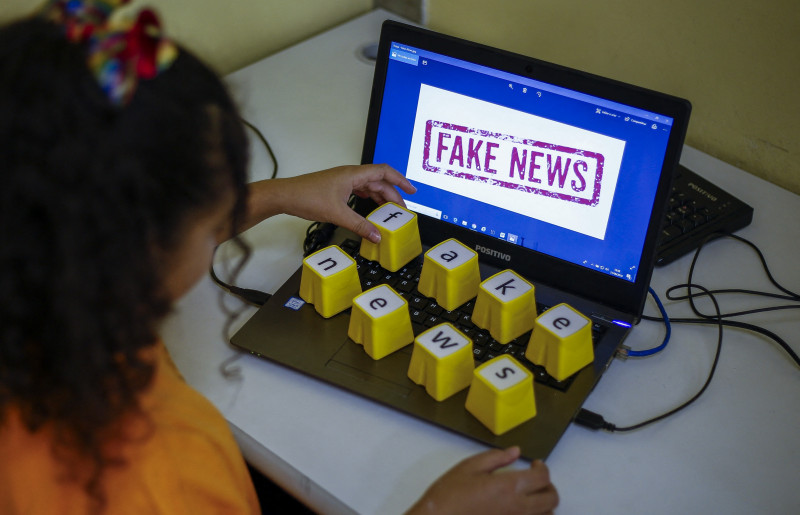
KUALA LUMPUR – All Asean member states have enacted specific cybercrime legislation, or adapted their criminal codes to criminalise the dissemination of fake news and falsehoods online.
Also, existing laws governing defamation have been used against fake news perpetrators. Nonetheless, there is still no clear and common definition for “fake news.”
However, such legislation could be a double-edged sword as in some member states there have been accusations that laws to curtail fake news have conveniently been used to silence critics and dissent against the government and political parties. Many are also of the view that laws to counter fake news also curtail civil liberties.
Based on available resources in the peer-reviewed biannual Journal of Asean Studies, below are the specific legislations on fake news in Asean member states. Action can be taken under the specific legislation or in combination with other laws. Member states also continue fine-tuning or introducing new legislation to combat fake news.
Brunei
Spreading fake news is mainly covered by the Public Order Act (1983). The law carries the penalty of a maximum fine of B$3,000 (RM9,881) and three-years’ imprisonment.
Cambodia
Law on Telecommunications and the Inter-Ministerial Prakas (set of directives) on Publication Controls of Website and Social Media Processing via Internet are deployed to address fake news. Prosecutions against fake news postings have been undertaken under the Criminal Code as well. A cybercrime law is also being drafted to address the menace.
Indonesia
Indonesia has the Law on Electronic Information and Transactions as amended in 2016 and Government Regulation on Trading Through Electronic Systems. Article 207 of the Criminal Code could also easily be applied to anyone who makes a false claim against a public authority.
Laos
Publication and spreading of fake news is regulated by the Law on Resistance and Prevention of Cybercrime 2015.
Malaysia
The Communications and Multimedia Act (1998) regulates, amongst other actions, the transmission of false information.
Myanmar
Myanmar is largely dependent on its broad-based Telecommunications Law of 2013 in the war against fake news. Two further laws are also used to prosecute offences, namely criminal defamation law and the Electronic Transaction Law.
The Philippines
The Philippines is charging persons suspected of propagating fake news under Section 4(c)4 of the Cybercrime Prevention Act and Article of the 154 of the Revised Penal Code.
Singapore
Singapore responds to fake news with the Protection from Online Falsehoods and Manipulation Act 2019 (Pofma). Singapore is the most strict in dealing with the problem.
Thailand
Thailand regulates fake news under the Computer Crime Act 2017, as amended, and the Criminal Code.
Vietnam
Vietnam’s Cybersecurity Law has a number of articles that can be used to prosecute those who are considered to be communicating fake news.
Apart from laws to stop fake news, there are many institutions especially related to the media that help determine the veracity of news. In Malaysia, the Malaysian Communications and Multimedia Commission and Bernama play an active role in putting to a stop the fake news by providing a fact-checking platform.
Indonesia’s Cekfakta fact-checking platform, based on collaboration with media organisations, is now the world’s biggest fact-checking network. Other Asean governments, media, and organisations also provide some form of fact checking to help counter fake news.
Asean member states also educate their citizens to be more responsible online and to avoid sharing information if unsure of its veracity. – Bernama, January 13, 2023