BEIJING – Muslims in China’s Xinjiang were “arbitrarily” selected for arrest by a computer programme that flagged suspicious behaviour, activists said today, in a report detailing big data’s role in repression in the restive region.
US-based NGO Human Rights Watch said leaked police data that listed over 2,000 detainees from the Aksu prefecture was further evidence of “how China’s brutal repression of Xinjiang's Turkic Muslims is being turbocharged by technology.”
Beijing has come under intense international criticism over its policies in the resource-rich territory, where rights groups say as many as one million Uighurs and other mostly Muslim minorities have been held in internment camps.
China defends the camps as vocational training centres aimed at stamping out terrorism and improving employment opportunities.
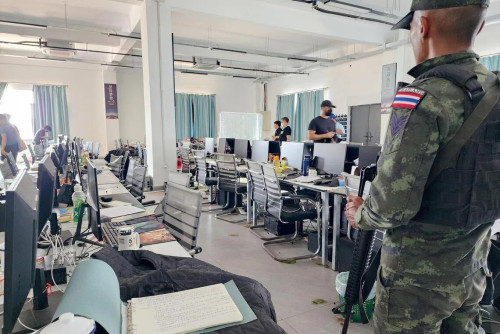
Surveillance spending in Xinjiang has ballooned in recent years, with facial recognition, iris scanners, DNA collection, and artificial intelligence deployed across the province in the name of preventing terrorism.
HRW said it had obtained the list – which detailed detentions from mid-2016 to late 2018 – from an anonymous source that had previously provided audiovisual content taken from inside a facility in Aksu.
The group gave an example of a ‘Mrs T’ – detained for “links with sensitive countries” who was listed as having received a number of calls from a foreign number which belonged to her sister.
Researchers at the NGO spoke to the woman and learned that police had interrogated her sister in Xinjiang, but she has had no direct contact with her family in the province since.
‘Uighur alarm’
The people were flagged using a programme called the Integrated Joint Operations Platform, which collected data from surveillance systems in Xinjiang, before officials decided whether to send them to camps, according to HRW.
HRW said its information suggests the “vast majority” of people were flagged to authorities for legal behaviour, including phone calls to relatives abroad, having no fixed address or switching off their phone repeatedly.
Only around 10% of the people on the list were detained for the reasons of terrorism or extremism.
The list, parts of which were shown to AFP, described the reason for detention of many of the people as simply being “flagged” by the integrated platform.
The rights group has not published the full contents of the list, citing safety concerns for the person who had leaked it.
The local Aksu government, as well as Xinjiang’s regional authorities, did not immediately respond to AFP’s requests for comment.
Separately, US-based surveillance research firm IPVM said in a report yesterday that Chinese telecoms giant Huawei had been involved in testing facial recognition software that could send alerts to police when it recognised Uighur minorities’ faces.
An internal Huawei report cited by IPVM – which has been removed from the company’s website but is still visible in Google searches – showed the software as passing tests for “Uighur alerts” and “recognition based on age, sex, ethnicity, angle of facial images.”
Huawei did not immediately reply to AFP’s request for comment. – AFP, December 9, 2020