THE date 20 September continues to resonate as a defining moment in Malaysia’s political journey, a symbolic anchor to the Reformasi movement's struggle to establish justice amidst immense adversity.
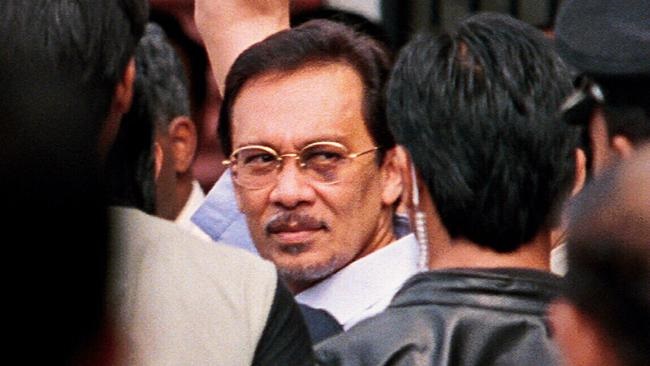
It was on this day in 1998 that Datuk Seri Anwar Ibrahim, then recently dismissed as Deputy Prime Minister and Finance Minister, was arrested at his Bukit Damansara residence—just 18 days after his sacking.
More grimly, he was also assaulted in police custody while blindfolded and handcuffed. That act of state violence marked a dark chapter in Malaysia's political history and galvanised a nationwide movement for change.
The movement that followed birthed Parti Keadilan Nasional, now known as Parti Keadilan Rakyat (PKR). It was a truly multi-ethnic uprising, observed activist and Reformasi figure Hasmi Hashim.
“That wave, I witnessed, involved all communities—Malay, Chinese, Indian and others. It was an extraordinary awakening, not limited to one race or state,” Hasmi recalled.
The Reformasi movement has since evolved from street protests to a formal political force. It laid the groundwork for the formation of the Pakatan Harapan (PH) coalition, culminating in the unity government established after Malaysia’s 15th General Election (GE15).
Today, Reformasi has been institutionalised—at least nominally—through the Malaysia Madani governance framework, anchored by six core values including sustainability, compassion, respect, and good governance.
“The experience helped Anwar forge the necessary unity for a stable government, like what we are witnessing now,” Hasmi added.
Since becoming Malaysia’s 10th Prime Minister on 24 November 2022, Anwar has focused on institutional and legal reforms. Several legislative efforts have been tabled or implemented, including the Parliamentary Services Act, Gig Workers Bill, Whistleblower Protection (Amendment) Bill, and the Sexual Offences Against Children Act 2025.
A constitutional amendment to separate the functions of the Attorney General and the Public Prosecutor is also on the agenda.
Internationally, Anwar has gained prominence for his vocal support of Palestine and his leadership within ASEAN, notably in facilitating reconciliation between Thailand and Cambodia.
Deputy Minister of Youth and Sports, Adam Adli Abd Halim, recognised the difficulty of such achievements.
“This is not easily attained without strong political will. As I’ve said, Datuk Seri Anwar has conviction because he understands it’s not about popularity—it’s about doing what’s right,” said Adam, who has been active in youth politics since 2011.
He also reminded his generation of reformists that the mantle now carries the weight of responsibility.
“Even though our current positions are an opportunity to realise what we fought for, this is not a place to abuse power. It is not a place to become what we once opposed,” he warned.
But while the current government wears the badge of Reformasi, questions remain over the pace and substance of change.
Referencing E.M. Forster’s remark from 1951—"We may still contrive to raise three cheers for democracy, although at present she only deserves two"—many find the sentiment apt today.
A sense of fatigue and disillusionment shadows the current incarnation of Reformasi. The Malaysia Madani brand is omnipresent, but does it signify real change or rhetorical repackaging?
Books like ‘March 8: The Day Malaysia Woke Up’ and ‘March 8: Eclipsing May 13’ document how the Reformasi movement triggered the political tsunami of 2008, when Barisan Nasional lost its parliamentary supermajority after ruling unchallenged for five decades.
But it would take another decade—and the temporary alliance with former nemesis Tun Dr Mahathir Mohamad—for Pakatan Harapan to finally unseat BN in 2018.
This path-dependent continuity of Reformasi culminated in the formation of a unity government in 2022, after two years of political turbulence sparked by the Sheraton Move.
The irony of sharing power with UMNO—the very party Reformasi once opposed—is not lost on the movement’s veterans. For many, it generates a persistent sense of cognitive dissonance.
Prime Minister Anwar has defended the slow pace of reforms, saying: “There are some impatient ones. You can move fast and be thrown out tomorrow, so it has to be done with wisdom.
“Hikmah (wisdom from God) means a lot, not only in how you profess, but how you act. Do you have the resources? Do you have the necessary support? Can you convince the ruling elite and professional elites that this is a mission for all?”
He added: “What I know is there is no turning back. Every month and every year, there must be some progression.”
While critics have dismissed these as evasive justifications, Anwar makes a valid point: with only 81 of 222 parliamentary seats, Pakatan Harapan must collaborate with Barisan Nasional, Gabungan Parti Sarawak (GPS), and Gabungan Rakyat Sabah (GRS) to build a consensus on reform—a herculean political task.
PKR MP Wong Chen, who chairs the Special Select Committee on International Trade and Foreign Relations, recently voiced frustration over the government’s sluggish reform record.
His outspokenness provoked backlash from within his party, including from Subang PKR deputy chief Dr Wan Hasifi Amin Wan Zaidon, who urged him to resign if he was no longer “aligned” with party values.
As the Reformasi movement marks its 27th year, it remains an open question whether its founding principles are being realised or slowly diluted by the burdens of power.
But as Anwar once said in a quieter moment: “There is no turning back.” - September 21, 2025






.jpeg)