THE Government has reaffirmed its decision to reduce the subsidised RON95 petrol quota as a targeted measure to cushion the public from escalating global oil prices, insisting that raising pump prices would have imposed a broader burden on consumers.
Finance Minister II Datuk Seri Amir Hamzah Azizan said the government’s move to lower the monthly quota from 300 litres to 200 litres was guided by data and aimed at minimising the impact on the majority of Malaysians during a period of global economic uncertainty.
“Adjusting the usage quota only affects a small portion of users, as data shows that about 90 per cent of the population is not impacted by the reduction from 300 litres to 200 litres per month,” he said, stressing that “although some parties are affected by the policy adjustment, this step is considered the best for now in navigating global economic uncertainty.”
He warned that even a marginal increase in the RON95 price, such as from RM1.99 to RM2.05 per litre, would have had an immediate and universal effect, making the quota adjustment a more measured and targeted intervention.
“All measures taken are part of a medium- and long-term strategy to ensure the resilience of the national economy, while addressing current challenges. The priority is to ensure sufficient supply, followed by efforts to stabilise prices and reduce leakages, while continuing to assist those who truly need it,” he said.
The policy comes against the backdrop of heightened geopolitical tensions affecting global oil supply, particularly disruptions linked to the Strait of Hormuz, through which roughly one-fifth of the world’s oil passes.
Amir noted that global petrol prices have risen by about 80 per cent, while diesel prices have surged by as much as 160 per cent, placing pressure on economies worldwide. “This puts pressure on all countries, including Malaysia,” he said.
He added that most Malaysians consume about 100 litres of RON95 monthly, indicating that the revised quota remains sufficient for the majority of users.
In contrast, diesel subsidies are being managed through enhanced targeted financial assistance rather than consumption limits.
Support for individuals and the agricultural sector has been increased from RM200 to RM300 to offset rising costs while narrowing price gaps that could fuel smuggling activities.
“If the price gap becomes too large, the risk of smuggling increases, and this ultimately harms the country as the subsidies are funded by public funds,” he said.
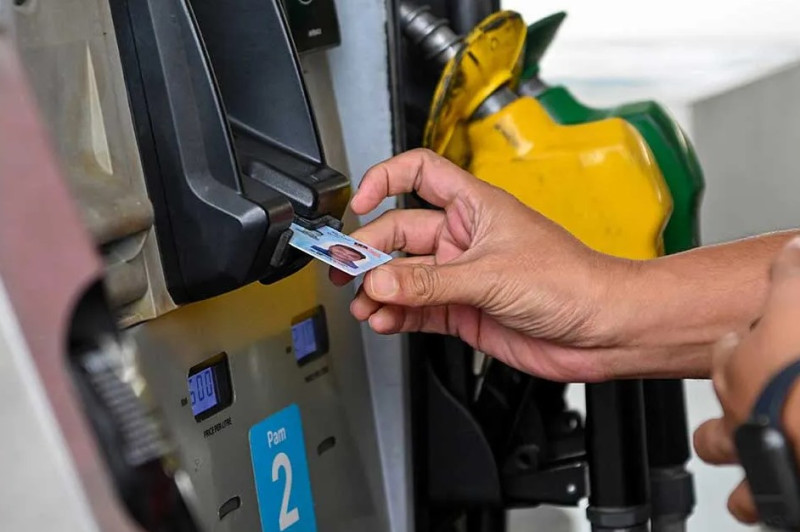
The government is also evaluating the expansion of the MyKad-based subsidy mechanism, currently used for RON95 under the Budi95 scheme, to diesel distribution.
Amir said the system has improved efficiency and reduced leakages without significantly altering consumer behaviour.
However, he cautioned that implementation would require careful planning, particularly in Sabah and Sarawak, where diesel is widely used not only for transport but also for electricity generation in rural areas lacking access to conventional petrol stations.
“If we want to implement it for diesel, we must ensure that supply is not disrupted. We need time to ensure there is nothing we do not understand that could become an obstacle,” he said.
The targeted subsidy approach was first introduced for diesel in June 2024 and later expanded to RON95 in October 2025 under the Budi95 initiative, which now covers nearly 17 million users.
While initial implementation drew concerns, including congestion at petrol stations, the system is now stabilising and gaining broader acceptance.
“Our priority is to ensure that the people are not burdened, that purchasing processes run smoothly, and at the same time the objectives of savings and reducing leakages are achieved,” he said. - April 8, 2026