
KUALA LUMPUR – A global report has ranked Kuala Lumpur poorly at number 53 with a score of 33.4% out of 60 global cities for sustainable mobility.
It also ranked the Malaysian capital city at number 23 for public transit performance with a score of 56.5%, and highlighted its awful road safety situation.
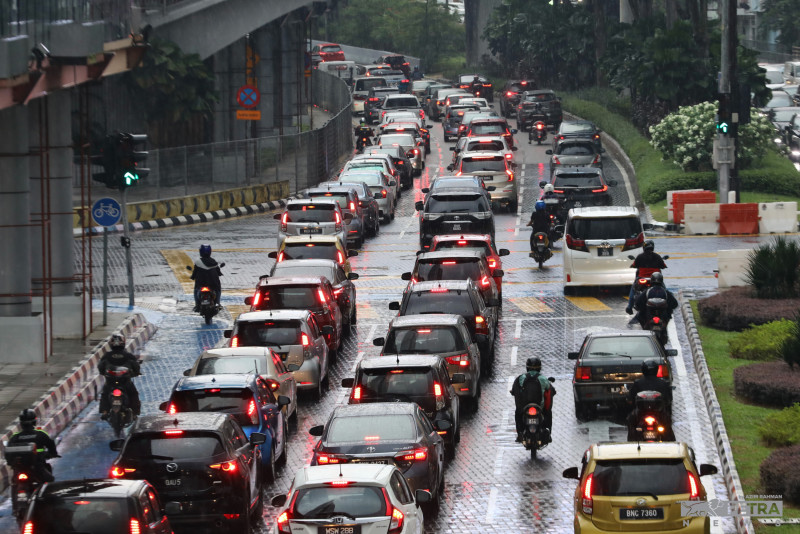
“Despite its strong public transit system, Kuala Lumpur has a high number of road traffic accidents – a rate that’s among the worst in our Urban Mobility Readiness Index,” said the report by Oliver Wyman Forum in partnership with the University of California, Berkeley.
The 2022 edition of the Urban Mobility Readiness Index (Umri) rates how well 60 global cities across five regions, including Kuala Lumpur and Asia Pacific cities, are positioned and prepared for mobility’s next chapter.
The global index noted that Kuala Lumpur, “benefits from a wide variety of public transit modes, ranging from Bus Rapid Transit to rapid rail”.
“The city’s roads also provide low regional connectivity, as Malaysia has a fragmented road network. Few residents currently bike or walk on a daily basis, and the city would benefit from investment in cycling infrastructure and in sidewalks.”
The 2022 edition has introduced a public transit sub-index, ranking the performance of the 60 cities in managing their public transportation system and how many commuters use them. It also measures the cities’ performances on public transit density, efficiency and utilisation rate.
Oliver Wyman has offices in more than 70 cities across 30 countries, including an office in KL Sentral. Checks by The Vibes have revealed that it has been conducting large-scale research initiatives since 2019 across the mobility and transportation industry, assessing the readiness of global cities for future mobility trends.
Launched two years ago, the sub-index on sustainable mobility measures cities’ efforts to build greener and more sustainable mobility ecosystems.
As the world is recovering from the disruptions brought about by the Covid-19 pandemic, the report highlighted that global cities cannot let new economic challenges and worsening extreme weather stall efforts to modernise their mobility systems.
“They need efficient and equitable mobility networks to ensure resilience and drive economic vitality,” it said.
It also highlighted sustainability and public transit as the “backbone to a resilient economy”.
The top ten global cities under the public transit sub-index are led by Hong Kong at the number one spot.
The remaining nine cities in subsequent order of ranking are: Zurich, Stockholm, Singapore, Helsinki, Oslo, Tokyo, Paris, Berlin, and London.
“Public transit is by far the most eco‑friendly way to enable large groups of people to move around and can help businesses attract the workers they need and keep city centres buzzing with activity,” the report stressed.
Many cities already have implemented these strategies, including affordable and extensive transit systems and more shared options such as e‑bikes and scooters, according to the 2022 edition of the Umri.
Kuala Lumpur is also ranked at number 40 for Umri, with a score of 45.1%.
The index has holistic measurements with 57 key performance indicators for aspects including social impact, infrastructure, innovation, system efficiency and market attractiveness.
“As cities tackle these issues and look for ways to strengthen their economic and environmental resilience, they should make modern mobility systems a core part of their strategies,” said the report.
“Efficient and equitable mobility networks are key engines of urban vitality and sustainability.” – The Vibes, January 15, 2023