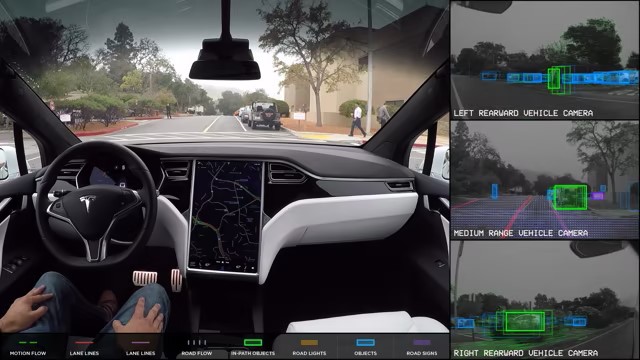
KUALA LUMPUR – Someday in the future, if you believe the hype, we’ll all get around in self-driving cars. With little to no human input these cars are expected to plan their trajectory and navigate using advanced sensing technology.
The cars will communicate with other self-driving cars and road network infrastructure, increasing reaction time, and maintaining a consistent speed and distance from other vehicles.
In addition to making our roads safer, these capabilities are hoped to eliminate stop-and-go traffic, increase road capacity, and optimise traffic flow. Overall, the prediction is that autonomous vehicles will reduce traffic congestion. But just how realistic a future this is remains unclear.
To realise the full potential of the congestion-busting self-driving future, substantial upgrades to existing communication technologies and transportation infrastructure are required.
To handle the range of movements an autonomous vehicle can make, roads must be redesigned. To facilitate the car’s camera vision and object identification, road markings and signs will need to become clear and uniform.
Meanwhile, individually-owned self-driving cars may contribute little to traffic congestion reduction. Due to their convenience, self-driving cars may actually increase the number of trips taken. Self-driving cars may exacerbate urban sprawl with commuters content to relax in their vehicles for a long commute.
But shared self-driving cars may combat these problems and deliver the much-longed-for free-flowing traffic. Like ride-sharing pool services today, such as Uber, Didi, Lyft and Ola, self-driving car trips could be shared with one or more riders.
They could provide convenient and low-cost mobility-on-demand services. Shared self-driving cars may even complement or replace conventional fixed-schedule and fixed-route transit systems, such as buses.
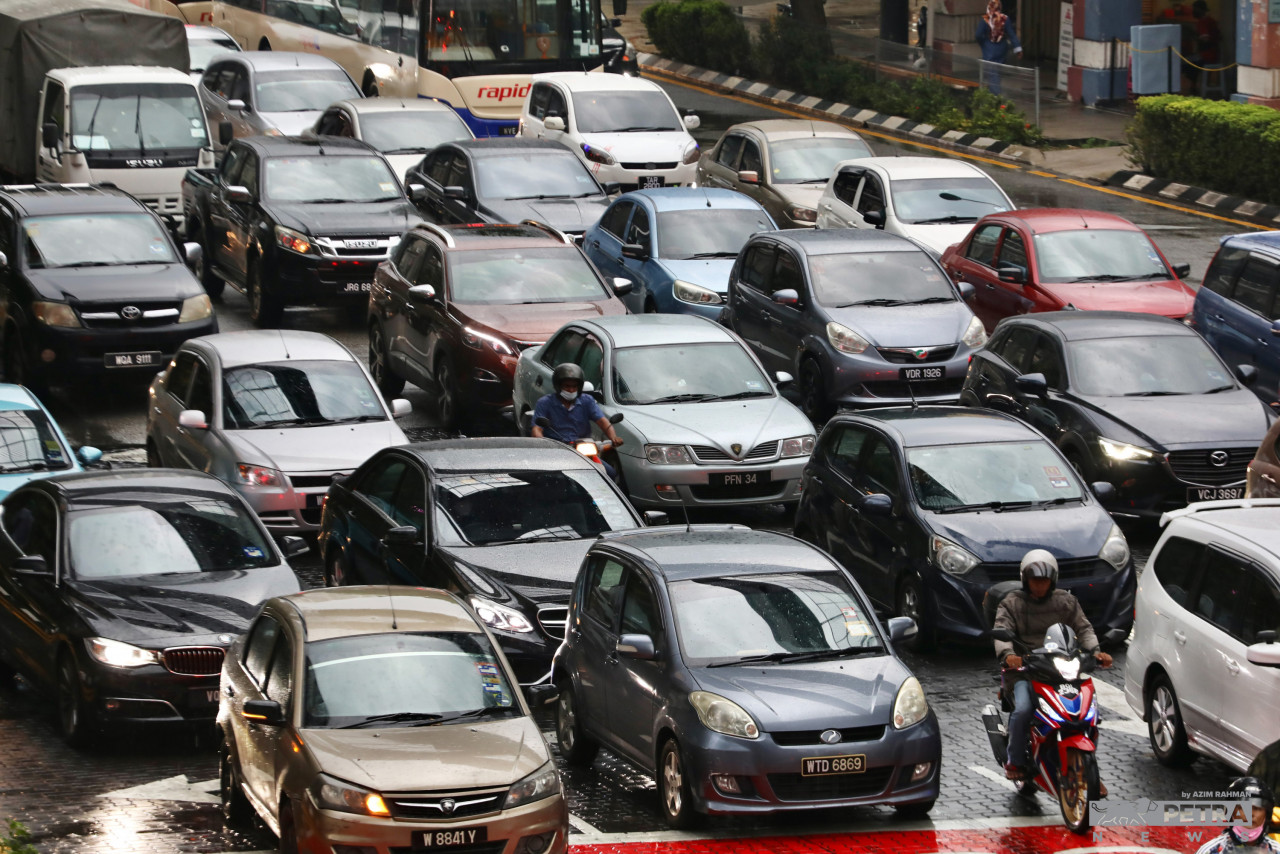
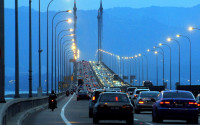
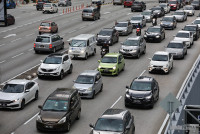
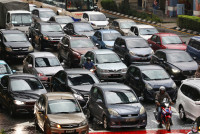
Shared self-driving cars coupled with transit could be one solution to cities’ traffic congestion problems. For example in Malaysia, during peak hours, Kuala Lumpur’s road users endure delays totalling 480 million person-hours each year, costing the nation up to RM19 billion (or 1.8% of Malaysia’s gross domestic product).
Recent studies showed that middle-income commuters between 20 and 39 years old were the most likely to adopt shared self-driving cars, especially if they think it will save travel and walking time.
Modelling of traffic flows showed that shared self-driving cars could increase public transport use by 3% and reduce personal car use by 6%.
But the study also suggested that when wait times for the shared self-driving car were shorter, passengers would be more willing to skip the switch to public transit and ride in the car for the whole journey.
Self-driving car technology is still a long way from being widespread, and there are plenty who doubt it will ever fulfil its promise. In the meantime, traffic congestion continues to grow. Strategies to reduce congestion exist already, such as public transport, congestion charging and flexible work schedules that allow employees to begin work at various times of the day.
Pinning all hopes on a still-developing technology would seem a poor solution to traffic congestion today. – The Vibes, February 14, 2023
Susilawati is a senior lecturer at Monash University Malaysia. Before joining Monash, she worked in multinational consulting firms as a spatial analyst in Indonesia and Australia.
Her research interests are dynamic transport planning and modelling for autonomous mobility that considers the stochastic nature of traffic demand and road capacity to create reliable transport systems.
She led two research grants on sustainable and intelligent transport and is co-principle investigator on several multidisciplinary projects on smart cities and active mobility. In 2010, she was awarded the Inaugural Young Researcher Award by the Australian Road Research Board.
Published under Creative Commons by 360info.






.jpeg)