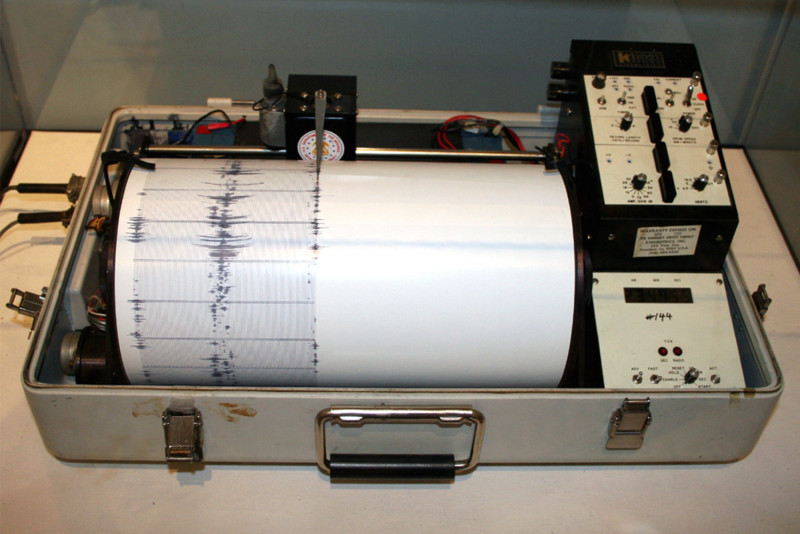
KUALA LUMPUR – The Minerals and Geoscience Department has installed six active and 54 passive seismographic stations across Malaysia to monitor fault lines that can potentially cause earthquakes and tremors in the country.
In a statement, the Natural Resources, Environment and Climate Change Ministry said this was part of its long-term mitigation programme with local authorities to assess the risks of earthquakes in the country.
It said that the six active and 29 passive stations were located in Sabah, followed by Pahang (13), Selangor (six), and two stations each in Perak, Negri Sembilan, and Sarawak that delivered information in real time.
Based on empirical evidence, the ministry said Malaysia had a “probability” of experiencing earthquakes.
“Public awareness programmes are also being implemented for state authorities, local residents, and schools to provide exposure on earthquake risks,” the ministry said.
The ministry said the department also published the Seismic Hazard Map of Peninsular Malaysia, Sabah, and Sarawak in 2019, which maps out disaster zones based on “peak ground acceleration” and which is used as a reference for the design of earthquake-resistant buildings.
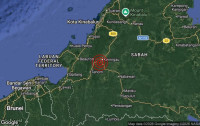
It noted that strong earthquakes centred in Malaysia have occurred with a magnitude of 6.0 to 6.3 on the Richter scale in Sabah in 1923, 1958, 1976, and 2015, while the strongest tremor in Sarawak occurred in 1996, with a magnitude of 5.3.
Peninsular Malaysia has also recorded several earthquakes in Bukit Tinggi in Pahang, the Kenyir Dam in Terengganu, Kuala Pilah in Negri Sembilan, as well as Manjung and Temenggor in Perak, ranging between magnitudes 1.6 and 4.6 in 1984, 1985, 1987, 2007, 2009, 2010 and 2013.
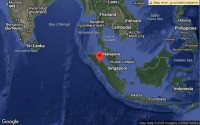
The ministry said strong earthquakes that occur in Sumatra, Indonesia have the potential to activate ancient fault lines in Peninsular Malaysia, and the effects of tremors can be felt in several locations on the west coast of the Peninsula.
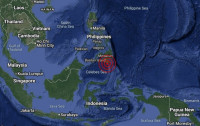
“For Sabah and Sarawak, earthquake tremors are caused by a combination of ancient fault activation as a result of tectonic movements of the Philippine Plate and the Eurasian Plate as well as local active fault line movements.” – The Vibes, April 19, 2023