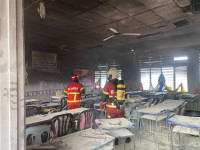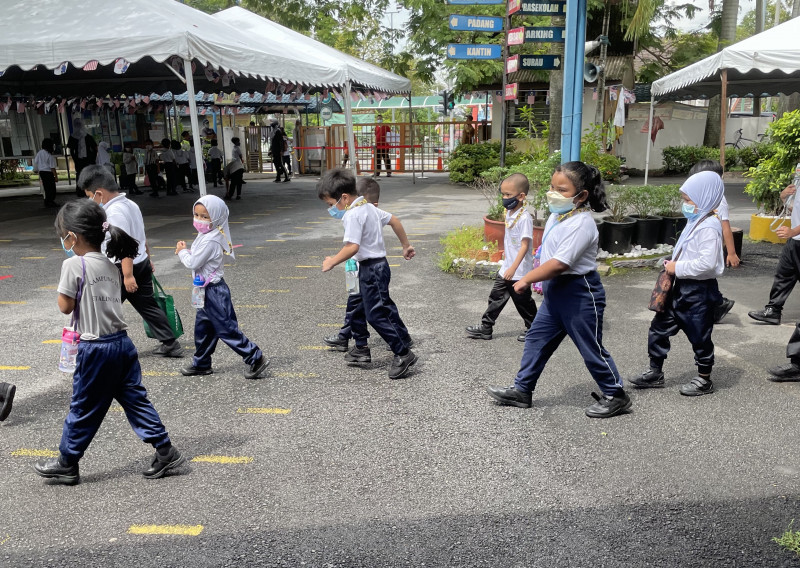

KUALA LUMPUR – Schools in four states under Phase 4 of the National Recovery Plan (NRP) reopened earlier this month only to stoke concerns among parents about chaotic scheduling and its impact on learning.
Teachers cannot fully track students’ learning and are burdened by teaching repeatedly across classes on rotation.
Mohamad Zaki Samsudin, chairman of the parent-teacher association (PTA) at SMK Sri Permata, Petaling Jaya, said: “Students do feel disorientated at this one-week-on-the-next-week-off system.
“But given the current circumstances, it is the best option for now.”
He added that the rotation requires teachers to repeat their lessons from one batch to the other, making it somewhat difficult to track students’ progress.
Also, they have to ensure that students who are off the following week are occupied with exercises and homework to keep up the learning momentum. This may sometimes prove difficult for teachers to cope, he added.
“My personal view is that one size does not fit all,” Zaki said.
“The Education Ministry should decentralise the process and allow schools to make their own decisions as to how to implement this system, rather than detail every step,” he said, pointing out that some schools have low enrolment.
“Why have rotation for these smaller schools? It only complicates matters for school management,” he said. “The current system is too rigid.”
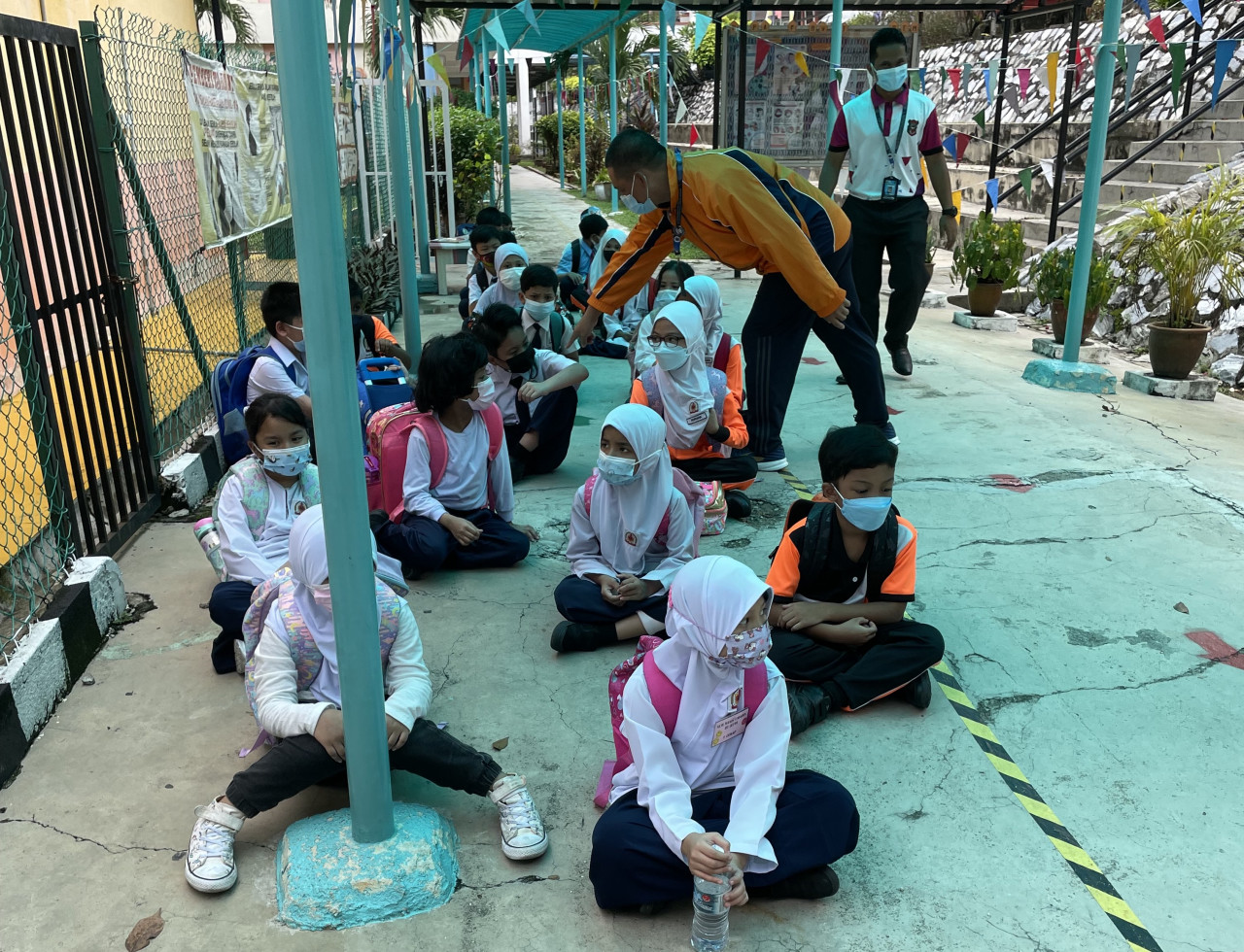
Parent Md Fakarudin, a PTA member at Sekolah Abdul Razak, Negri Sembilan, feels that the rotation system is not suitable for primary school students who have a tendency to get confused with the now-on-now-off system.
“When the second week is off, the primary school students feel lost as they are not in school and have to cope on their own,” said Fakarudin.
With teachers having to repeat each lesson for different batches, there is a lag in the syllabus being covered, he added.
Better to go to school
School bus driver K. Suguna said the present rotation system has not been smooth-sailing for students and parents.
Both she and her husband, who drive children to and from school, have observed that primary and secondary school attendance is not returning to normal in schools around Petaling Jaya.
“Many parents would rather stay at home and do not want to pay a month’s transport costs when their children are only in school for two weeks,” she said.
As schools impose staggered departure times for students to prevent overcrowding and ensure social distancing, it becomes chaotic when parents and buses arrive late to pick kids up, she added.
However, parents still feel coming to school is a better option than learning online.
Juliana Jamaludin, whose children are in SMK Sri Permata, said: “While the Covid-19 situation remains, rotation of classes remains a good option as it reduces the number of students in each class.”
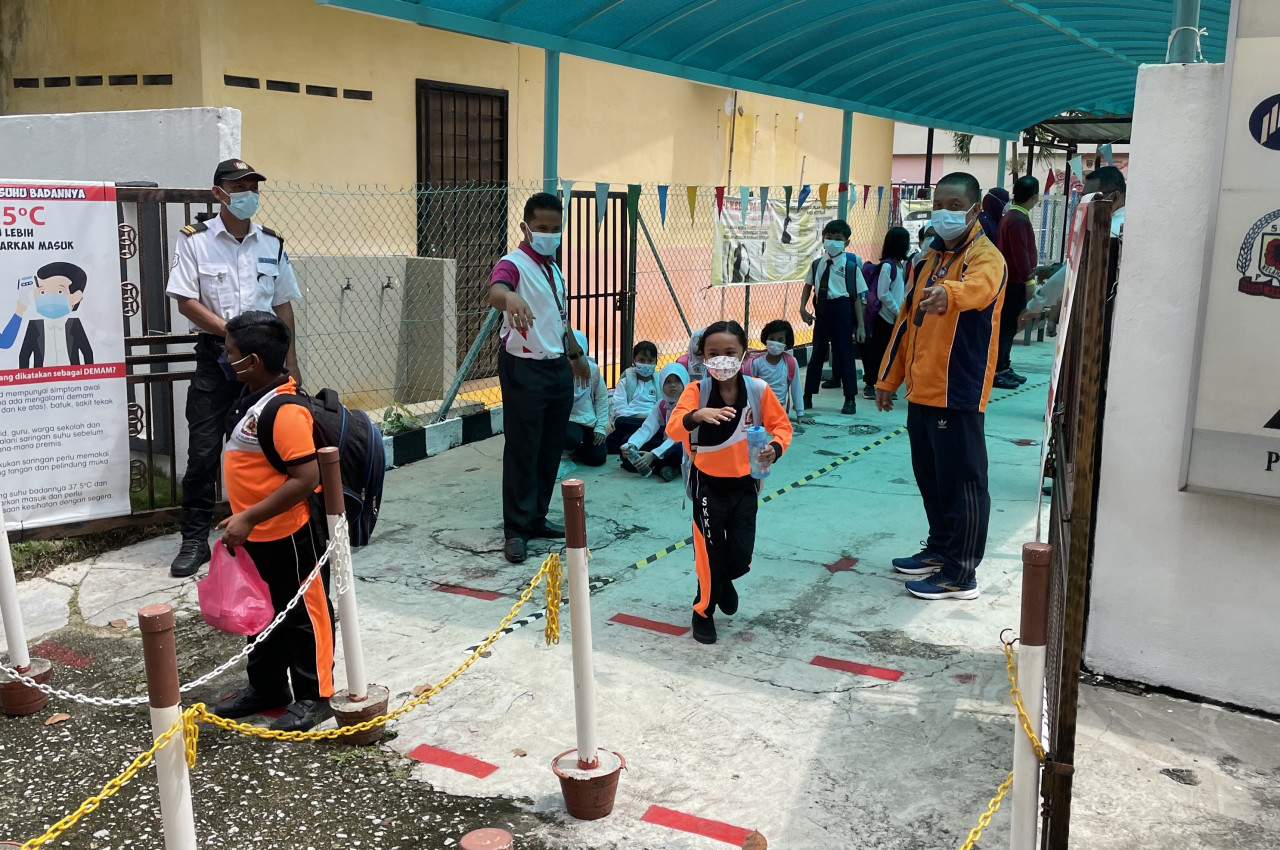
“Of course, the students want to be with their friends. But given the current circumstances the present system is needed for the safety of students,” she said.
The Vibes visited two primary schools, SJK Kg Tunku and SK Kelana Jaya 1, both in Petaling Jaya.
In the case of the former, due to large enrolment, it had Years 4, 5 and 6 classes in the morning and Years 1 and 2 in the afternoon. One SJK Kg Tunku teacher said classes are on rotation.
In the case of SK Kelana Jaya 1, the smaller enrolment there allows it to manage with just one morning session. A parent said her daughter needed help to cope with the rotation system as she is not used to it yet.
Under NRP Phase 4, students in Melaka, Selangor, Kuala Lumpur, and Putrajaya have returned to school in stages.
Those in Years 1, 2 and 3 and Forms 3 and 4 returned to class on November 1, while those in Years 4, 5 and 6 and Forms 1 and 2 returned on November 8.
International schools reopen doors
The scenario for international schools varies from school to school, with some still teaching completely online, while others opened classes for face-to-face teaching.
At Nobel International School, Kelana Jaya, all classes are still online. Only examinations are held physically.
At HELP International School (HIS), all primary classes are back to normal with face-to-face teaching, but attendance is said to be at about 60%. Those who choose not to attend face-to-face lessons are taught by an assistant teacher online.
Those in secondary classes who choose not to attend classes can join the lessons online with students who are physically present.
The school term for both primary and secondary school students has been extended until March 2022, as announced by Education Minister Datuk Radzi Md Jidin.
Students in Form 5 will have their exams in March next year, with oral and practical exams in February 2022. – The Vibes, November 13, 2021