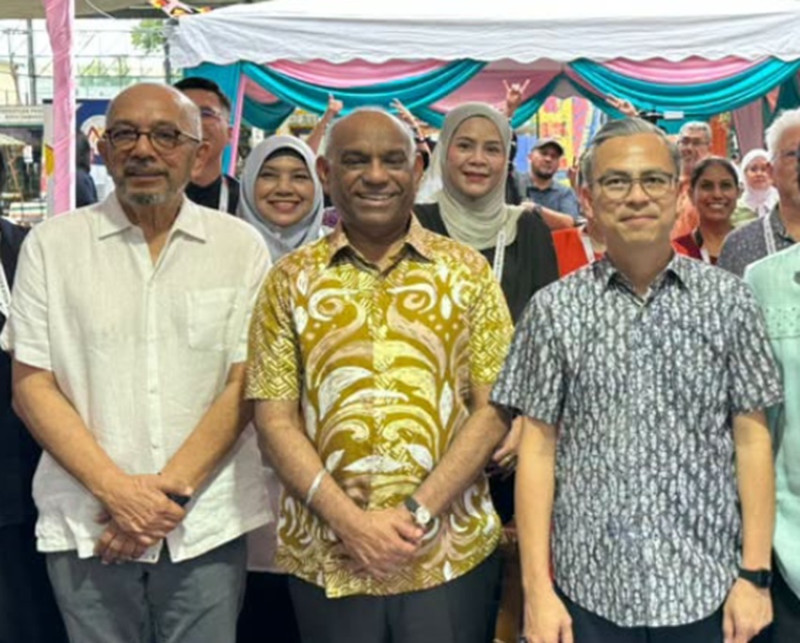
A RM1 million fund has been established to help serving and former journalists aged 50 and above access medical screenings, addressing a growing concern over healthcare affordability among media workers who have lost the benefits once provided by their employers.
The initiative, a collaboration between ECM Libra Foundation and CVSKL Foundation, took effect on Nov 1 and is expected to benefit up to 400 journalists, particularly those without medical insurance.
The money comes from a personal contribution by ECM Libra Foundation co-founder Datuk Seri Kalimullah Masheerul Hassan, himself a former journalist who has watched colleagues struggle to afford medical treatment after leaving the profession.
Speaking to The Edge, Kalimullah recounted the case of a former editor who needed a heart procedure but could not afford treatment at a private hospital.
After being given an appointment several months later at a public hospital, the former editor eventually underwent the procedure at CVSKL.
In another instance, an appeal for financial assistance for a journalist’s surgery was circulated among several media chat groups.
Colleagues eventually raised the money, but the appeal had also exposed the individual’s financial difficulties.
These experiences prompted Kalimullah to approach CVSKL Foundation chairman Tan Sri Rashpal Singh Randhay about four to five months ago to explore a more dignified way for journalists to obtain medical care without having to turn to colleagues for financial help.
“Journalists are very proud people,” Kalimullah told The Edge.
“So, that way they don’t have to be embarrassed; they avail themselves of the best treatment because CVSKL has got some of the best specialists in the country.”
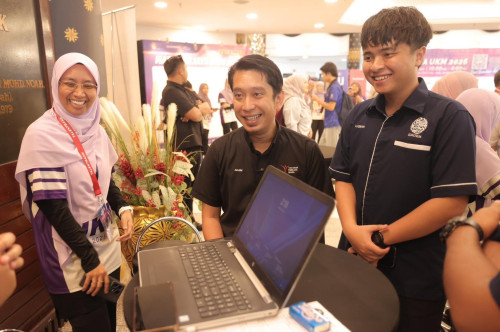
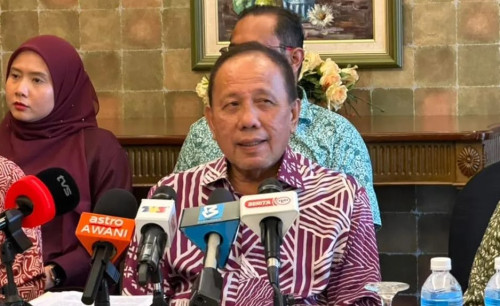
Developed in collaboration with the Malaysian Media Council (MMC), the initiative was soft-launched by Communications Minister Datuk Fahmi Fadzil on Oct 31.
The RM1 million contribution will fully cover a medical screening package at CVSKL, which normally costs between RM4,800 and RM5,200.
The package includes cardiovascular assessments, diabetes and kidney function tests, cancer markers and mammograms for women.
To qualify, applicants must be at least 50 years old, have a minimum of five years’ experience in journalism and come from households with a monthly income not exceeding RM8,000.
Applications will be coordinated through the MMC, chaired by Tan Sri Nallini Pathmanathan.
Rashpal said beneficiaries found to have medical conditions during screening could be referred to specialists for further assessment.
The foundation could also help arrange referrals to other hospitals and charitable organisations where necessary.
“We can also refer them to the respective hospitals or wherever they are. We can advise them,” he told The Edge.
The initiative comes as the media industry grapples with shrinking revenue, newsroom reductions and increasingly uncertain employment prospects, with older journalists among those facing difficulties adapting to the shift towards digital operations.
Kalimullah, who began his journalism career in 1979, said the employment landscape had changed considerably.
Journalists retiring from established newspapers could once find contract work, particularly as sub-editors, allowing them to remain employed and earn an income well into their 60s.
Such opportunities have become increasingly difficult to find.
“Never in my wildest dreams when I started journalism in 1979 did I think that there would come a day when journalists complained that they don’t get paid, their EPF is not paid, they have to go to court,” he said.
Although Kalimullah has since moved into the corporate sector, he has maintained close ties with the journalism fraternity.
Whether the initiative can continue beyond its initial allocation remains an open question.
Kalimullah suggested that media organisations pool their resources to establish a common healthcare fund for the profession, rather than leaving assistance to individual employers or ad hoc appeals for donations.
Rashpal said he hoped to expand the programme through partnerships with other hospitals and charitable organisations.
He also suggested tax incentives to encourage companies to contribute towards employee welfare initiatives.
At the launch, Fahmi indicated that efforts would be made to secure further contributions in conjunction with next year’s National Journalists’ Day celebrations.
For now, the programme will operate until the initial RM1 million allocation is exhausted. – November 4, 2026