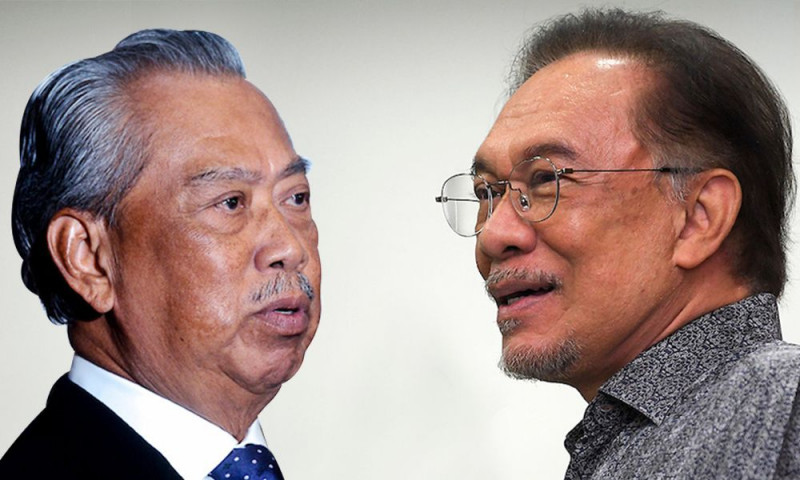
PAKATAN Harapan and Bersatu, once political allies before becoming bitter rivals, are now back at the negotiating table ahead of the Melaka state election.
PH Melaka chairman Adly Zahari confirmed today that the coalition is holding talks with Bersatu and other parties over a possible wider electoral pact.
He said the discussions were being held in line with decisions made by the PH Presidential Council, but stressed that no agreement would be announced until negotiations were completed.
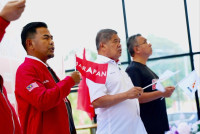
“The negotiations also include Bersatu, but any form of cooperation will only be announced after the negotiation process has been completed,” he told reporters after attending the launch of Amanah’s election machinery in Duyong.
The talks mark a significant shift from the political relationship between the two sides over the past six years.
Bersatu was formed by former Umno leaders who later joined forces with PH in the run-up to the 2018 general election.
The partnership collapsed less than two years later, bringing down the PH government and setting off a series of political realignments that continue to shape national politics.
Bersatu subsequently became a key component of Perikatan Nasional, while PH and Bersatu remained on opposing sides.
Political analyst Dr Azmi Hassan believes the changing political landscape may now be forcing both sides to reconsider that position.
He said Bersatu needed a broader political platform, while PH needed to strengthen its appeal among Malay voters.
Azmi pointed to the political developments in Johor and Negeri Sembilan as indications that parties could no longer take old alliances for granted.
He also said PH continued to face difficulties in attracting Malay support, partly because DAP is perceived as the dominant force within the coalition.
That, he argued, makes Bersatu potentially useful to PH as it looks to widen its Malay support base.
But any cooperation would require both parties to deal with the political baggage between them.
Azmi said their past differences would have to be resolved if the two sides were serious about working together.
“Both need each other,” he said.
A difficult bargain
For PH, working with Bersatu would be an awkward political proposition.
The coalition would be dealing with a party that was once part of the same government before the split that ended PH’s first stint in federal power.
For Bersatu, the calculation is equally complicated.
It remains part of PN, where its relationship with PAS and the wider coalition will have to be taken into account if it reaches an understanding with PH.
Recent developments in Johor and Negeri Sembilan have nevertheless shown that political arrangements are becoming more fluid.
In Negeri Sembilan, for example, Bersatu eventually contested under its own logo after seat negotiations within PN failed, while PAS moved towards cooperation with Barisan Nasional.
Those developments have given Bersatu another reason to examine its options ahead of Melaka.
For PH, the attraction is potentially different: access to a broader Malay electorate in areas where the coalition has struggled to make inroads.
Neither side, however, can assume that a political agreement will automatically translate into votes.
The cooperation would have to be sold to their respective supporters, many of whom have spent years seeing the other party as an opponent.
The numbers are still being worked out
Within PH, the internal seat distribution has already been settled.
Adly said PKR, Amanah and DAP had finalised their allocation, with Amanah taking eight seats, including Bukit Katil, Durian Tunggal, Telok Mas and Merlimau.
But the wider negotiations remain open.
Adly said PH had yet to hold discussions with BN.
That leaves the final shape of the Melaka contest uncertain, with negotiations involving Bersatu potentially becoming one of the more consequential elements in determining how the parties line up.
For Azmi, the logic is ultimately one of political necessity.
Bersatu needs a wider platform. PH needs to strengthen its Malay support.
Their history may make cooperation difficult, but it has not stopped the talks.
Melaka will show whether that pragmatism can move beyond negotiations and into an electoral arrangement. – September 20, 2026



.jpg)


.jpg)