

GEORGE TOWN – Three Malay-majority parliamentary seats in Penang can be taken as indicators of Pakatan Harapan’s possible return to power through a simple majority in Parliament in the 15th general election (GE15), the coalition’s candidates said.
The three seats are Kepala Batas, Tasek Gelugor, and Balik Pulau – of these, only Balik Pulau has ever been won by PH.
Kepala Batas and Tasek Gelugor are in Prai on the mainland, while Balik Pulau is the largest constituency on the island. All three have one important element in common – Malay voters being the dominant ethnic group.
Balik Pulau, which PH through PKR won in 2008, lost to BN in 2013, and won again in 2018, has a Malay electorate of more than 65%.
The Barisan Nasional (BN)-Umno strongholds of Kepala Batas and Tasek Gelugor have more than 70% Malay voters.
PH candidates in these seats said that if they can upset the odds and seize these federal seats, there is a strong possibility that PH could win the national polls on November 19 with a simple majority of 112, out of Parliament’s 222 seats.
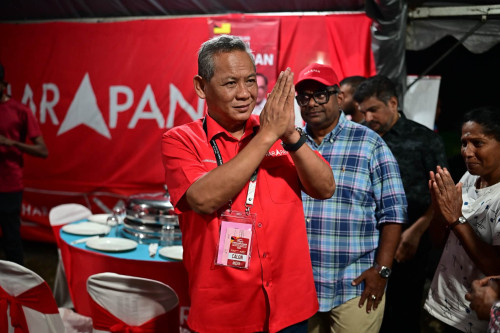
In Kepala Batas, one of the seats in the electoral pact between PH and Muda, Muda candidate Danial Abdul Majeed said that if he were to win, it would be a prelude to PH capturing control of Parliament.
“The data shows that it is a Malay seat that PH could never capture in past elections. If we win, it is a sign that PH can win more Malay seats nationwide,” said the 26-year-old engineer.
“But Kepala Batas is an uphill battle. The predominantly Malay voters are fiercely loyal to BN – as many feel that it has provided them with jobs, safety, and security. PH has not convinced them, even though PH rules Penang,” he added.

BN’s winning margins in Kepala Batas have decreased in subsequent general elections since 2004, when former prime minister Tun Abdullah Ahmad Badawi won by an 18,000 majority. This was reduced to over 11,000 in the 2008 general election.
Since the seat’s incumbent Datuk Seri Reezal Merican Naina Merican was fielded in 2013, BN’s winning margin has been reduced by more than half at over 4,000 votes in GE13 and GE14 – in tandem with growing discontent elsewhere with BN.
Besides Reezal, who is caretaker housing and local government minister, Danial will also face Pejuang and Perikatan Nasional (PN) candidates.
In Tasek Gelugor, which BN won in 2018 by a mere 81-vote margin, PH candidate Nik Abdul Razak Nik Md Ridzuan, who is from Amanah, also believes that if he wins here, other Malay-dominant seats might also swing to the federal opposition.
Like Kepala Batas, BN’s winning margins in each election since 2004 have dropped – from 10,183 in 2004, to 4,547 in 2008, and 3,042 in 2013.
Datuk Shabudin Yahaya, who won the seat in 2018 on an BN-Umno ticket, later jumped to Bersatu and is now sitting out this election.
Bersatu is fielding its information chief Datuk Wan Saiful Wan Jan for PN in the seat instead. He will face candidates from BN, Warisan, and Pejuang.
“If I can win in Tasek Gelugor, it may lead to the entire country giving their mandate to PH,” Nik Abdul Razak claimed.
For Balik Pulau, although PH has won the seat twice, incumbent and PH candidate for GE15 Datuk Muhammed Bakhtiar Wan Chik has said it will not be an easy fight as Malay support here is split among the three main coalitions – BN, PH, and PN – as well as Pejuang.
Five of the six candidates vying for the seat in the coming polls are Malay-Muslim, making it harder for PH to retain its hold on the electorate here.

“But if we regain Balik Pulau, it is a good sign that the Malay psyche is with PH,” said Bakhtiar, who first contested here in 2013 but lost to the Umno candidate by 1,539 votes. He secured the seat in 2018 with a 6,464-vote margin.
Former Balik Pulau MP Yusmadi Yusoff, who first won the seat for PKR in 2008 by a 708-vote margin, said as the largest Malay-majority district on the island, Balik Pulau can be taken as representative of the community’s political leanings.
Of Penang’s 13 parliamentary seats, PH has been assured of non-Malay support, especially DAP seats such as Batu Kawan, Jelutong, and Bukit Bendera.
In 2018, DAP won seven parliamentary seats, PKR four and BN, two. The Penang government is also led by DAP.
In GE15, all seats will face the unpredictability of an influx of new and young voters following laws allowing 18-year-olds to vote and automatic voter registration. The national electoral roll has increased by more than six million voters as a result.
Muda’s Danial said PH will have to convince youth voters to return to their hometowns to vote.
“If the young can come home and relate their hardships about living costs and lack of suitable jobs to their elders, perhaps this can be the X-factor in helping PH defeat BN (in these Malay-majority seats),” he said. – The Vibes, November 9, 2022.
.jpeg)