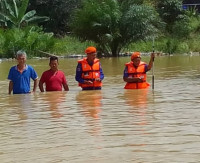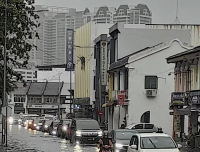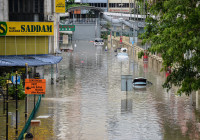

KUALA LUMPUR – The inexperience of disaster management agencies in west coast states may be the reason behind the delayed response to the devastating floods that hit major parts of the country last week.
Former Meteorological Department (MetMalaysia) director-general Jailan Simon said the reaction by these states paled in comparison to the response to the annual flooding during monsoon seasons that hit the peninsula’s east coast.
During his time heading the department, he said, agencies in Kelantan and Terengganu were quick to mobilise their manpower and assets once a yellow weather alert was issued, forecasting continuous rain.
He added that waiting for the alert to turn orange or red before deployment would be too late, as was evident in last week’s floods.
“In the east coast, which is accustomed to flooding, the disaster management agencies know what to do whenever a yellow warning is issued.
But in states like Selangor, even if a warning is issued, I’m not sure they know what it means, or if they reacted accordingly,” he told The Vibes.
Explaining the weather forecast system, Jailan said MetMalaysia would typically issue a continuous rainfall alert at least three days before the Irrigation and Drainage Department (DID) utilises the data to predict floods.
“By right, there is a procedure under the National Disaster Management Agency and National Security Council. But maybe it is the lack of experience (in the west coast states).
“Also, we know that there are a lot of new faces in the federal cabinet and the states. Perhaps they are not used to it (handling a disaster).”
He said the recent disaster reminded him of a similar flood disaster that devastated Penang four years ago – when a delayed response by the respective agencies resulted in multiple casualties.

Jailan, then MetMalaysia deputy director-general, recalled that despite the weather alert being issued four days earlier, action was almost non-existent at the state level.
“I’m not sure what happened in Selangor last week. But, by right, when MetMalaysia issues the yellow level alert, all agencies should have been informed and prepared.
“I consider what happened last week similar to the events in Penang in 2017, where warnings were issued, but there was no immediate response.”
However, he acknowledged that the recent floods would have also taken MetMalaysia by surprise, as it could not have predicted that much continuous rainfall.
Moving forward, he said, it is pertinent that more campaigns are conducted to educate the public on the MetMalaysia alerts and to take the necessary precautionary measures.
Could floods have been predicted much earlier?
Water modelling specialist Zaki Zainuddin similarly said with the existing meteorological and hydraulic modelling systems, it is impossible for the government to be ill-informed of incoming rainfall or floods.
A meteorological or climate modelling is a system that collects data and generates anticipated rainfall, among others.
Hydraulic modellers, which include variables such as the width and depth of a river and how rapid the river water flows, would then use the data from the climate models to predict floods and their severity.
Speaking to The Vibes, Zaki said based on this technology, agencies would have been able to predict floods up to three days prior.
“We do have the technology; these models are already in use. But to my knowledge, they are only used on a piecemeal basis.
If data was available, we could have at least anticipated the severity of the flood. It’s not 100% accurate, but with conservative assumptions, we can definitely determine its magnitude.
“Could we have been better prepared? I think yes, if we knew beforehand of the severity of the flood situation in the different areas.”
Forecast system not used in all states
On the other hand, DID director-general Datuk Md Nasir Md Noh said at present, the hydraulic model capable of predicting floods is not yet available in every state.
It is understood that currently, the model is only ready for use at the Kelantan, Terengganu and Pahang river basins.
“The rest are being installed and prepared. They are still in the process of development, and are not ready for use yet.
“I can’t definitively tell when exactly the system will be up and running.”
According to Nasir, locations with the hydraulic system will be able to predict occurrences of floods a couple of days before they happen, while the forecast for other areas can only be made two to three hours prior.
He said these data, including the water levels at the various rivers, can then be viewed by the public by accessing the Info Banjir website. https://publicinfobanjir.water.gov.my
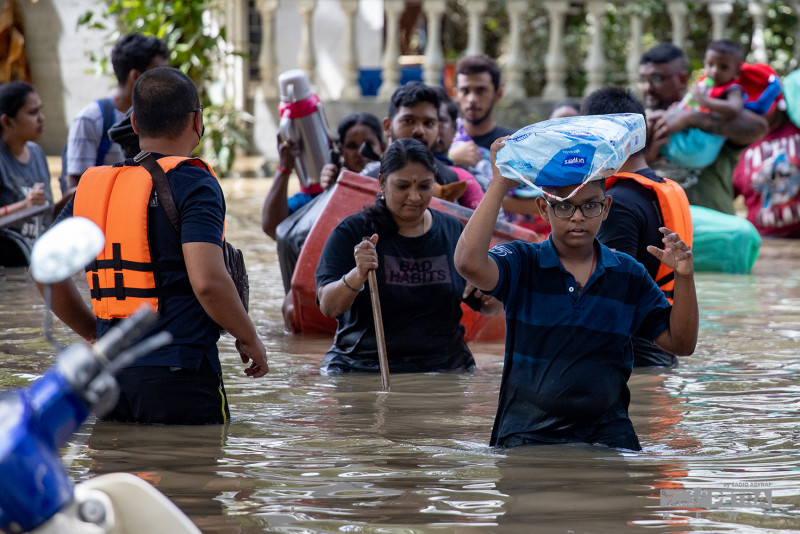
The floods that hit multiple states in the country last week have killed at least 48 people, with five still missing and thousands more still seeking shelter at temporary centres.
The losses from the disaster, one of Malaysia’s worst in recent memory, is projected to be in the tens of millions of ringgit. – The Vibes, December 30, 2021