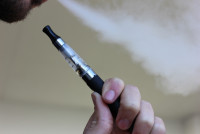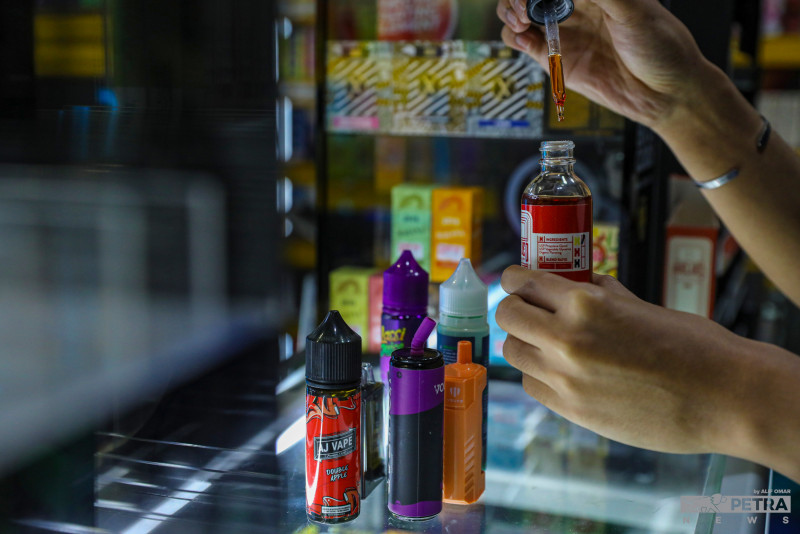
JOHOR BARU – Following public concern and heavy criticism from healthcare activists, the government has announced that it plans to table a new law in Parliament with a view towards regulating vapes and e-cigarette products containing nicotine.
In a statement, Health Minister Dr Zaliha Mustafa explained that after the decision to charge duties on such products with nicotine in liquid or gel form, the items would be governed under the Excise Act 1976.
Among the controls in place include licensing the production and storage of such products.
“Anyone who produces products, which can be taxed, without a licence can have legal action taken against them,” she said in a statement today.
Thus, to ensure comprehensive regulation of vape products, the Health Ministry will table a law which would regulate all nicotine products.
This comes in the wake of a new federal gazette which allows nicotine in gel and liquid form, used in products like e-cigarettes and vapes, to be removed from the list of controlled substances under the Poisons Act 1952.
Also exempted are tobacco and nicotine in the “form of patch or gum to be used as an aid or smoking cessation”.
The gazette on the Poisons (Amendment of Poisons List) Order 2023, which was issued yesterday and came into force today, was signed by Zaliha. It also introduces a tax on e-cigarettes and vapes with nicotine at 40 sen/ml.
The move has been panned by various groups and individuals related to the healthcare sector.
Zaliha said that her ministry has held consultations regarding the policy with all stakeholders and taken into account the previous administration’s push for the Generational Endgame (GEG) plan, which would end smoking for people born after 2005.
“Discussions were held between the ministry and all stakeholders including MPs, NGOs (non-governmental organisations), and professional bodies regarding the new legal amendments while taking into account the GEG,” Zaliha added.
Meanwhile, the Health Ministry will continue its anti-smoking campaigns through the Anti-Smoking Generational Endgame Plan, or Gegar.
The new law is expected to be tabled during the next parliamentary session in May.
Among the groups critical of the gazette, specifically on the exemption of nicotine from products like e-cigarettes and vapes from the poisons list, was the Malaysian Pharmacists’ Society. It described the move as detrimental to Malaysian public health and safety, besides not being in the national interest.
“Excluding it from the Poisons Act 1952 would send the wrong message to the public, particularly young people, and could lead to an increase in the use of e-cigarettes and vaping,” said its president Amrahi Buang.
The Malaysian Medical Association (MMA) warned that Malaysia currently has no regulations in place pertaining to the use of vape products.
“Removing nicotine from this list of controlled substances under the Poisons Act will then allow any vape products – both containing nicotine and not – to be sold openly and legally to anyone, including children of any age,” said MMA president Dr Muruga Raj Rajathurai.
He added that the Control of Tobacco Product and Smoking Bill 2022 needs to be passed first. Only then would there be adequate control of vaping, including on devices with nicotine.
The Galen Centre for Health and Social Policy said that Malaysia is likely to lose its credibility on the international stage and in places such as the World Health Assembly.
Its chief executive Azrul Mohd Khalib said that the deregulation of such products has potentially opened the floodgates to existing and new problems, which could not be handled by the current healthcare and legal system.
“This decision is likely to mark the beginning of one of the biggest public health crises in Malaysia: a dramatic increase in young people and children who are addicted to nicotine, through (vaping),” he said. – The Vibes, April 1, 2023